

Key Insights
The Asia-Pacific Artificial Organs and Bionic Implants Market is poised for substantial expansion, projected to reach an impressive valuation by 2033. Driven by a confluence of factors, including the increasing prevalence of chronic diseases, a growing aging population, and a heightened awareness and adoption of advanced medical technologies, the market is set to witness robust growth. Key drivers such as rising healthcare expenditure, supportive government initiatives aimed at improving healthcare infrastructure, and significant investments in research and development for more sophisticated and patient-friendly bionic solutions are fueling this upward trajectory. The demand for artificial organs, particularly artificial kidneys and livers, is surging due to the escalating burden of organ failure, while bionic implants, especially in orthopedics and audiology, are gaining traction as effective restorative solutions. Technological advancements, leading to enhanced functionality, durability, and biocompatibility of these devices, are further stimulating market penetration.
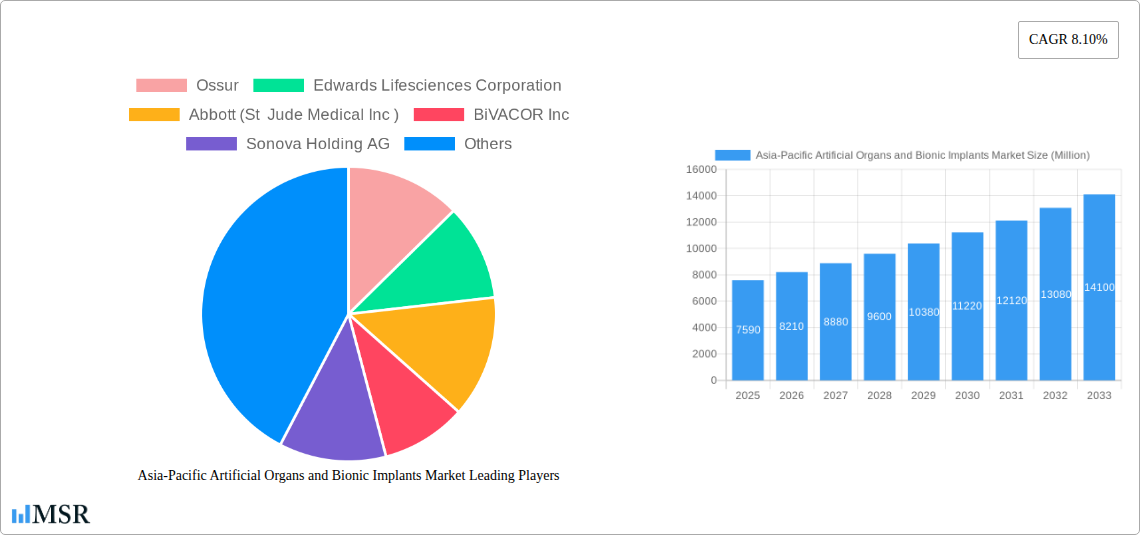
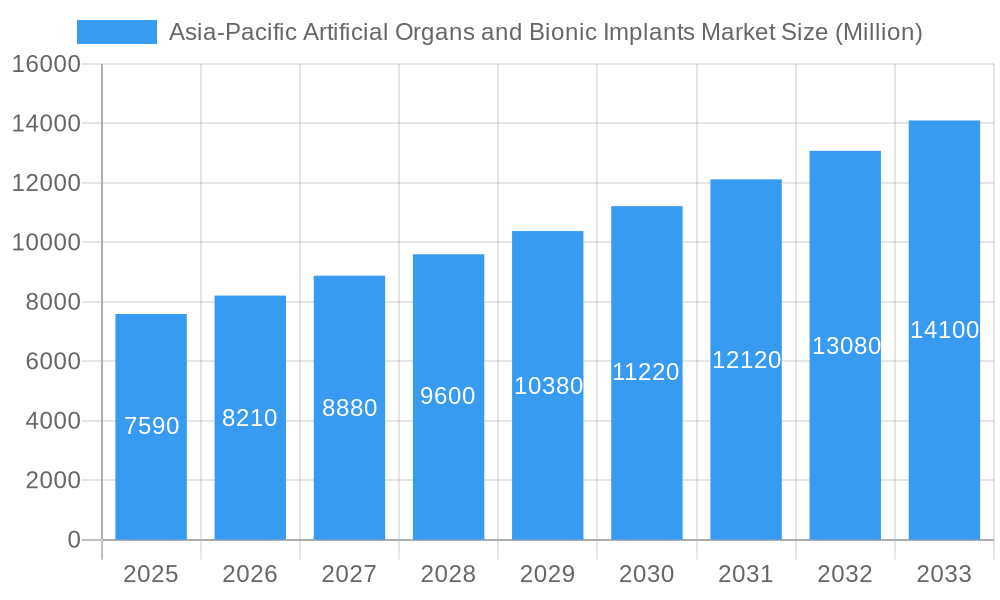
Asia-Pacific Artificial Organs and Bionic Implants Market Market Size (In Billion)

The market segmentation by product reveals a dynamic landscape, with Artificial Organs and Bionics collectively contributing to the overall market growth. Within Artificial Organs, artificial kidneys and livers are expected to see significant demand, while cochlear implants and other specialized artificial organs also represent growing segments. The Bionics segment, encompassing vision, ear, orthopedic, and cardiac bionics, is also a crucial growth area, driven by the need for improved quality of life for individuals with disabilities and chronic conditions. Geographically, China and Japan are anticipated to lead the market, owing to their large populations, advanced healthcare systems, and early adoption of medical innovations. India and South Korea are also emerging as significant markets, with their rapidly developing healthcare sectors and increasing disposable incomes. Rest of the Asia-Pacific region, while currently smaller, presents substantial untapped potential for future growth. Despite the promising outlook, challenges such as high device costs, regulatory hurdles, and the need for specialized surgical expertise may present some restraints, though ongoing efforts to address these issues are expected to mitigate their impact.
Asia-Pacific Artificial Organs and Bionic Implants Market Company Market Share
This in-depth report offers a definitive analysis of the burgeoning Asia-Pacific artificial organs and bionic implants market, a critical sector within the global medical technology landscape. Spanning a study period from 2019 to 2033, with a base and estimated year of 2025, this research delves into market dynamics, key drivers, segmentation, and future projections. We provide actionable intelligence for stakeholders navigating this rapidly evolving space, encompassing artificial heart market, artificial kidney market, artificial liver market, cochlear implants market, vision bionics market, ear bionics market, orthopedic bionics market, and cardiac bionics market. Discover the strategic imperatives for growth in China artificial organs market, Japan bionic implants market, India medical devices market, Australia artificial organs market, South Korea bionic implants market, and the broader Rest of Asia-Pacific medical technology market.
Asia-Pacific Artificial Organs and Bionic Implants Market Market Concentration & Dynamics
The Asia-Pacific artificial organs and bionic implants market exhibits a moderate to high concentration, with a few key players dominating significant market shares. Innovation ecosystems are rapidly maturing, driven by substantial government investments in healthcare infrastructure and a growing focus on advanced medical solutions. Regulatory frameworks are becoming more streamlined, encouraging the adoption of cutting-edge technologies, although variations exist across different countries. Substitute products, while present in some categories, are increasingly being surpassed by the efficacy and advancements in bionic and artificial organ solutions. End-user trends are leaning towards minimally invasive procedures and personalized treatment options, fueling demand for sophisticated implants. Merger and acquisition (M&A) activities, estimated at 10-15 deals annually in the historical period (2019-2024), are a significant dynamic, with larger companies acquiring innovative startups to expand their product portfolios and market reach. Key players like Medtronic plc, Abbott, Boston Scientific Corporation, and Zimmer Biomet are actively involved in consolidating their positions.
Asia-Pacific Artificial Organs and Bionic Implants Market Industry Insights & Trends
The Asia-Pacific artificial organs and bionic implants market is poised for exceptional growth, projected to reach an estimated USD 15,000 million by 2025, with a Compound Annual Growth Rate (CAGR) of 12.5% during the forecast period (2025-2033). This remarkable expansion is propelled by several interconnected factors. A burgeoning aging population across the region, coupled with a rising prevalence of chronic diseases such as cardiovascular disorders, kidney failure, and hearing loss, creates a substantial and growing patient pool demanding advanced treatment modalities. The increasing disposable income and improving healthcare affordability in countries like China and India are empowering a larger segment of the population to access sophisticated medical devices and procedures, including artificial heart replacements, kidney dialysis alternatives, and cochlear implant surgery.
Technological advancements are at the forefront of this market's evolution. Innovations in biocompatible materials, miniaturization of devices, and the integration of artificial intelligence (AI) and machine learning (ML) are leading to the development of more effective, durable, and patient-friendly artificial organs and bionic implants. For instance, next-generation artificial kidney devices are moving towards implantable solutions offering greater autonomy, while bionic eye systems are demonstrating remarkable improvements in visual restoration. The demand for personalized medicine is also a significant trend, with manufacturers developing custom-fit bionic limbs and implants tailored to individual patient needs, enhancing functional outcomes and patient satisfaction.
Furthermore, the growing awareness and acceptance of advanced medical interventions, coupled with the expanding network of specialized healthcare facilities and skilled medical professionals, are critical enablers of market growth. Government initiatives promoting medical tourism and investing in cutting-edge research and development further bolster the region's capacity to innovate and adopt these life-changing technologies. The bionic implants market specifically benefits from advancements in prosthetics and neurotechnology, offering unprecedented restoration of lost functions.
Key Markets & Segments Leading Asia-Pacific Artificial Organs and Bionic Implants Market
China currently stands as the dominant market within the Asia-Pacific artificial organs and bionic implants market, driven by its vast population, rapid economic development, and significant investments in healthcare infrastructure. The Chinese government's focus on upgrading its medical technology sector, coupled with a rising middle class that demands higher quality healthcare, fuels the demand for advanced solutions. The artificial organs market in China is experiencing robust growth, particularly in areas like artificial hearts and artificial kidneys, due to the high prevalence of related chronic diseases.
In terms of product segmentation, Cochlear Implants and Orthopedic Bionic segments are currently leading the market's growth trajectory. The increasing incidence of hearing impairments, particularly in urbanized areas, and the growing number of road accidents and age-related degenerative conditions contribute to the high demand for these bionic solutions. The ear bionics market is also seeing significant traction due to increasing awareness and improved surgical outcomes.
China's Dominance:
- Economic Growth: Robust GDP growth translating to increased healthcare expenditure.
- Population Size: The largest population base in the region, leading to a higher number of potential patients.
- Government Support: Favorable policies and funding for medical technology innovation and adoption.
- Growing Middle Class: Increased purchasing power and demand for advanced medical treatments.
Leading Segments:
- Cochlear Implants: Driven by increasing awareness of hearing loss treatment and government-backed screening programs for newborns and children. The September 2022 initiative by the Karnataka Institute of Medical Sciences to launch cochlear implant facilities for children highlights the growing focus on this segment.
- Orthopedic Bionic: Fueled by the rising prevalence of osteoarthritis, sports injuries, and road accidents, leading to a demand for advanced prosthetic limbs and joint replacements.
- Cardiac Bionics: Experiencing steady growth due to the increasing burden of cardiovascular diseases, with innovations in artificial heart valves and ventricular assist devices (VADs).
Japan and South Korea also represent significant markets, characterized by advanced technological capabilities and high per capita healthcare spending. India, with its massive population and improving healthcare accessibility, is emerging as a high-growth market, especially in the orthopedic bionic and cochlear implants segments. Australia's proactive approach to medical innovation, exemplified by the January 2022 breakthrough device designation for its Bionic Eye Systems by the USFDA, positions it as a key player in advanced bionic technologies. The Rest of Asia-Pacific, while diverse, showcases pockets of significant growth driven by improving healthcare infrastructure and increasing patient affordability.
Asia-Pacific Artificial Organs and Bionic Implants Market Product Developments
Product development in the Asia-Pacific artificial organs and bionic implants market is characterized by a relentless pursuit of enhanced functionality, reduced invasiveness, and improved biocompatibility. Innovations are focused on creating more sophisticated artificial heart devices with longer lifespans and better integration with the human circulatory system. In the artificial kidney market, research is progressing towards implantable bioartificial kidneys that mimic natural kidney function more closely. The bionics sector is witnessing advancements in neural interfaces for vision bionics, enabling greater visual acuity. Orthopedic bionics are becoming lighter, more responsive, and integrated with AI for adaptive movement. These developments are crucial for maintaining a competitive edge and addressing unmet medical needs.
Challenges in the Asia-Pacific Artificial Organs and Bionic Implants Market Market
The Asia-Pacific artificial organs and bionic implants market faces several significant challenges that could impede its rapid growth. Regulatory hurdles and varying approval processes across different countries create a complex landscape for market entry and product diffusion. High manufacturing costs associated with these advanced medical devices translate into substantial prices, limiting affordability for a significant portion of the population, particularly in developing economies. Supply chain complexities, including the availability of raw materials and skilled personnel for implantation and maintenance, can also pose constraints. Furthermore, intense competition among established players and emerging innovators necessitates continuous investment in R&D to maintain market share, putting pressure on profit margins.
Forces Driving Asia-Pacific Artificial Organs and Bionic Implants Market Growth
The growth of the Asia-Pacific artificial organs and bionic implants market is propelled by a confluence of powerful forces. Technological innovation is a primary driver, with continuous advancements in materials science, miniaturization, and AI leading to more effective and less invasive devices. The escalating prevalence of chronic diseases, such as cardiovascular ailments and end-stage renal disease, creates a substantial and growing patient demand for artificial organ replacements and bionic solutions. Increasing healthcare expenditure across the region, fueled by rising disposable incomes and government initiatives to improve healthcare access, further empowers patients to opt for these advanced treatments. Moreover, a growing awareness and acceptance of medical tourism and sophisticated procedures contribute to market expansion.
Challenges in the Asia-Pacific Artificial Organs and Bionic Implants Market Market
Long-term growth in the Asia-Pacific artificial organs and bionic implants market is significantly influenced by ongoing innovations and strategic market expansions. The development of more sophisticated, bio-integrated artificial organs, such as lab-grown tissues and fully functional artificial livers, holds immense potential. Partnerships between research institutions and commercial entities are crucial for accelerating the translation of groundbreaking discoveries into market-ready products. Market expansion into underserved regions within the Asia-Pacific, coupled with the development of cost-effective solutions, will be key to unlocking future growth opportunities and broadening patient access to these life-saving technologies.
Emerging Opportunities in Asia-Pacific Artificial Organs and Bionic Implants Market
Emerging opportunities within the Asia-Pacific artificial organs and bionic implants market are vast and ripe for exploitation. The increasing focus on regenerative medicine and tissue engineering presents a fertile ground for developing novel bio-artificial organs. The growing demand for personalized bionic solutions, leveraging 3D printing and advanced AI algorithms, offers significant market potential. Furthermore, the expansion of healthcare infrastructure in emerging economies within Southeast Asia and Oceania, coupled with increasing government initiatives to promote domestic medical device manufacturing, opens new avenues for market penetration. The integration of remote monitoring and telehealth technologies for bionic implants also presents a significant opportunity to enhance patient care and outcomes.
Leading Players in the Asia-Pacific Artificial Organs and Bionic Implants Market Sector
- Ossur
- Edwards Lifesciences Corporation
- Abbott
- BiVACOR Inc
- Sonova Holding AG
- Boston Scientific Corporation
- Zimmer Biomet
- Medtronic plc
- Otto Bock Holding GmbH & Co KG
Key Milestones in Asia-Pacific Artificial Organs and Bionic Implants Market Industry
- September 2022: The Karnataka Institute of Medical Sciences announced the launch of cochlear implant facilities for children to provide treatment for hearing-impaired patients.
- January 2022: Australia's one of the world-first Bionic Eye Systems was granted a breakthrough device designation by the USFDA.
Strategic Outlook for Asia-Pacific Artificial Organs and Bionic Implants Market Market
The strategic outlook for the Asia-Pacific artificial organs and bionic implants market is exceptionally bright, driven by sustained technological advancements and expanding market access. Key growth accelerators include continued investment in R&D for next-generation artificial organs and bionics, focusing on enhanced biocompatibility and reduced invasiveness. Strategic partnerships between global medical device leaders and local manufacturers in key markets like China and India will be pivotal for localized production and distribution. Furthermore, leveraging data analytics and AI for personalized treatment planning and post-operative care will unlock significant opportunities for improved patient outcomes and market differentiation. The growing emphasis on preventative healthcare and early intervention for conditions requiring artificial organs and bionic implants will further fuel market expansion.
Asia-Pacific Artificial Organs and Bionic Implants Market Segmentation
-
1. Product
-
1.1. Artificial Organs
- 1.1.1. Artificial Heart
- 1.1.2. Artificial Kidney
- 1.1.3. Artificial Liver
- 1.1.4. Cochlear Implants
- 1.1.5. Others
-
1.2. Bionics
- 1.2.1. Vision Bionics
- 1.2.2. Ear Bionics
- 1.2.3. Orthopedic Bionic
- 1.2.4. Cardiac Bionics
-
1.1. Artificial Organs
-
2. Geography
- 2.1. China
- 2.2. Japan
- 2.3. India
- 2.4. Australia
- 2.5. South Korea
- 2.6. Rest of Asia-Pacific
Asia-Pacific Artificial Organs and Bionic Implants Market Segmentation By Geography
- 1. China
- 2. Japan
- 3. India
- 4. Australia
- 5. South Korea
- 6. Rest of Asia Pacific
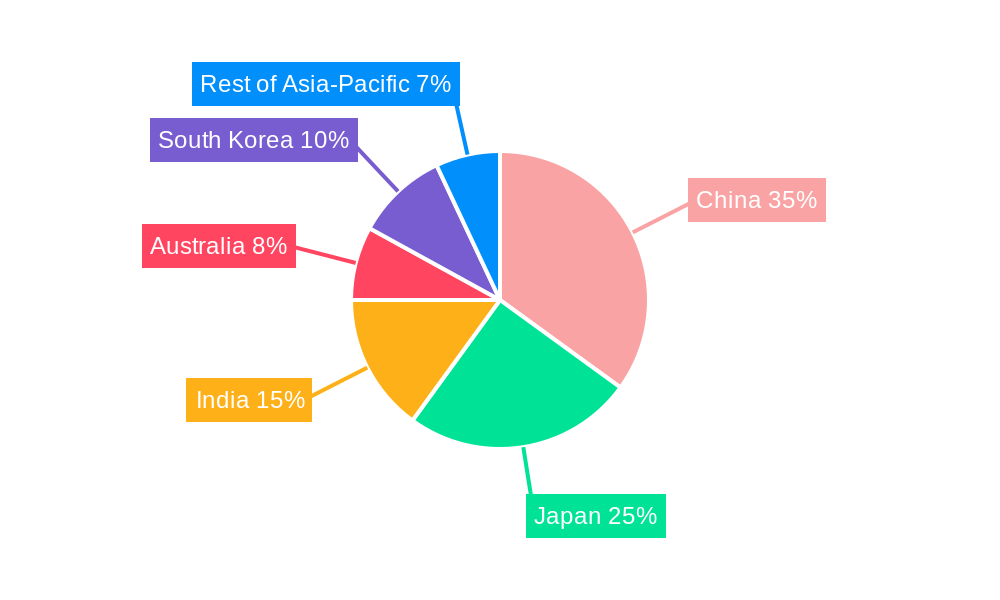
Asia-Pacific Artificial Organs and Bionic Implants Market Regional Market Share
Geographic Coverage of Asia-Pacific Artificial Organs and Bionic Implants Market
Asia-Pacific Artificial Organs and Bionic Implants Market REPORT HIGHLIGHTS
| Aspects | Details |
|---|---|
| Study Period | 2020-2034 |
| Base Year | 2025 |
| Estimated Year | 2026 |
| Forecast Period | 2026-2034 |
| Historical Period | 2020-2025 |
| Growth Rate | CAGR of 8.10% from 2020-2034 |
| Segmentation |
|
Table of Contents
- 1. Introduction
- 1.1. Research Scope
- 1.2. Market Segmentation
- 1.3. Research Methodology
- 1.4. Definitions and Assumptions
- 2. Executive Summary
- 2.1. Introduction
- 3. Market Dynamics
- 3.1. Introduction
- 3.2. Market Drivers
- 3.2.1. Increased Incidence of Disabilities and Rising Number of Road accidents; Technological Advancements Leading to Enhanced Applications
- 3.3. Market Restrains
- 3.3.1. Expensive Procedures and Fear of Device Malfunction and its Consequences
- 3.4. Market Trends
- 3.4.1. Artificial Heart Segment is Expected to Hold a Significant Market Share Over the Forecast Period
- 4. Market Factor Analysis
- 4.1. Porters Five Forces
- 4.2. Supply/Value Chain
- 4.3. PESTEL analysis
- 4.4. Market Entropy
- 4.5. Patent/Trademark Analysis
- 5. Asia-Pacific Artificial Organs and Bionic Implants Market Analysis, Insights and Forecast, 2020-2032
- 5.1. Market Analysis, Insights and Forecast - by Product
- 5.1.1. Artificial Organs
- 5.1.1.1. Artificial Heart
- 5.1.1.2. Artificial Kidney
- 5.1.1.3. Artificial Liver
- 5.1.1.4. Cochlear Implants
- 5.1.1.5. Others
- 5.1.2. Bionics
- 5.1.2.1. Vision Bionics
- 5.1.2.2. Ear Bionics
- 5.1.2.3. Orthopedic Bionic
- 5.1.2.4. Cardiac Bionics
- 5.1.1. Artificial Organs
- 5.2. Market Analysis, Insights and Forecast - by Geography
- 5.2.1. China
- 5.2.2. Japan
- 5.2.3. India
- 5.2.4. Australia
- 5.2.5. South Korea
- 5.2.6. Rest of Asia-Pacific
- 5.3. Market Analysis, Insights and Forecast - by Region
- 5.3.1. China
- 5.3.2. Japan
- 5.3.3. India
- 5.3.4. Australia
- 5.3.5. South Korea
- 5.3.6. Rest of Asia Pacific
- 5.1. Market Analysis, Insights and Forecast - by Product
- 6. China Asia-Pacific Artificial Organs and Bionic Implants Market Analysis, Insights and Forecast, 2020-2032
- 6.1. Market Analysis, Insights and Forecast - by Product
- 6.1.1. Artificial Organs
- 6.1.1.1. Artificial Heart
- 6.1.1.2. Artificial Kidney
- 6.1.1.3. Artificial Liver
- 6.1.1.4. Cochlear Implants
- 6.1.1.5. Others
- 6.1.2. Bionics
- 6.1.2.1. Vision Bionics
- 6.1.2.2. Ear Bionics
- 6.1.2.3. Orthopedic Bionic
- 6.1.2.4. Cardiac Bionics
- 6.1.1. Artificial Organs
- 6.2. Market Analysis, Insights and Forecast - by Geography
- 6.2.1. China
- 6.2.2. Japan
- 6.2.3. India
- 6.2.4. Australia
- 6.2.5. South Korea
- 6.2.6. Rest of Asia-Pacific
- 6.1. Market Analysis, Insights and Forecast - by Product
- 7. Japan Asia-Pacific Artificial Organs and Bionic Implants Market Analysis, Insights and Forecast, 2020-2032
- 7.1. Market Analysis, Insights and Forecast - by Product
- 7.1.1. Artificial Organs
- 7.1.1.1. Artificial Heart
- 7.1.1.2. Artificial Kidney
- 7.1.1.3. Artificial Liver
- 7.1.1.4. Cochlear Implants
- 7.1.1.5. Others
- 7.1.2. Bionics
- 7.1.2.1. Vision Bionics
- 7.1.2.2. Ear Bionics
- 7.1.2.3. Orthopedic Bionic
- 7.1.2.4. Cardiac Bionics
- 7.1.1. Artificial Organs
- 7.2. Market Analysis, Insights and Forecast - by Geography
- 7.2.1. China
- 7.2.2. Japan
- 7.2.3. India
- 7.2.4. Australia
- 7.2.5. South Korea
- 7.2.6. Rest of Asia-Pacific
- 7.1. Market Analysis, Insights and Forecast - by Product
- 8. India Asia-Pacific Artificial Organs and Bionic Implants Market Analysis, Insights and Forecast, 2020-2032
- 8.1. Market Analysis, Insights and Forecast - by Product
- 8.1.1. Artificial Organs
- 8.1.1.1. Artificial Heart
- 8.1.1.2. Artificial Kidney
- 8.1.1.3. Artificial Liver
- 8.1.1.4. Cochlear Implants
- 8.1.1.5. Others
- 8.1.2. Bionics
- 8.1.2.1. Vision Bionics
- 8.1.2.2. Ear Bionics
- 8.1.2.3. Orthopedic Bionic
- 8.1.2.4. Cardiac Bionics
- 8.1.1. Artificial Organs
- 8.2. Market Analysis, Insights and Forecast - by Geography
- 8.2.1. China
- 8.2.2. Japan
- 8.2.3. India
- 8.2.4. Australia
- 8.2.5. South Korea
- 8.2.6. Rest of Asia-Pacific
- 8.1. Market Analysis, Insights and Forecast - by Product
- 9. Australia Asia-Pacific Artificial Organs and Bionic Implants Market Analysis, Insights and Forecast, 2020-2032
- 9.1. Market Analysis, Insights and Forecast - by Product
- 9.1.1. Artificial Organs
- 9.1.1.1. Artificial Heart
- 9.1.1.2. Artificial Kidney
- 9.1.1.3. Artificial Liver
- 9.1.1.4. Cochlear Implants
- 9.1.1.5. Others
- 9.1.2. Bionics
- 9.1.2.1. Vision Bionics
- 9.1.2.2. Ear Bionics
- 9.1.2.3. Orthopedic Bionic
- 9.1.2.4. Cardiac Bionics
- 9.1.1. Artificial Organs
- 9.2. Market Analysis, Insights and Forecast - by Geography
- 9.2.1. China
- 9.2.2. Japan
- 9.2.3. India
- 9.2.4. Australia
- 9.2.5. South Korea
- 9.2.6. Rest of Asia-Pacific
- 9.1. Market Analysis, Insights and Forecast - by Product
- 10. South Korea Asia-Pacific Artificial Organs and Bionic Implants Market Analysis, Insights and Forecast, 2020-2032
- 10.1. Market Analysis, Insights and Forecast - by Product
- 10.1.1. Artificial Organs
- 10.1.1.1. Artificial Heart
- 10.1.1.2. Artificial Kidney
- 10.1.1.3. Artificial Liver
- 10.1.1.4. Cochlear Implants
- 10.1.1.5. Others
- 10.1.2. Bionics
- 10.1.2.1. Vision Bionics
- 10.1.2.2. Ear Bionics
- 10.1.2.3. Orthopedic Bionic
- 10.1.2.4. Cardiac Bionics
- 10.1.1. Artificial Organs
- 10.2. Market Analysis, Insights and Forecast - by Geography
- 10.2.1. China
- 10.2.2. Japan
- 10.2.3. India
- 10.2.4. Australia
- 10.2.5. South Korea
- 10.2.6. Rest of Asia-Pacific
- 10.1. Market Analysis, Insights and Forecast - by Product
- 11. Rest of Asia Pacific Asia-Pacific Artificial Organs and Bionic Implants Market Analysis, Insights and Forecast, 2020-2032
- 11.1. Market Analysis, Insights and Forecast - by Product
- 11.1.1. Artificial Organs
- 11.1.1.1. Artificial Heart
- 11.1.1.2. Artificial Kidney
- 11.1.1.3. Artificial Liver
- 11.1.1.4. Cochlear Implants
- 11.1.1.5. Others
- 11.1.2. Bionics
- 11.1.2.1. Vision Bionics
- 11.1.2.2. Ear Bionics
- 11.1.2.3. Orthopedic Bionic
- 11.1.2.4. Cardiac Bionics
- 11.1.1. Artificial Organs
- 11.2. Market Analysis, Insights and Forecast - by Geography
- 11.2.1. China
- 11.2.2. Japan
- 11.2.3. India
- 11.2.4. Australia
- 11.2.5. South Korea
- 11.2.6. Rest of Asia-Pacific
- 11.1. Market Analysis, Insights and Forecast - by Product
- 12. China Asia-Pacific Artificial Organs and Bionic Implants Market Analysis, Insights and Forecast, 2020-2032
- 13. Japan Asia-Pacific Artificial Organs and Bionic Implants Market Analysis, Insights and Forecast, 2020-2032
- 14. India Asia-Pacific Artificial Organs and Bionic Implants Market Analysis, Insights and Forecast, 2020-2032
- 15. South Korea Asia-Pacific Artificial Organs and Bionic Implants Market Analysis, Insights and Forecast, 2020-2032
- 16. Taiwan Asia-Pacific Artificial Organs and Bionic Implants Market Analysis, Insights and Forecast, 2020-2032
- 17. Australia Asia-Pacific Artificial Organs and Bionic Implants Market Analysis, Insights and Forecast, 2020-2032
- 18. Rest of Asia-Pacific Asia-Pacific Artificial Organs and Bionic Implants Market Analysis, Insights and Forecast, 2020-2032
- 19. Competitive Analysis
- 19.1. Market Share Analysis 2025
- 19.2. Company Profiles
- 19.2.1 Ossur
- 19.2.1.1. Overview
- 19.2.1.2. Products
- 19.2.1.3. SWOT Analysis
- 19.2.1.4. Recent Developments
- 19.2.1.5. Financials (Based on Availability)
- 19.2.2 Edwards Lifesciences Corporation
- 19.2.2.1. Overview
- 19.2.2.2. Products
- 19.2.2.3. SWOT Analysis
- 19.2.2.4. Recent Developments
- 19.2.2.5. Financials (Based on Availability)
- 19.2.3 Abbott (St Jude Medical Inc )
- 19.2.3.1. Overview
- 19.2.3.2. Products
- 19.2.3.3. SWOT Analysis
- 19.2.3.4. Recent Developments
- 19.2.3.5. Financials (Based on Availability)
- 19.2.4 BiVACOR Inc
- 19.2.4.1. Overview
- 19.2.4.2. Products
- 19.2.4.3. SWOT Analysis
- 19.2.4.4. Recent Developments
- 19.2.4.5. Financials (Based on Availability)
- 19.2.5 Sonova Holding AG
- 19.2.5.1. Overview
- 19.2.5.2. Products
- 19.2.5.3. SWOT Analysis
- 19.2.5.4. Recent Developments
- 19.2.5.5. Financials (Based on Availability)
- 19.2.6 Boston Scientific Corporation
- 19.2.6.1. Overview
- 19.2.6.2. Products
- 19.2.6.3. SWOT Analysis
- 19.2.6.4. Recent Developments
- 19.2.6.5. Financials (Based on Availability)
- 19.2.7 Zimmer Biomet
- 19.2.7.1. Overview
- 19.2.7.2. Products
- 19.2.7.3. SWOT Analysis
- 19.2.7.4. Recent Developments
- 19.2.7.5. Financials (Based on Availability)
- 19.2.8 Medtronic plc
- 19.2.8.1. Overview
- 19.2.8.2. Products
- 19.2.8.3. SWOT Analysis
- 19.2.8.4. Recent Developments
- 19.2.8.5. Financials (Based on Availability)
- 19.2.9 Otto Bock Holding GmbH & Co KG
- 19.2.9.1. Overview
- 19.2.9.2. Products
- 19.2.9.3. SWOT Analysis
- 19.2.9.4. Recent Developments
- 19.2.9.5. Financials (Based on Availability)
- 19.2.1 Ossur
List of Figures
- Figure 1: Asia-Pacific Artificial Organs and Bionic Implants Market Revenue Breakdown (Million, %) by Product 2025 & 2033
- Figure 2: Asia-Pacific Artificial Organs and Bionic Implants Market Share (%) by Company 2025
List of Tables
- Table 1: Asia-Pacific Artificial Organs and Bionic Implants Market Revenue Million Forecast, by Region 2020 & 2033
- Table 2: Asia-Pacific Artificial Organs and Bionic Implants Market Volume K Unit Forecast, by Region 2020 & 2033
- Table 3: Asia-Pacific Artificial Organs and Bionic Implants Market Revenue Million Forecast, by Product 2020 & 2033
- Table 4: Asia-Pacific Artificial Organs and Bionic Implants Market Volume K Unit Forecast, by Product 2020 & 2033
- Table 5: Asia-Pacific Artificial Organs and Bionic Implants Market Revenue Million Forecast, by Geography 2020 & 2033
- Table 6: Asia-Pacific Artificial Organs and Bionic Implants Market Volume K Unit Forecast, by Geography 2020 & 2033
- Table 7: Asia-Pacific Artificial Organs and Bionic Implants Market Revenue Million Forecast, by Region 2020 & 2033
- Table 8: Asia-Pacific Artificial Organs and Bionic Implants Market Volume K Unit Forecast, by Region 2020 & 2033
- Table 9: Asia-Pacific Artificial Organs and Bionic Implants Market Revenue Million Forecast, by Country 2020 & 2033
- Table 10: Asia-Pacific Artificial Organs and Bionic Implants Market Volume K Unit Forecast, by Country 2020 & 2033
- Table 11: China Asia-Pacific Artificial Organs and Bionic Implants Market Revenue (Million) Forecast, by Application 2020 & 2033
- Table 12: China Asia-Pacific Artificial Organs and Bionic Implants Market Volume (K Unit) Forecast, by Application 2020 & 2033
- Table 13: Japan Asia-Pacific Artificial Organs and Bionic Implants Market Revenue (Million) Forecast, by Application 2020 & 2033
- Table 14: Japan Asia-Pacific Artificial Organs and Bionic Implants Market Volume (K Unit) Forecast, by Application 2020 & 2033
- Table 15: India Asia-Pacific Artificial Organs and Bionic Implants Market Revenue (Million) Forecast, by Application 2020 & 2033
- Table 16: India Asia-Pacific Artificial Organs and Bionic Implants Market Volume (K Unit) Forecast, by Application 2020 & 2033
- Table 17: South Korea Asia-Pacific Artificial Organs and Bionic Implants Market Revenue (Million) Forecast, by Application 2020 & 2033
- Table 18: South Korea Asia-Pacific Artificial Organs and Bionic Implants Market Volume (K Unit) Forecast, by Application 2020 & 2033
- Table 19: Taiwan Asia-Pacific Artificial Organs and Bionic Implants Market Revenue (Million) Forecast, by Application 2020 & 2033
- Table 20: Taiwan Asia-Pacific Artificial Organs and Bionic Implants Market Volume (K Unit) Forecast, by Application 2020 & 2033
- Table 21: Australia Asia-Pacific Artificial Organs and Bionic Implants Market Revenue (Million) Forecast, by Application 2020 & 2033
- Table 22: Australia Asia-Pacific Artificial Organs and Bionic Implants Market Volume (K Unit) Forecast, by Application 2020 & 2033
- Table 23: Rest of Asia-Pacific Asia-Pacific Artificial Organs and Bionic Implants Market Revenue (Million) Forecast, by Application 2020 & 2033
- Table 24: Rest of Asia-Pacific Asia-Pacific Artificial Organs and Bionic Implants Market Volume (K Unit) Forecast, by Application 2020 & 2033
- Table 25: Asia-Pacific Artificial Organs and Bionic Implants Market Revenue Million Forecast, by Product 2020 & 2033
- Table 26: Asia-Pacific Artificial Organs and Bionic Implants Market Volume K Unit Forecast, by Product 2020 & 2033
- Table 27: Asia-Pacific Artificial Organs and Bionic Implants Market Revenue Million Forecast, by Geography 2020 & 2033
- Table 28: Asia-Pacific Artificial Organs and Bionic Implants Market Volume K Unit Forecast, by Geography 2020 & 2033
- Table 29: Asia-Pacific Artificial Organs and Bionic Implants Market Revenue Million Forecast, by Country 2020 & 2033
- Table 30: Asia-Pacific Artificial Organs and Bionic Implants Market Volume K Unit Forecast, by Country 2020 & 2033
- Table 31: Asia-Pacific Artificial Organs and Bionic Implants Market Revenue Million Forecast, by Product 2020 & 2033
- Table 32: Asia-Pacific Artificial Organs and Bionic Implants Market Volume K Unit Forecast, by Product 2020 & 2033
- Table 33: Asia-Pacific Artificial Organs and Bionic Implants Market Revenue Million Forecast, by Geography 2020 & 2033
- Table 34: Asia-Pacific Artificial Organs and Bionic Implants Market Volume K Unit Forecast, by Geography 2020 & 2033
- Table 35: Asia-Pacific Artificial Organs and Bionic Implants Market Revenue Million Forecast, by Country 2020 & 2033
- Table 36: Asia-Pacific Artificial Organs and Bionic Implants Market Volume K Unit Forecast, by Country 2020 & 2033
- Table 37: Asia-Pacific Artificial Organs and Bionic Implants Market Revenue Million Forecast, by Product 2020 & 2033
- Table 38: Asia-Pacific Artificial Organs and Bionic Implants Market Volume K Unit Forecast, by Product 2020 & 2033
- Table 39: Asia-Pacific Artificial Organs and Bionic Implants Market Revenue Million Forecast, by Geography 2020 & 2033
- Table 40: Asia-Pacific Artificial Organs and Bionic Implants Market Volume K Unit Forecast, by Geography 2020 & 2033
- Table 41: Asia-Pacific Artificial Organs and Bionic Implants Market Revenue Million Forecast, by Country 2020 & 2033
- Table 42: Asia-Pacific Artificial Organs and Bionic Implants Market Volume K Unit Forecast, by Country 2020 & 2033
- Table 43: Asia-Pacific Artificial Organs and Bionic Implants Market Revenue Million Forecast, by Product 2020 & 2033
- Table 44: Asia-Pacific Artificial Organs and Bionic Implants Market Volume K Unit Forecast, by Product 2020 & 2033
- Table 45: Asia-Pacific Artificial Organs and Bionic Implants Market Revenue Million Forecast, by Geography 2020 & 2033
- Table 46: Asia-Pacific Artificial Organs and Bionic Implants Market Volume K Unit Forecast, by Geography 2020 & 2033
- Table 47: Asia-Pacific Artificial Organs and Bionic Implants Market Revenue Million Forecast, by Country 2020 & 2033
- Table 48: Asia-Pacific Artificial Organs and Bionic Implants Market Volume K Unit Forecast, by Country 2020 & 2033
- Table 49: Asia-Pacific Artificial Organs and Bionic Implants Market Revenue Million Forecast, by Product 2020 & 2033
- Table 50: Asia-Pacific Artificial Organs and Bionic Implants Market Volume K Unit Forecast, by Product 2020 & 2033
- Table 51: Asia-Pacific Artificial Organs and Bionic Implants Market Revenue Million Forecast, by Geography 2020 & 2033
- Table 52: Asia-Pacific Artificial Organs and Bionic Implants Market Volume K Unit Forecast, by Geography 2020 & 2033
- Table 53: Asia-Pacific Artificial Organs and Bionic Implants Market Revenue Million Forecast, by Country 2020 & 2033
- Table 54: Asia-Pacific Artificial Organs and Bionic Implants Market Volume K Unit Forecast, by Country 2020 & 2033
- Table 55: Asia-Pacific Artificial Organs and Bionic Implants Market Revenue Million Forecast, by Product 2020 & 2033
- Table 56: Asia-Pacific Artificial Organs and Bionic Implants Market Volume K Unit Forecast, by Product 2020 & 2033
- Table 57: Asia-Pacific Artificial Organs and Bionic Implants Market Revenue Million Forecast, by Geography 2020 & 2033
- Table 58: Asia-Pacific Artificial Organs and Bionic Implants Market Volume K Unit Forecast, by Geography 2020 & 2033
- Table 59: Asia-Pacific Artificial Organs and Bionic Implants Market Revenue Million Forecast, by Country 2020 & 2033
- Table 60: Asia-Pacific Artificial Organs and Bionic Implants Market Volume K Unit Forecast, by Country 2020 & 2033
Frequently Asked Questions
1. What is the projected Compound Annual Growth Rate (CAGR) of the Asia-Pacific Artificial Organs and Bionic Implants Market?
The projected CAGR is approximately 8.10%.
2. Which companies are prominent players in the Asia-Pacific Artificial Organs and Bionic Implants Market?
Key companies in the market include Ossur, Edwards Lifesciences Corporation, Abbott (St Jude Medical Inc ), BiVACOR Inc, Sonova Holding AG, Boston Scientific Corporation, Zimmer Biomet, Medtronic plc, Otto Bock Holding GmbH & Co KG.
3. What are the main segments of the Asia-Pacific Artificial Organs and Bionic Implants Market?
The market segments include Product, Geography.
4. Can you provide details about the market size?
The market size is estimated to be USD 7.59 Million as of 2022.
5. What are some drivers contributing to market growth?
Increased Incidence of Disabilities and Rising Number of Road accidents; Technological Advancements Leading to Enhanced Applications.
6. What are the notable trends driving market growth?
Artificial Heart Segment is Expected to Hold a Significant Market Share Over the Forecast Period.
7. Are there any restraints impacting market growth?
Expensive Procedures and Fear of Device Malfunction and its Consequences.
8. Can you provide examples of recent developments in the market?
September 2022: the Karnataka Institute of Medical Sciences announced to launch of cochlear implant facilities for kids to provide treatment for hearing-impaired patients.
9. What pricing options are available for accessing the report?
Pricing options include single-user, multi-user, and enterprise licenses priced at USD 4750, USD 5250, and USD 8750 respectively.
10. Is the market size provided in terms of value or volume?
The market size is provided in terms of value, measured in Million and volume, measured in K Unit.
11. Are there any specific market keywords associated with the report?
Yes, the market keyword associated with the report is "Asia-Pacific Artificial Organs and Bionic Implants Market," which aids in identifying and referencing the specific market segment covered.
12. How do I determine which pricing option suits my needs best?
The pricing options vary based on user requirements and access needs. Individual users may opt for single-user licenses, while businesses requiring broader access may choose multi-user or enterprise licenses for cost-effective access to the report.
13. Are there any additional resources or data provided in the Asia-Pacific Artificial Organs and Bionic Implants Market report?
While the report offers comprehensive insights, it's advisable to review the specific contents or supplementary materials provided to ascertain if additional resources or data are available.
14. How can I stay updated on further developments or reports in the Asia-Pacific Artificial Organs and Bionic Implants Market?
To stay informed about further developments, trends, and reports in the Asia-Pacific Artificial Organs and Bionic Implants Market, consider subscribing to industry newsletters, following relevant companies and organizations, or regularly checking reputable industry news sources and publications.
Methodology
Step 1 - Identification of Relevant Samples Size from Population Database



Step 2 - Approaches for Defining Global Market Size (Value, Volume* & Price*)

Note*: In applicable scenarios
Step 3 - Data Sources
Primary Research
- Web Analytics
- Survey Reports
- Research Institute
- Latest Research Reports
- Opinion Leaders
Secondary Research
- Annual Reports
- White Paper
- Latest Press Release
- Industry Association
- Paid Database
- Investor Presentations

Step 4 - Data Triangulation
Involves using different sources of information in order to increase the validity of a study
These sources are likely to be stakeholders in a program - participants, other researchers, program staff, other community members, and so on.
Then we put all data in single framework & apply various statistical tools to find out the dynamic on the market.
During the analysis stage, feedback from the stakeholder groups would be compared to determine areas of agreement as well as areas of divergence
