

Key Insights
The Magnetic Resonance Imaging (MRI) market in Germany is poised for robust growth, driven by increasing demand for advanced diagnostic imaging solutions and a strong emphasis on healthcare infrastructure. With an estimated market size of €729.40 million in 2025, the sector is projected to expand at a Compound Annual Growth Rate (CAGR) of 5.71% through 2033. This sustained growth is fueled by factors such as the rising prevalence of chronic diseases like cancer, neurological disorders, and cardiovascular conditions, all of which benefit from the detailed diagnostic capabilities of MRI. Furthermore, continuous technological advancements in MRI systems, including the development of higher field strengths and innovative imaging techniques, are enhancing diagnostic accuracy and patient comfort, thereby stimulating market expansion. The German healthcare system's commitment to adopting cutting-edge medical technology and its aging population contribute significantly to this positive market trajectory.
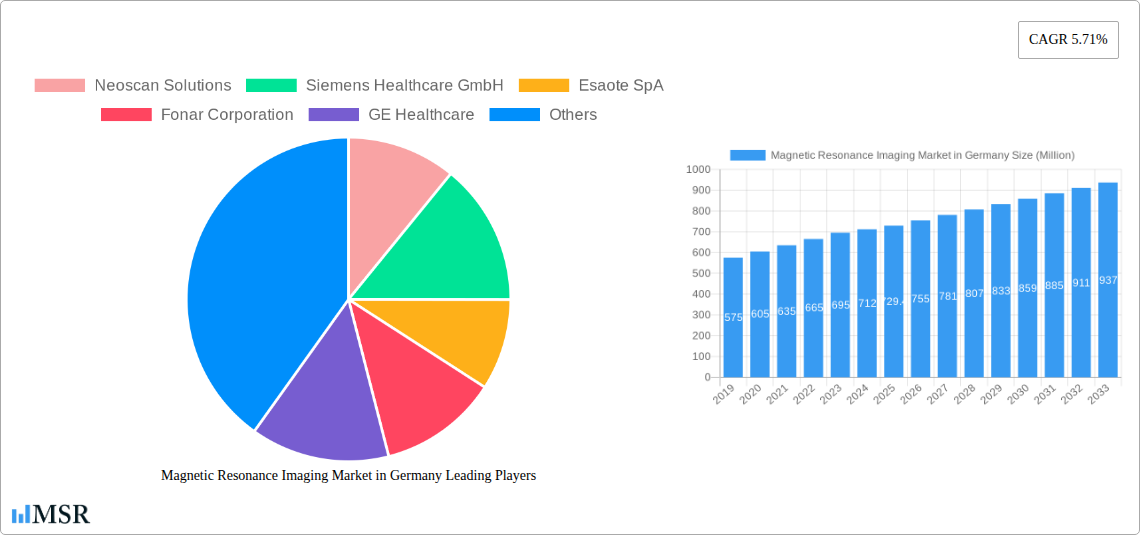
Magnetic Resonance Imaging Market in Germany Market Size (In Million)

The German MRI market is characterized by a dynamic competitive landscape, with both global giants and specialized players vying for market share. Key segments like Oncology and Neurology are expected to remain dominant application areas, given their high diagnostic imaging needs. The increasing adoption of Closed MRI systems, offering superior image quality, will likely drive segment growth, though Open MRI systems will continue to cater to specific patient needs, such as claustrophobic individuals or pediatric patients. Geographically, Germany, as a significant market within Europe, is expected to contribute substantially to the overall European MRI market's growth. The ongoing investment in healthcare facilities and the growing demand for specialized medical services will further bolster the market's momentum. The trend towards more efficient and less invasive diagnostic procedures will continue to position MRI as a cornerstone of modern medical diagnostics in Germany.
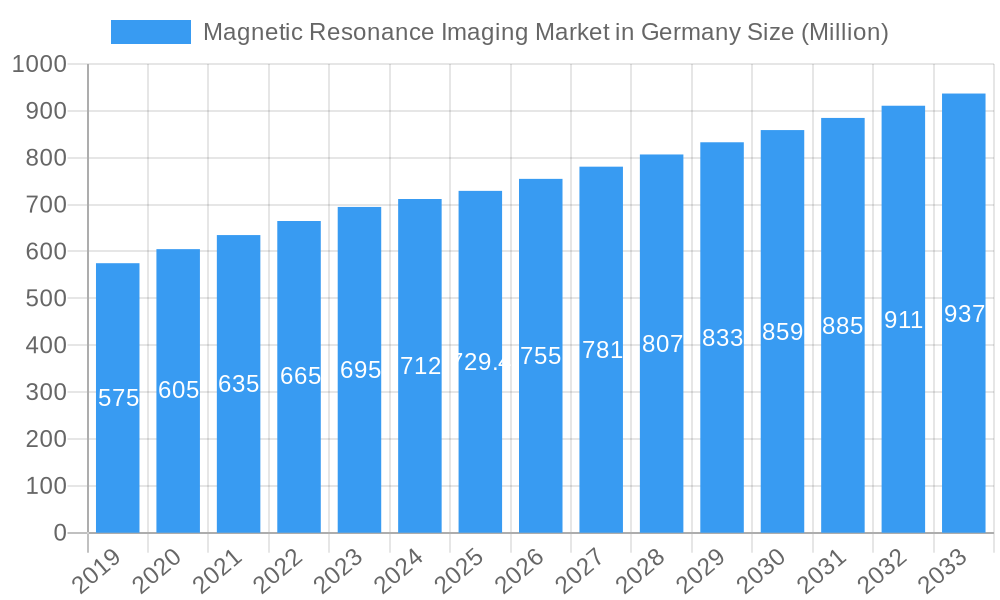
Magnetic Resonance Imaging Market in Germany Company Market Share
Unlocking the Future: Magnetic Resonance Imaging Market in Germany Report Description
Gain comprehensive insights into the dynamic Magnetic Resonance Imaging (MRI) market in Germany. This in-depth report, spanning the Historical Period (2019–2024), Base Year (2025), and Forecast Period (2025–2033), provides strategic intelligence for industry stakeholders. Discover key market drivers, technological advancements, competitive landscapes, and emerging opportunities shaping the German MRI sector. With a focus on Closed MRI Systems, Open MRI Systems, Low Field MRI Systems, High Field MRI Systems, Very High Field MRI Systems, and critical applications in Oncology, Neurology, Cardiology, Gastroenterology, Musculoskeletal, and Other Applications, this report offers actionable data and expert analysis. The Study Period (2019–2033) ensures a complete understanding of market evolution.
Magnetic Resonance Imaging Market in Germany Market Concentration & Dynamics
The German Magnetic Resonance Imaging (MRI) market exhibits a moderate to high concentration, primarily driven by established global players and a few specialized domestic companies. Siemens Healthcare GmbH, GE Healthcare, and Koninklijke Philips NV hold significant market shares, leveraging their extensive product portfolios and robust distribution networks. Innovation ecosystems are flourishing, fueled by Germany's strong research and development infrastructure, particularly within university hospitals and dedicated medical technology research centers. Regulatory frameworks, governed by agencies like the BfArM (Federal Institute for Drugs and Medical Devices), ensure stringent quality and safety standards for MRI devices. Substitute products, such as Computed Tomography (CT) and Ultrasound, offer alternative imaging modalities but are often complementary rather than direct replacements, especially for detailed soft tissue visualization. End-user trends are increasingly focused on patient comfort, reduced scan times, and enhanced diagnostic accuracy, driving demand for advanced MRI technologies. Merger and acquisition (M&A) activities, while not overly aggressive, are present as larger entities seek to consolidate market presence and acquire innovative technologies. For instance, the acquisition of smaller imaging solution providers can bolster market share and expand product offerings. The market anticipates continued consolidation as companies strive for economies of scale and broader market reach within the competitive German landscape.
Magnetic Resonance Imaging Market in Germany Industry Insights & Trends
The Magnetic Resonance Imaging (MRI) market in Germany is poised for substantial growth, projected to reach an estimated XX Billion Euros by 2033, exhibiting a Compound Annual Growth Rate (CAGR) of approximately 5.8% during the forecast period (2025–2033). This expansion is propelled by a confluence of factors, including an aging population, increasing prevalence of chronic diseases such as cancer and neurological disorders, and a growing demand for advanced diagnostic imaging solutions. Technological disruptions are at the forefront, with continuous innovation in MRI hardware and software enhancing image quality, reducing scan times, and improving patient comfort. The development of high-field and very high-field MRI systems is a significant trend, offering unprecedented detail for complex diagnoses in fields like neurology and oncology. Furthermore, the integration of artificial intelligence (AI) in MRI is revolutionizing image analysis, leading to faster and more accurate interpretations. Evolving consumer behaviors, driven by heightened health awareness and a preference for minimally invasive diagnostic procedures, are also contributing to market expansion. Patients and healthcare providers alike are recognizing the superior diagnostic capabilities of MRI, particularly for visualizing soft tissues and distinguishing between healthy and diseased tissues. The German healthcare system's commitment to providing high-quality patient care, coupled with increasing investments in medical infrastructure, further underpins this robust growth trajectory. The market size in the base year of 2025 is estimated to be XX Billion Euros, reflecting consistent growth from the historical period.
Key Markets & Segments Leading Magnetic Resonance Imaging Market in Germany
The German Magnetic Resonance Imaging (MRI) market is characterized by the dominance of specific segments, driven by application needs and technological advancements.
Architecture: Dominance of Closed MRI Systems
Closed MRI Systems: This architecture remains the cornerstone of the German MRI market, accounting for the largest share.
- Driver: Superior image quality and higher magnetic field strengths achievable in closed systems are crucial for precise diagnosis in critical applications like neurology and oncology.
- Dominance Analysis: Closed MRI systems, particularly those with high field strengths, are preferred for their ability to deliver exceptional anatomical detail and functional information. This makes them indispensable for complex diagnostic procedures where subtlety of findings is paramount. The increasing sophistication of neurological and oncological treatments necessitates the diagnostic precision offered by these systems.
Open MRI Systems: While a smaller segment, Open MRI systems are gaining traction, especially in specialized settings.
- Driver: Improved patient comfort and suitability for claustrophobic patients or those requiring continuous monitoring during scans.
- Dominance Analysis: Open MRI systems cater to a niche but growing demand, focusing on patient experience and accessibility. Their use is expanding in outpatient clinics and for specific musculoskeletal or pediatric imaging where patient cooperation is a significant factor.
Closed MRI Systems: This architecture remains the cornerstone of the German MRI market, accounting for the largest share.
- Driver: Superior image quality and higher magnetic field strengths achievable in closed systems are crucial for precise diagnosis in critical applications like neurology and oncology.
- Dominance Analysis: Closed MRI systems, particularly those with high field strengths, are preferred for their ability to deliver exceptional anatomical detail and functional information. This makes them indispensable for complex diagnostic procedures where subtlety of findings is paramount. The increasing sophistication of neurological and oncological treatments necessitates the diagnostic precision offered by these systems.
Open MRI Systems: While a smaller segment, Open MRI systems are gaining traction, especially in specialized settings.
- Driver: Improved patient comfort and suitability for claustrophobic patients or those requiring continuous monitoring during scans.
- Dominance Analysis: Open MRI systems cater to a niche but growing demand, focusing on patient experience and accessibility. Their use is expanding in outpatient clinics and for specific musculoskeletal or pediatric imaging where patient cooperation is a significant factor.
Field Strength: High and Very High Field MRI Systems Leading the Charge
High Field MRI Systems (3T): These systems represent the current standard for advanced diagnostics in Germany.
- Driver: Balance of image quality, scan speed, and cost-effectiveness.
- Dominance Analysis: 3 Tesla (3T) MRI scanners are widely adopted across hospitals and imaging centers due to their excellent signal-to-noise ratio, enabling detailed visualization of anatomy and pathology. They are crucial for a broad range of applications, from routine neurological exams to advanced cardiac imaging.
Very High Field MRI Systems (7T and above): This segment is rapidly growing and critical for cutting-edge research and specialized clinical applications.
- Driver: Unparalleled resolution for intricate anatomical and physiological studies, driving advancements in neuroscience and research.
- Dominance Analysis: 7 Tesla (7T) and even higher field strength systems are becoming increasingly vital for pushing the boundaries of medical research. Their capacity to reveal finer details and functional information is accelerating discoveries in areas such as neurodegenerative diseases, advanced oncological imaging, and functional MRI studies.
High Field MRI Systems (3T): These systems represent the current standard for advanced diagnostics in Germany.
- Driver: Balance of image quality, scan speed, and cost-effectiveness.
- Dominance Analysis: 3 Tesla (3T) MRI scanners are widely adopted across hospitals and imaging centers due to their excellent signal-to-noise ratio, enabling detailed visualization of anatomy and pathology. They are crucial for a broad range of applications, from routine neurological exams to advanced cardiac imaging.
Very High Field MRI Systems (7T and above): This segment is rapidly growing and critical for cutting-edge research and specialized clinical applications.
- Driver: Unparalleled resolution for intricate anatomical and physiological studies, driving advancements in neuroscience and research.
- Dominance Analysis: 7 Tesla (7T) and even higher field strength systems are becoming increasingly vital for pushing the boundaries of medical research. Their capacity to reveal finer details and functional information is accelerating discoveries in areas such as neurodegenerative diseases, advanced oncological imaging, and functional MRI studies.
Application: Neurology and Oncology at the Forefront
Neurology: This is consistently a leading application segment for MRI in Germany.
- Driver: High prevalence of neurological disorders (e.g., stroke, Alzheimer's, Parkinson's, multiple sclerosis) and the critical role of MRI in their diagnosis and management.
- Dominance Analysis: MRI's ability to visualize brain structures, detect lesions, and assess blood flow makes it the gold standard for neurological diagnostics. The increasing understanding of brain function and the development of neurodegenerative disease treatments further solidify its dominance in this sector.
Oncology: A significant and growing application area.
- Driver: Early detection, staging, treatment planning, and monitoring of cancer.
- Dominance Analysis: MRI provides excellent soft tissue contrast, making it invaluable for identifying and characterizing tumors in various organs. Its role in precise radiation therapy planning and evaluating treatment response is paramount, driving continuous demand and innovation in oncological MRI.
Cardiology: A growing application segment with advanced capabilities.
- Driver: Non-invasive assessment of cardiac structure, function, and blood flow; diagnosis of congenital heart disease and acquired conditions.
- Dominance Analysis: Cardiac MRI offers detailed insights into heart muscle health, valve function, and blood vessel integrity without the need for ionizing radiation, making it an increasingly preferred modality for complex cardiac evaluations.
Musculoskeletal (MSK): A fundamental application area with consistent demand.
- Driver: Diagnosis of sports injuries, arthritis, degenerative joint diseases, and spinal conditions.
- Dominance Analysis: MRI's superior soft tissue contrast is ideal for visualizing muscles, ligaments, tendons, and cartilage, making it essential for accurate MSK diagnoses and treatment planning.
Neurology: This is consistently a leading application segment for MRI in Germany.
- Driver: High prevalence of neurological disorders (e.g., stroke, Alzheimer's, Parkinson's, multiple sclerosis) and the critical role of MRI in their diagnosis and management.
- Dominance Analysis: MRI's ability to visualize brain structures, detect lesions, and assess blood flow makes it the gold standard for neurological diagnostics. The increasing understanding of brain function and the development of neurodegenerative disease treatments further solidify its dominance in this sector.
Oncology: A significant and growing application area.
- Driver: Early detection, staging, treatment planning, and monitoring of cancer.
- Dominance Analysis: MRI provides excellent soft tissue contrast, making it invaluable for identifying and characterizing tumors in various organs. Its role in precise radiation therapy planning and evaluating treatment response is paramount, driving continuous demand and innovation in oncological MRI.
Cardiology: A growing application segment with advanced capabilities.
- Driver: Non-invasive assessment of cardiac structure, function, and blood flow; diagnosis of congenital heart disease and acquired conditions.
- Dominance Analysis: Cardiac MRI offers detailed insights into heart muscle health, valve function, and blood vessel integrity without the need for ionizing radiation, making it an increasingly preferred modality for complex cardiac evaluations.
Musculoskeletal (MSK): A fundamental application area with consistent demand.
- Driver: Diagnosis of sports injuries, arthritis, degenerative joint diseases, and spinal conditions.
- Dominance Analysis: MRI's superior soft tissue contrast is ideal for visualizing muscles, ligaments, tendons, and cartilage, making it essential for accurate MSK diagnoses and treatment planning.
Magnetic Resonance Imaging Market in Germany Product Developments
The German MRI market is a hotbed of innovation, with companies consistently introducing advanced solutions. Recent developments include the launch of Magnetom Cima.X2 (3T) and Magnetom Terra.X1 (7T) by Siemens Healthineers, designed for both clinical and scientific use, showcasing advancements in high-field imaging. These products highlight a market trend towards higher field strengths for enhanced diagnostic capabilities and research applications. Furthermore, the successful application of mobile MRI in pediatric ECMO therapy, as studied by Bonn University Hospital, demonstrates the growing versatility and adaptability of MRI technology for critical care settings, opening new avenues for patient monitoring and intervention.
Challenges in the Magnetic Resonance Imaging Market in Germany Market
The German MRI market faces several challenges that can impact growth and adoption. High acquisition costs of advanced MRI systems remain a significant barrier, especially for smaller healthcare facilities. Stringent regulatory approval processes, while ensuring safety, can sometimes lead to extended timelines for new product introductions. Furthermore, the increasing complexity of MRI technology necessitates specialized training for radiographers and radiologists, creating a demand for skilled personnel. The competitive landscape, characterized by established global players, also presents pricing pressures and requires continuous innovation to maintain market share.
Forces Driving Magnetic Resonance Imaging Market in Germany Growth
Several key forces are propelling the growth of the Magnetic Resonance Imaging market in Germany. The rising incidence of chronic diseases, including neurological disorders and cancer, fuels the demand for advanced diagnostic imaging. Technological advancements, such as the development of higher field strength MRI systems and AI-powered image analysis tools, are enhancing diagnostic accuracy and efficiency. Government initiatives promoting healthcare infrastructure development and increased public and private investments in advanced medical technologies also play a crucial role. Furthermore, the growing preference for non-invasive diagnostic methods contributes significantly to the market's expansion.
Challenges in the Magnetic Resonance Imaging Market in Germany Market
Long-term growth catalysts for the German MRI market lie in continued technological innovation and market expansion. The development of more compact and cost-effective MRI systems will broaden accessibility. Further integration of AI for automated image segmentation, quantitative analysis, and predictive diagnostics will enhance workflow efficiency and diagnostic precision. Partnerships between technology providers and healthcare institutions to develop tailored imaging solutions for specific diseases or patient populations will also be critical. Exploring new applications, such as advanced functional MRI for therapeutic monitoring and early disease detection, will further solidify MRI's indispensable role in healthcare.
Emerging Opportunities in Magnetic Resonance Imaging Market in Germany
Emerging opportunities in the German MRI market are centered on niche applications and technological integration. The growing demand for outpatient imaging services presents an opportunity for more accessible and patient-friendly MRI solutions. The increasing focus on personalized medicine and precision diagnostics will drive the need for advanced MRI techniques capable of detailed functional and metabolic assessments. Furthermore, the development of AI-driven AI-powered diagnostic tools for predictive analytics and early disease detection offers significant growth potential. The integration of MRI with other imaging modalities and data sources will also create opportunities for more holistic patient care.
Leading Players in the Magnetic Resonance Imaging Market in Germany Sector
- Neoscan Solutions
- Siemens Healthcare GmbH
- Esaote SpA
- Fonar Corporation
- GE Healthcare
- SternMed GmbH
- Koninklijke Philips NV
- Canon Medical Systems Corporation
- Fujifilm Holdings Corporation
Key Milestones in Magnetic Resonance Imaging Market in Germany Industry
- April 2023: Bonn University Hospital in Germany conducted the first study of children receiving extracorporeal membrane oxygenation (ECMO) therapy using mobile magnetic resonance imaging (MRI). The findings demonstrated the successful application of mobile MRI in this critical care scenario and have been published in the prestigious Critical Care journal.
- November 2022: Siemens Healthineers launched its two latest magnetic resonance tomographs designed for clinical and scientific use at RSNA 2022: Magnetom Cima.X2 with 3T field strength and Magnetom Terra.X1 with 7T.
Strategic Outlook for Magnetic Resonance Imaging Market in Germany Market
The strategic outlook for the Magnetic Resonance Imaging market in Germany is characterized by sustained growth and technological advancement. Key growth accelerators include the continued investment in advanced imaging technologies, particularly in high-field and very high-field MRI, to address the rising burden of chronic diseases. The increasing adoption of AI for enhanced image analysis and workflow optimization will further drive efficiency and accuracy. Strategic partnerships between technology providers and healthcare institutions will be crucial for developing innovative solutions tailored to specific clinical needs and expanding market reach. The focus on patient-centric imaging, offering greater comfort and reduced scan times, will also be a significant differentiator.
Magnetic Resonance Imaging Market in Germany Segmentation
-
1. Architecture
- 1.1. Closed MRI Systems
- 1.2. Open MRI Systems
-
2. Field Strength
- 2.1. Low Field MRI Systems
- 2.2. High Field MRI Systems
- 2.3. Very Hig
-
3. Application
- 3.1. Oncology
- 3.2. Neurology
- 3.3. Cardiology
- 3.4. Gastroenterology
- 3.5. Musculoskeletal
- 3.6. Other Applications
Magnetic Resonance Imaging Market in Germany Segmentation By Geography
-
1. North America
- 1.1. United States
- 1.2. Canada
- 1.3. Mexico
-
2. South America
- 2.1. Brazil
- 2.2. Argentina
- 2.3. Rest of South America
-
3. Europe
- 3.1. United Kingdom
- 3.2. Germany
- 3.3. France
- 3.4. Italy
- 3.5. Spain
- 3.6. Russia
- 3.7. Benelux
- 3.8. Nordics
- 3.9. Rest of Europe
-
4. Middle East & Africa
- 4.1. Turkey
- 4.2. Israel
- 4.3. GCC
- 4.4. North Africa
- 4.5. South Africa
- 4.6. Rest of Middle East & Africa
-
5. Asia Pacific
- 5.1. China
- 5.2. India
- 5.3. Japan
- 5.4. South Korea
- 5.5. ASEAN
- 5.6. Oceania
- 5.7. Rest of Asia Pacific
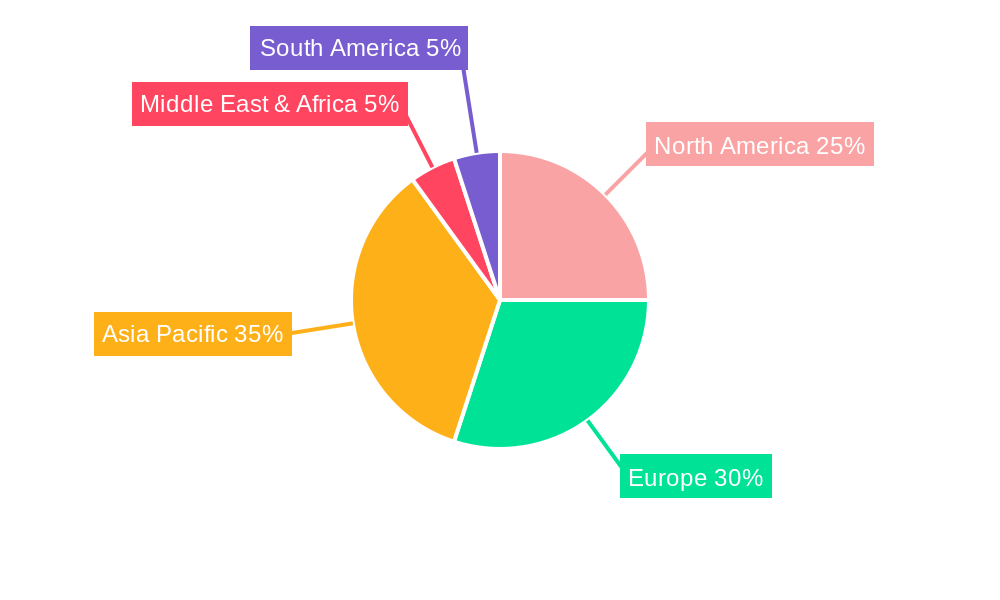
Magnetic Resonance Imaging Market in Germany Regional Market Share
Geographic Coverage of Magnetic Resonance Imaging Market in Germany
Magnetic Resonance Imaging Market in Germany REPORT HIGHLIGHTS
| Aspects | Details |
|---|---|
| Study Period | 2020-2034 |
| Base Year | 2025 |
| Estimated Year | 2026 |
| Forecast Period | 2026-2034 |
| Historical Period | 2020-2025 |
| Growth Rate | CAGR of 5.71% from 2020-2034 |
| Segmentation |
|
Table of Contents
- 1. Introduction
- 1.1. Research Scope
- 1.2. Market Segmentation
- 1.3. Research Methodology
- 1.4. Definitions and Assumptions
- 2. Executive Summary
- 2.1. Introduction
- 3. Market Dynamics
- 3.1. Introduction
- 3.2. Market Drivers
- 3.2.1. Increasing Prevalence of Chronic Diseases; Increasing Technological Advancements
- 3.3. Market Restrains
- 3.3.1. Lack of Proper Reimbursement and Stringent Regulatory Approval Procedures; High Cost of Equipment
- 3.4. Market Trends
- 3.4.1. High Field MRI Segment is Expected to Hold a Significant Market Share Over the Forecast Period
- 4. Market Factor Analysis
- 4.1. Porters Five Forces
- 4.2. Supply/Value Chain
- 4.3. PESTEL analysis
- 4.4. Market Entropy
- 4.5. Patent/Trademark Analysis
- 5. Global Magnetic Resonance Imaging Market in Germany Analysis, Insights and Forecast, 2020-2032
- 5.1. Market Analysis, Insights and Forecast - by Architecture
- 5.1.1. Closed MRI Systems
- 5.1.2. Open MRI Systems
- 5.2. Market Analysis, Insights and Forecast - by Field Strength
- 5.2.1. Low Field MRI Systems
- 5.2.2. High Field MRI Systems
- 5.2.3. Very Hig
- 5.3. Market Analysis, Insights and Forecast - by Application
- 5.3.1. Oncology
- 5.3.2. Neurology
- 5.3.3. Cardiology
- 5.3.4. Gastroenterology
- 5.3.5. Musculoskeletal
- 5.3.6. Other Applications
- 5.4. Market Analysis, Insights and Forecast - by Region
- 5.4.1. North America
- 5.4.2. South America
- 5.4.3. Europe
- 5.4.4. Middle East & Africa
- 5.4.5. Asia Pacific
- 5.1. Market Analysis, Insights and Forecast - by Architecture
- 6. North America Magnetic Resonance Imaging Market in Germany Analysis, Insights and Forecast, 2020-2032
- 6.1. Market Analysis, Insights and Forecast - by Architecture
- 6.1.1. Closed MRI Systems
- 6.1.2. Open MRI Systems
- 6.2. Market Analysis, Insights and Forecast - by Field Strength
- 6.2.1. Low Field MRI Systems
- 6.2.2. High Field MRI Systems
- 6.2.3. Very Hig
- 6.3. Market Analysis, Insights and Forecast - by Application
- 6.3.1. Oncology
- 6.3.2. Neurology
- 6.3.3. Cardiology
- 6.3.4. Gastroenterology
- 6.3.5. Musculoskeletal
- 6.3.6. Other Applications
- 6.1. Market Analysis, Insights and Forecast - by Architecture
- 7. South America Magnetic Resonance Imaging Market in Germany Analysis, Insights and Forecast, 2020-2032
- 7.1. Market Analysis, Insights and Forecast - by Architecture
- 7.1.1. Closed MRI Systems
- 7.1.2. Open MRI Systems
- 7.2. Market Analysis, Insights and Forecast - by Field Strength
- 7.2.1. Low Field MRI Systems
- 7.2.2. High Field MRI Systems
- 7.2.3. Very Hig
- 7.3. Market Analysis, Insights and Forecast - by Application
- 7.3.1. Oncology
- 7.3.2. Neurology
- 7.3.3. Cardiology
- 7.3.4. Gastroenterology
- 7.3.5. Musculoskeletal
- 7.3.6. Other Applications
- 7.1. Market Analysis, Insights and Forecast - by Architecture
- 8. Europe Magnetic Resonance Imaging Market in Germany Analysis, Insights and Forecast, 2020-2032
- 8.1. Market Analysis, Insights and Forecast - by Architecture
- 8.1.1. Closed MRI Systems
- 8.1.2. Open MRI Systems
- 8.2. Market Analysis, Insights and Forecast - by Field Strength
- 8.2.1. Low Field MRI Systems
- 8.2.2. High Field MRI Systems
- 8.2.3. Very Hig
- 8.3. Market Analysis, Insights and Forecast - by Application
- 8.3.1. Oncology
- 8.3.2. Neurology
- 8.3.3. Cardiology
- 8.3.4. Gastroenterology
- 8.3.5. Musculoskeletal
- 8.3.6. Other Applications
- 8.1. Market Analysis, Insights and Forecast - by Architecture
- 9. Middle East & Africa Magnetic Resonance Imaging Market in Germany Analysis, Insights and Forecast, 2020-2032
- 9.1. Market Analysis, Insights and Forecast - by Architecture
- 9.1.1. Closed MRI Systems
- 9.1.2. Open MRI Systems
- 9.2. Market Analysis, Insights and Forecast - by Field Strength
- 9.2.1. Low Field MRI Systems
- 9.2.2. High Field MRI Systems
- 9.2.3. Very Hig
- 9.3. Market Analysis, Insights and Forecast - by Application
- 9.3.1. Oncology
- 9.3.2. Neurology
- 9.3.3. Cardiology
- 9.3.4. Gastroenterology
- 9.3.5. Musculoskeletal
- 9.3.6. Other Applications
- 9.1. Market Analysis, Insights and Forecast - by Architecture
- 10. Asia Pacific Magnetic Resonance Imaging Market in Germany Analysis, Insights and Forecast, 2020-2032
- 10.1. Market Analysis, Insights and Forecast - by Architecture
- 10.1.1. Closed MRI Systems
- 10.1.2. Open MRI Systems
- 10.2. Market Analysis, Insights and Forecast - by Field Strength
- 10.2.1. Low Field MRI Systems
- 10.2.2. High Field MRI Systems
- 10.2.3. Very Hig
- 10.3. Market Analysis, Insights and Forecast - by Application
- 10.3.1. Oncology
- 10.3.2. Neurology
- 10.3.3. Cardiology
- 10.3.4. Gastroenterology
- 10.3.5. Musculoskeletal
- 10.3.6. Other Applications
- 10.1. Market Analysis, Insights and Forecast - by Architecture
- 11. North Rhine-Westphalia Magnetic Resonance Imaging Market in Germany Analysis, Insights and Forecast, 2020-2032
- 12. Bavaria Magnetic Resonance Imaging Market in Germany Analysis, Insights and Forecast, 2020-2032
- 13. Baden-Württemberg Magnetic Resonance Imaging Market in Germany Analysis, Insights and Forecast, 2020-2032
- 14. Lower Saxony Magnetic Resonance Imaging Market in Germany Analysis, Insights and Forecast, 2020-2032
- 15. Hesse Magnetic Resonance Imaging Market in Germany Analysis, Insights and Forecast, 2020-2032
- 16. Competitive Analysis
- 16.1. Global Market Share Analysis 2025
- 16.2. Company Profiles
- 16.2.1 Neoscan Solutions
- 16.2.1.1. Overview
- 16.2.1.2. Products
- 16.2.1.3. SWOT Analysis
- 16.2.1.4. Recent Developments
- 16.2.1.5. Financials (Based on Availability)
- 16.2.2 Siemens Healthcare GmbH
- 16.2.2.1. Overview
- 16.2.2.2. Products
- 16.2.2.3. SWOT Analysis
- 16.2.2.4. Recent Developments
- 16.2.2.5. Financials (Based on Availability)
- 16.2.3 Esaote SpA
- 16.2.3.1. Overview
- 16.2.3.2. Products
- 16.2.3.3. SWOT Analysis
- 16.2.3.4. Recent Developments
- 16.2.3.5. Financials (Based on Availability)
- 16.2.4 Fonar Corporation
- 16.2.4.1. Overview
- 16.2.4.2. Products
- 16.2.4.3. SWOT Analysis
- 16.2.4.4. Recent Developments
- 16.2.4.5. Financials (Based on Availability)
- 16.2.5 GE Healthcare
- 16.2.5.1. Overview
- 16.2.5.2. Products
- 16.2.5.3. SWOT Analysis
- 16.2.5.4. Recent Developments
- 16.2.5.5. Financials (Based on Availability)
- 16.2.6 SternMed GmbH
- 16.2.6.1. Overview
- 16.2.6.2. Products
- 16.2.6.3. SWOT Analysis
- 16.2.6.4. Recent Developments
- 16.2.6.5. Financials (Based on Availability)
- 16.2.7 Koninklijke Philips NV
- 16.2.7.1. Overview
- 16.2.7.2. Products
- 16.2.7.3. SWOT Analysis
- 16.2.7.4. Recent Developments
- 16.2.7.5. Financials (Based on Availability)
- 16.2.8 Canon Medical Systems Corporation
- 16.2.8.1. Overview
- 16.2.8.2. Products
- 16.2.8.3. SWOT Analysis
- 16.2.8.4. Recent Developments
- 16.2.8.5. Financials (Based on Availability)
- 16.2.9 Fujifilm Holdings Corporation
- 16.2.9.1. Overview
- 16.2.9.2. Products
- 16.2.9.3. SWOT Analysis
- 16.2.9.4. Recent Developments
- 16.2.9.5. Financials (Based on Availability)
- 16.2.1 Neoscan Solutions
List of Figures
- Figure 1: Global Magnetic Resonance Imaging Market in Germany Revenue Breakdown (Million, %) by Region 2025 & 2033
- Figure 2: Germany Magnetic Resonance Imaging Market in Germany Revenue (Million), by Country 2025 & 2033
- Figure 3: Germany Magnetic Resonance Imaging Market in Germany Revenue Share (%), by Country 2025 & 2033
- Figure 4: North America Magnetic Resonance Imaging Market in Germany Revenue (Million), by Architecture 2025 & 2033
- Figure 5: North America Magnetic Resonance Imaging Market in Germany Revenue Share (%), by Architecture 2025 & 2033
- Figure 6: North America Magnetic Resonance Imaging Market in Germany Revenue (Million), by Field Strength 2025 & 2033
- Figure 7: North America Magnetic Resonance Imaging Market in Germany Revenue Share (%), by Field Strength 2025 & 2033
- Figure 8: North America Magnetic Resonance Imaging Market in Germany Revenue (Million), by Application 2025 & 2033
- Figure 9: North America Magnetic Resonance Imaging Market in Germany Revenue Share (%), by Application 2025 & 2033
- Figure 10: North America Magnetic Resonance Imaging Market in Germany Revenue (Million), by Country 2025 & 2033
- Figure 11: North America Magnetic Resonance Imaging Market in Germany Revenue Share (%), by Country 2025 & 2033
- Figure 12: South America Magnetic Resonance Imaging Market in Germany Revenue (Million), by Architecture 2025 & 2033
- Figure 13: South America Magnetic Resonance Imaging Market in Germany Revenue Share (%), by Architecture 2025 & 2033
- Figure 14: South America Magnetic Resonance Imaging Market in Germany Revenue (Million), by Field Strength 2025 & 2033
- Figure 15: South America Magnetic Resonance Imaging Market in Germany Revenue Share (%), by Field Strength 2025 & 2033
- Figure 16: South America Magnetic Resonance Imaging Market in Germany Revenue (Million), by Application 2025 & 2033
- Figure 17: South America Magnetic Resonance Imaging Market in Germany Revenue Share (%), by Application 2025 & 2033
- Figure 18: South America Magnetic Resonance Imaging Market in Germany Revenue (Million), by Country 2025 & 2033
- Figure 19: South America Magnetic Resonance Imaging Market in Germany Revenue Share (%), by Country 2025 & 2033
- Figure 20: Europe Magnetic Resonance Imaging Market in Germany Revenue (Million), by Architecture 2025 & 2033
- Figure 21: Europe Magnetic Resonance Imaging Market in Germany Revenue Share (%), by Architecture 2025 & 2033
- Figure 22: Europe Magnetic Resonance Imaging Market in Germany Revenue (Million), by Field Strength 2025 & 2033
- Figure 23: Europe Magnetic Resonance Imaging Market in Germany Revenue Share (%), by Field Strength 2025 & 2033
- Figure 24: Europe Magnetic Resonance Imaging Market in Germany Revenue (Million), by Application 2025 & 2033
- Figure 25: Europe Magnetic Resonance Imaging Market in Germany Revenue Share (%), by Application 2025 & 2033
- Figure 26: Europe Magnetic Resonance Imaging Market in Germany Revenue (Million), by Country 2025 & 2033
- Figure 27: Europe Magnetic Resonance Imaging Market in Germany Revenue Share (%), by Country 2025 & 2033
- Figure 28: Middle East & Africa Magnetic Resonance Imaging Market in Germany Revenue (Million), by Architecture 2025 & 2033
- Figure 29: Middle East & Africa Magnetic Resonance Imaging Market in Germany Revenue Share (%), by Architecture 2025 & 2033
- Figure 30: Middle East & Africa Magnetic Resonance Imaging Market in Germany Revenue (Million), by Field Strength 2025 & 2033
- Figure 31: Middle East & Africa Magnetic Resonance Imaging Market in Germany Revenue Share (%), by Field Strength 2025 & 2033
- Figure 32: Middle East & Africa Magnetic Resonance Imaging Market in Germany Revenue (Million), by Application 2025 & 2033
- Figure 33: Middle East & Africa Magnetic Resonance Imaging Market in Germany Revenue Share (%), by Application 2025 & 2033
- Figure 34: Middle East & Africa Magnetic Resonance Imaging Market in Germany Revenue (Million), by Country 2025 & 2033
- Figure 35: Middle East & Africa Magnetic Resonance Imaging Market in Germany Revenue Share (%), by Country 2025 & 2033
- Figure 36: Asia Pacific Magnetic Resonance Imaging Market in Germany Revenue (Million), by Architecture 2025 & 2033
- Figure 37: Asia Pacific Magnetic Resonance Imaging Market in Germany Revenue Share (%), by Architecture 2025 & 2033
- Figure 38: Asia Pacific Magnetic Resonance Imaging Market in Germany Revenue (Million), by Field Strength 2025 & 2033
- Figure 39: Asia Pacific Magnetic Resonance Imaging Market in Germany Revenue Share (%), by Field Strength 2025 & 2033
- Figure 40: Asia Pacific Magnetic Resonance Imaging Market in Germany Revenue (Million), by Application 2025 & 2033
- Figure 41: Asia Pacific Magnetic Resonance Imaging Market in Germany Revenue Share (%), by Application 2025 & 2033
- Figure 42: Asia Pacific Magnetic Resonance Imaging Market in Germany Revenue (Million), by Country 2025 & 2033
- Figure 43: Asia Pacific Magnetic Resonance Imaging Market in Germany Revenue Share (%), by Country 2025 & 2033
List of Tables
- Table 1: Global Magnetic Resonance Imaging Market in Germany Revenue Million Forecast, by Region 2020 & 2033
- Table 2: Global Magnetic Resonance Imaging Market in Germany Revenue Million Forecast, by Architecture 2020 & 2033
- Table 3: Global Magnetic Resonance Imaging Market in Germany Revenue Million Forecast, by Field Strength 2020 & 2033
- Table 4: Global Magnetic Resonance Imaging Market in Germany Revenue Million Forecast, by Application 2020 & 2033
- Table 5: Global Magnetic Resonance Imaging Market in Germany Revenue Million Forecast, by Region 2020 & 2033
- Table 6: Global Magnetic Resonance Imaging Market in Germany Revenue Million Forecast, by Country 2020 & 2033
- Table 7: North Rhine-Westphalia Magnetic Resonance Imaging Market in Germany Revenue (Million) Forecast, by Application 2020 & 2033
- Table 8: Bavaria Magnetic Resonance Imaging Market in Germany Revenue (Million) Forecast, by Application 2020 & 2033
- Table 9: Baden-Württemberg Magnetic Resonance Imaging Market in Germany Revenue (Million) Forecast, by Application 2020 & 2033
- Table 10: Lower Saxony Magnetic Resonance Imaging Market in Germany Revenue (Million) Forecast, by Application 2020 & 2033
- Table 11: Hesse Magnetic Resonance Imaging Market in Germany Revenue (Million) Forecast, by Application 2020 & 2033
- Table 12: Global Magnetic Resonance Imaging Market in Germany Revenue Million Forecast, by Architecture 2020 & 2033
- Table 13: Global Magnetic Resonance Imaging Market in Germany Revenue Million Forecast, by Field Strength 2020 & 2033
- Table 14: Global Magnetic Resonance Imaging Market in Germany Revenue Million Forecast, by Application 2020 & 2033
- Table 15: Global Magnetic Resonance Imaging Market in Germany Revenue Million Forecast, by Country 2020 & 2033
- Table 16: United States Magnetic Resonance Imaging Market in Germany Revenue (Million) Forecast, by Application 2020 & 2033
- Table 17: Canada Magnetic Resonance Imaging Market in Germany Revenue (Million) Forecast, by Application 2020 & 2033
- Table 18: Mexico Magnetic Resonance Imaging Market in Germany Revenue (Million) Forecast, by Application 2020 & 2033
- Table 19: Global Magnetic Resonance Imaging Market in Germany Revenue Million Forecast, by Architecture 2020 & 2033
- Table 20: Global Magnetic Resonance Imaging Market in Germany Revenue Million Forecast, by Field Strength 2020 & 2033
- Table 21: Global Magnetic Resonance Imaging Market in Germany Revenue Million Forecast, by Application 2020 & 2033
- Table 22: Global Magnetic Resonance Imaging Market in Germany Revenue Million Forecast, by Country 2020 & 2033
- Table 23: Brazil Magnetic Resonance Imaging Market in Germany Revenue (Million) Forecast, by Application 2020 & 2033
- Table 24: Argentina Magnetic Resonance Imaging Market in Germany Revenue (Million) Forecast, by Application 2020 & 2033
- Table 25: Rest of South America Magnetic Resonance Imaging Market in Germany Revenue (Million) Forecast, by Application 2020 & 2033
- Table 26: Global Magnetic Resonance Imaging Market in Germany Revenue Million Forecast, by Architecture 2020 & 2033
- Table 27: Global Magnetic Resonance Imaging Market in Germany Revenue Million Forecast, by Field Strength 2020 & 2033
- Table 28: Global Magnetic Resonance Imaging Market in Germany Revenue Million Forecast, by Application 2020 & 2033
- Table 29: Global Magnetic Resonance Imaging Market in Germany Revenue Million Forecast, by Country 2020 & 2033
- Table 30: United Kingdom Magnetic Resonance Imaging Market in Germany Revenue (Million) Forecast, by Application 2020 & 2033
- Table 31: Germany Magnetic Resonance Imaging Market in Germany Revenue (Million) Forecast, by Application 2020 & 2033
- Table 32: France Magnetic Resonance Imaging Market in Germany Revenue (Million) Forecast, by Application 2020 & 2033
- Table 33: Italy Magnetic Resonance Imaging Market in Germany Revenue (Million) Forecast, by Application 2020 & 2033
- Table 34: Spain Magnetic Resonance Imaging Market in Germany Revenue (Million) Forecast, by Application 2020 & 2033
- Table 35: Russia Magnetic Resonance Imaging Market in Germany Revenue (Million) Forecast, by Application 2020 & 2033
- Table 36: Benelux Magnetic Resonance Imaging Market in Germany Revenue (Million) Forecast, by Application 2020 & 2033
- Table 37: Nordics Magnetic Resonance Imaging Market in Germany Revenue (Million) Forecast, by Application 2020 & 2033
- Table 38: Rest of Europe Magnetic Resonance Imaging Market in Germany Revenue (Million) Forecast, by Application 2020 & 2033
- Table 39: Global Magnetic Resonance Imaging Market in Germany Revenue Million Forecast, by Architecture 2020 & 2033
- Table 40: Global Magnetic Resonance Imaging Market in Germany Revenue Million Forecast, by Field Strength 2020 & 2033
- Table 41: Global Magnetic Resonance Imaging Market in Germany Revenue Million Forecast, by Application 2020 & 2033
- Table 42: Global Magnetic Resonance Imaging Market in Germany Revenue Million Forecast, by Country 2020 & 2033
- Table 43: Turkey Magnetic Resonance Imaging Market in Germany Revenue (Million) Forecast, by Application 2020 & 2033
- Table 44: Israel Magnetic Resonance Imaging Market in Germany Revenue (Million) Forecast, by Application 2020 & 2033
- Table 45: GCC Magnetic Resonance Imaging Market in Germany Revenue (Million) Forecast, by Application 2020 & 2033
- Table 46: North Africa Magnetic Resonance Imaging Market in Germany Revenue (Million) Forecast, by Application 2020 & 2033
- Table 47: South Africa Magnetic Resonance Imaging Market in Germany Revenue (Million) Forecast, by Application 2020 & 2033
- Table 48: Rest of Middle East & Africa Magnetic Resonance Imaging Market in Germany Revenue (Million) Forecast, by Application 2020 & 2033
- Table 49: Global Magnetic Resonance Imaging Market in Germany Revenue Million Forecast, by Architecture 2020 & 2033
- Table 50: Global Magnetic Resonance Imaging Market in Germany Revenue Million Forecast, by Field Strength 2020 & 2033
- Table 51: Global Magnetic Resonance Imaging Market in Germany Revenue Million Forecast, by Application 2020 & 2033
- Table 52: Global Magnetic Resonance Imaging Market in Germany Revenue Million Forecast, by Country 2020 & 2033
- Table 53: China Magnetic Resonance Imaging Market in Germany Revenue (Million) Forecast, by Application 2020 & 2033
- Table 54: India Magnetic Resonance Imaging Market in Germany Revenue (Million) Forecast, by Application 2020 & 2033
- Table 55: Japan Magnetic Resonance Imaging Market in Germany Revenue (Million) Forecast, by Application 2020 & 2033
- Table 56: South Korea Magnetic Resonance Imaging Market in Germany Revenue (Million) Forecast, by Application 2020 & 2033
- Table 57: ASEAN Magnetic Resonance Imaging Market in Germany Revenue (Million) Forecast, by Application 2020 & 2033
- Table 58: Oceania Magnetic Resonance Imaging Market in Germany Revenue (Million) Forecast, by Application 2020 & 2033
- Table 59: Rest of Asia Pacific Magnetic Resonance Imaging Market in Germany Revenue (Million) Forecast, by Application 2020 & 2033
Frequently Asked Questions
1. What is the projected Compound Annual Growth Rate (CAGR) of the Magnetic Resonance Imaging Market in Germany?
The projected CAGR is approximately 5.71%.
2. Which companies are prominent players in the Magnetic Resonance Imaging Market in Germany?
Key companies in the market include Neoscan Solutions, Siemens Healthcare GmbH, Esaote SpA, Fonar Corporation, GE Healthcare, SternMed GmbH, Koninklijke Philips NV, Canon Medical Systems Corporation, Fujifilm Holdings Corporation.
3. What are the main segments of the Magnetic Resonance Imaging Market in Germany?
The market segments include Architecture, Field Strength, Application.
4. Can you provide details about the market size?
The market size is estimated to be USD 729.40 Million as of 2022.
5. What are some drivers contributing to market growth?
Increasing Prevalence of Chronic Diseases; Increasing Technological Advancements.
6. What are the notable trends driving market growth?
High Field MRI Segment is Expected to Hold a Significant Market Share Over the Forecast Period.
7. Are there any restraints impacting market growth?
Lack of Proper Reimbursement and Stringent Regulatory Approval Procedures; High Cost of Equipment.
8. Can you provide examples of recent developments in the market?
April 2023: Bonn University Hospital in Germany conducted the first study of children receiving extracorporeal membrane oxygenation (ECMO), therapy using mobile magnetic resonance imaging (MRI). The ECMO procedure involves oxygenating the blood outside the body. The findings demonstrated that the first four pediatric ECMO patients using the mobile MRI have been published in the prestigious Critical Care journal.
9. What pricing options are available for accessing the report?
Pricing options include single-user, multi-user, and enterprise licenses priced at USD 3800, USD 4500, and USD 5800 respectively.
10. Is the market size provided in terms of value or volume?
The market size is provided in terms of value, measured in Million.
11. Are there any specific market keywords associated with the report?
Yes, the market keyword associated with the report is "Magnetic Resonance Imaging Market in Germany," which aids in identifying and referencing the specific market segment covered.
12. How do I determine which pricing option suits my needs best?
The pricing options vary based on user requirements and access needs. Individual users may opt for single-user licenses, while businesses requiring broader access may choose multi-user or enterprise licenses for cost-effective access to the report.
13. Are there any additional resources or data provided in the Magnetic Resonance Imaging Market in Germany report?
While the report offers comprehensive insights, it's advisable to review the specific contents or supplementary materials provided to ascertain if additional resources or data are available.
14. How can I stay updated on further developments or reports in the Magnetic Resonance Imaging Market in Germany?
To stay informed about further developments, trends, and reports in the Magnetic Resonance Imaging Market in Germany, consider subscribing to industry newsletters, following relevant companies and organizations, or regularly checking reputable industry news sources and publications.
Methodology
Step 1 - Identification of Relevant Samples Size from Population Database



Step 2 - Approaches for Defining Global Market Size (Value, Volume* & Price*)

Note*: In applicable scenarios
Step 3 - Data Sources
Primary Research
- Web Analytics
- Survey Reports
- Research Institute
- Latest Research Reports
- Opinion Leaders
Secondary Research
- Annual Reports
- White Paper
- Latest Press Release
- Industry Association
- Paid Database
- Investor Presentations

Step 4 - Data Triangulation
Involves using different sources of information in order to increase the validity of a study
These sources are likely to be stakeholders in a program - participants, other researchers, program staff, other community members, and so on.
Then we put all data in single framework & apply various statistical tools to find out the dynamic on the market.
During the analysis stage, feedback from the stakeholder groups would be compared to determine areas of agreement as well as areas of divergence
