

Key Insights
The South Korean Minimally Invasive Surgery (MIS) Devices Market is poised for significant expansion, driven by a confluence of technological advancements, an aging population, and increasing patient demand for less invasive procedures. With an estimated market size of approximately $750 million in 2025, the market is projected to grow at a robust Compound Annual Growth Rate (CAGR) of 8.40% from 2025 to 2033. This sustained growth is fueled by key market drivers such as the increasing prevalence of chronic diseases like cardiovascular and gastrointestinal disorders, necessitating advanced surgical interventions. Furthermore, the rising adoption of robotic-assisted surgical systems and sophisticated endoscopic and laparoscopic devices is enhancing surgical precision and patient outcomes, thereby boosting market penetration. The trend towards value-based healthcare and the government's focus on promoting advanced medical technologies also contribute to the market's upward trajectory.
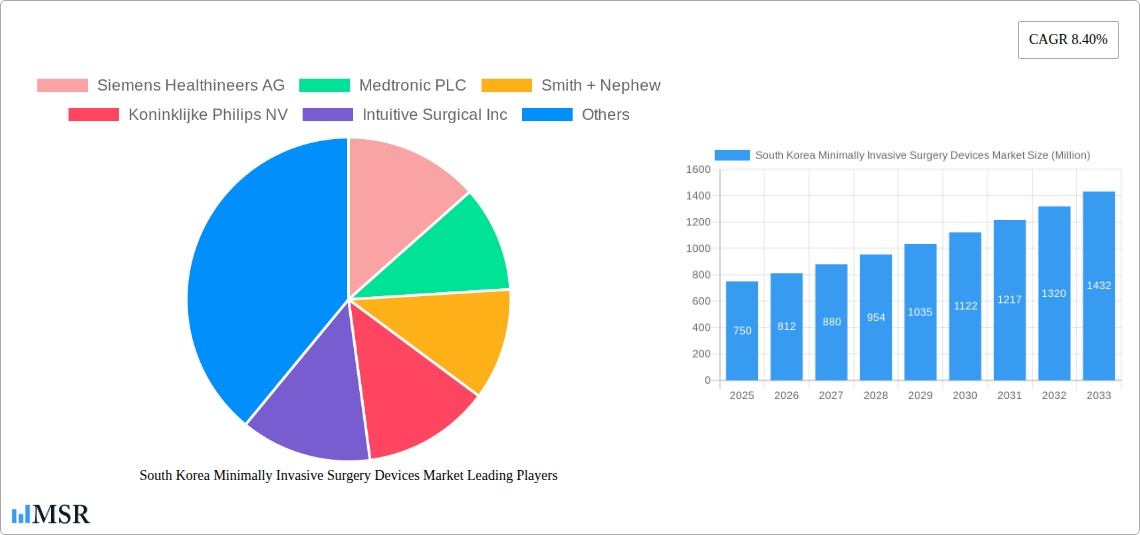
South Korea Minimally Invasive Surgery Devices Market Market Size (In Million)

Despite the strong growth outlook, certain restraints could influence the market's pace. High initial costs associated with advanced MIS devices, including robotic systems, and the need for specialized training for surgeons present significant barriers to widespread adoption, particularly in smaller or less-resourced healthcare facilities. Nevertheless, the strategic importance of MIS in improving patient recovery times, reducing hospital stays, and lowering overall healthcare expenditure is expected to outweigh these challenges. Key segments showing strong demand include cardiovascular, orthopedic, and gynecological applications, with handheld instruments, guiding devices, and electrosurgical devices forming the core product categories. Major global players like Medtronic PLC, Intuitive Surgical Inc., and Siemens Healthineers AG are actively investing in research and development to introduce innovative solutions tailored for the South Korean market, further solidifying its growth potential.
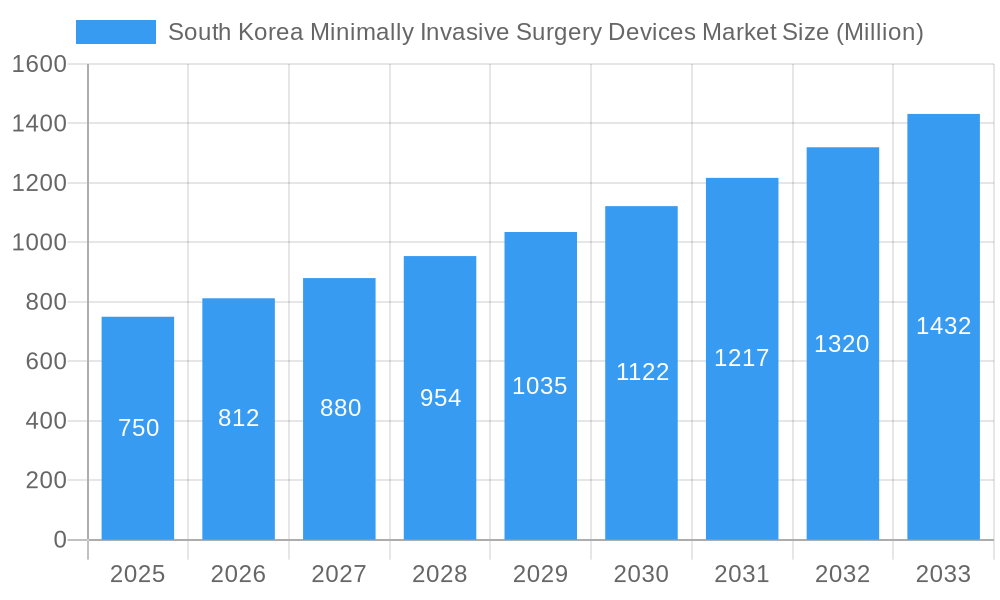
South Korea Minimally Invasive Surgery Devices Market Company Market Share
Here's the SEO-optimized and engaging report description for the South Korea Minimally Invasive Surgery Devices Market, crafted with high-ranking keywords and structured for clarity and actionable insights:
This comprehensive report provides a detailed analysis of the South Korea Minimally Invasive Surgery (MIS) Devices Market, offering critical insights into its current landscape and future trajectory. Covering the study period from 2019 to 2033, with a base year of 2025 and a forecast period extending to 2033, this report is essential for understanding the dynamics of this rapidly growing sector. We delve deep into market size, CAGR, key growth drivers, emerging trends, and the competitive strategies of leading players.
This research report is designed to equip industry stakeholders, including manufacturers, suppliers, investors, and healthcare providers, with the strategic intelligence needed to navigate the South Korean surgical technology market. Our analysis encompasses robotic assisted surgical systems, endoscopic devices, laparoscopic devices, and other advanced medical devices for surgery. We also examine the impact of new technologies on applications such as cardiovascular surgery, gastrointestinal procedures, gynecological treatments, and orthopedic surgery.
The South Korea MIS Devices Market is experiencing robust expansion driven by increasing adoption of advanced surgical techniques, a favorable healthcare infrastructure, and government initiatives promoting medical innovation. This report offers a meticulous breakdown of market segmentation, product developments, and the competitive environment, providing a 360-degree view of the industry.
South Korea Minimally Invasive Surgery Devices Market Market Concentration & Dynamics
The South Korea Minimally Invasive Surgery Devices Market exhibits a dynamic interplay between established global players and burgeoning local innovators. Market concentration is moderately high, with key companies like Medtronic PLC, Siemens Healthineers AG, Intuitive Surgical Inc., and Olympus Corporation holding significant market share. However, the landscape is evolving, fueled by a robust innovation ecosystem and increasing venture capital investment in surgical robotics and advanced medical instruments. Regulatory frameworks in South Korea, overseen by agencies like the Ministry of Food and Drug Safety (MFDS), are becoming increasingly sophisticated, focusing on patient safety and device efficacy, which can influence market entry strategies. The threat of substitute products is present but largely contained within specific niches, as the benefits of MIS for reduced patient trauma and faster recovery times remain paramount. End-user trends, particularly the growing demand for less invasive procedures in cardiovascular, gastrointestinal, and orthopedic applications, are shaping product development and market demand. Mergers and acquisitions (M&A) activities, such as Boston Scientific's acquisition of M.I.Tech, indicate a strategic consolidation and expansion drive within the market. The overall M&A deal count is projected to remain steady, reflecting the market's maturity and the pursuit of synergistic growth.
South Korea Minimally Invasive Surgery Devices Market Industry Insights & Trends
The South Korea Minimally Invasive Surgery Devices Market is poised for substantial growth, projected to reach an estimated market size of USD 2,500 Million by 2033, expanding at a Compound Annual Growth Rate (CAGR) of XX% during the forecast period (2025-2033). This expansion is primarily driven by the increasing preference for minimally invasive procedures over traditional open surgeries, owing to benefits such as reduced hospital stays, faster patient recovery, minimized scarring, and lower risk of complications. The aging population in South Korea, coupled with a rising prevalence of chronic diseases requiring surgical intervention, such as cardiovascular and gastrointestinal disorders, further bolsters the demand for MIS devices. Technological advancements are a cornerstone of this market's growth. The integration of artificial intelligence (AI) and machine learning (ML) into surgical platforms, the development of miniaturized and advanced endoscopic devices, and the proliferation of robotic assisted surgical systems are revolutionizing surgical practices. Companies are heavily investing in research and development to introduce innovative solutions that enhance surgical precision and patient outcomes. Furthermore, supportive government policies promoting the adoption of advanced medical technologies and investments in healthcare infrastructure are creating a conducive environment for market expansion. The increasing disposable income and growing health consciousness among the South Korean population also contribute to the demand for sophisticated and effective medical treatments. The market is witnessing a surge in demand for specialized MIS devices catering to niche applications like urological procedures, gynecological treatments, and aesthetic surgery, further diversifying the market landscape. The focus on value-based healthcare and the reimbursement landscape also plays a crucial role, encouraging the adoption of cost-effective and efficient MIS solutions.
Key Markets & Segments Leading South Korea Minimally Invasive Surgery Devices Market
The South Korea Minimally Invasive Surgery Devices Market is experiencing dynamic shifts across its various segments, with specific product categories and application areas demonstrating exceptional growth.
Dominant Product Segments:
- Robotic Assisted Surgical Systems: This segment is at the forefront of innovation and market expansion. The increasing investment in advanced surgical technology by leading hospitals, coupled with the growing demand for precision and automation in complex procedures, is driving the adoption of robotic systems. These systems offer enhanced dexterity, visualization, and control, leading to improved patient outcomes and reduced surgeon fatigue.
- Endoscopic Devices: This broad category, encompassing flexible and rigid endoscopes, is crucial for diagnostic and therapeutic interventions across numerous medical specialties. The development of high-definition imaging capabilities, miniaturization, and integrated therapeutic tools continues to fuel growth in this segment, particularly for gastrointestinal and respiratory tract examinations.
- Laparoscopic Devices: Essential for a wide range of abdominal surgeries, laparoscopic instruments continue to be a cornerstone of MIS. Innovations in energy devices, graspers, and retractors, along with improved insufflation and visualization technologies, ensure their sustained relevance and market share.
Dominant Application Segments:
- Cardiovascular: The demand for minimally invasive cardiac surgery (MICS) procedures is rapidly increasing in South Korea due to the aging population and the prevalence of cardiovascular diseases. MIS techniques for procedures like valve repair and bypass surgery offer significant advantages over traditional open-heart surgery, including reduced trauma and faster recovery.
- Gastrointestinal: MIS is extensively utilized in gastrointestinal surgery for conditions such as appendicitis, hernias, gall bladder removal, and bariatric surgery. The segment benefits from ongoing technological advancements in diagnostic and therapeutic endoscopy, as well as laparoscopic instrumentation, leading to better patient management and outcomes.
- Orthopedic: The adoption of minimally invasive techniques in orthopedic surgery, particularly for joint replacements (hip, knee) and spinal procedures, is on the rise. These techniques result in smaller incisions, less muscle disruption, and quicker rehabilitation, appealing to both patients and surgeons.
Drivers of Dominance:
- Technological Advancement: Continuous innovation in imaging, robotics, and instrumentation within these segments directly translates to enhanced surgical capabilities and patient benefits.
- Clinical Efficacy and Patient Preference: The proven benefits of MIS in these applications, such as reduced pain, scarring, and recovery time, align with patient preferences and clinical outcomes.
- Healthcare Infrastructure Investment: Major hospitals and healthcare institutions are investing heavily in advanced MIS equipment and training, particularly in cardiovascular and orthopedic specialties, to provide state-of-the-art care.
- Reimbursement Policies: Favorable reimbursement policies for MIS procedures in these key application areas encourage their wider adoption.
South Korea Minimally Invasive Surgery Devices Market Product Developments
Product innovation in the South Korean MIS Devices Market is characterized by the relentless pursuit of miniaturization, enhanced precision, and integrated functionalities. Key developments include advanced robotic surgical platforms with improved haptic feedback and AI-driven surgical guidance, sophisticated endoscopic devices featuring ultra-thin profiles and multi-functional capabilities for diagnostics and targeted therapies, and novel electrosurgical devices offering precise tissue cutting and coagulation with minimal collateral damage. The market is also seeing the emergence of single-use instruments designed to reduce infection risks and streamline operating room workflows. These advancements are directly impacting the efficacy and accessibility of minimally invasive interventions across diverse surgical applications, providing surgeons with superior tools for better patient outcomes.
Challenges in the South Korea Minimally Invasive Surgery Devices Market Market
The South Korea Minimally Invasive Surgery Devices Market faces several challenges that could temper its growth. High initial investment costs for advanced technologies like robotic surgical systems present a significant barrier for smaller healthcare facilities and emerging markets within the country. Stringent regulatory approval processes, while ensuring patient safety, can delay the market entry of novel devices. Furthermore, the need for extensive training and skill development for surgeons to effectively utilize complex MIS equipment can lead to adoption challenges. Intense competition among domestic and international players can also exert downward pressure on pricing and profit margins. Ensuring robust supply chain management for specialized components and finished MIS devices is critical to avoid disruptions.
Forces Driving South Korea Minimally Invasive Surgery Devices Market Growth
Several powerful forces are propelling the growth of the South Korea Minimally Invasive Surgery Devices Market. A primary driver is the escalating demand for advanced surgical solutions driven by an aging population and the increasing prevalence of chronic diseases. Technological innovation, particularly in robotic surgery, endoscopy, and laparoscopic instrumentation, is continuously enhancing the capabilities and outcomes of MIS procedures. Supportive government initiatives and investments aimed at modernizing healthcare infrastructure and promoting medical tourism further bolster the market. The growing patient preference for less invasive procedures due to reduced recovery times and minimized scarring is a significant consumer-driven factor.
Challenges in the South Korea Minimally Invasive Surgery Devices Market Market
Long-term growth catalysts for the South Korea Minimally Invasive Surgery Devices Market are rooted in continued technological evolution and strategic market expansions. The ongoing development of AI-powered surgical assistance, advanced imaging technologies, and intelligent robotic systems will create new avenues for growth. Strategic partnerships and collaborations between global device manufacturers and local South Korean companies will foster innovation and market penetration. Expanding the application of MIS to underserved medical specialties and geographical regions within South Korea will unlock further potential. Furthermore, the increasing focus on personalized medicine and value-based healthcare will drive the development of targeted and cost-effective MIS solutions.
Emerging Opportunities in South Korea Minimally Invasive Surgery Devices Market
Emerging opportunities in the South Korea MIS Devices Market lie in the growing adoption of single-use and disposable MIS instruments, which address concerns about infection control and sterilization costs. The expansion of MIS applications into less conventional surgical fields, such as interventional pulmonology and advanced pain management, presents new market frontiers. The increasing demand for remote surgical training and telesurgery technologies, accelerated by recent global events, offers significant growth potential. Furthermore, the development of AI-driven diagnostic tools integrated with MIS platforms and the utilization of big data analytics for optimizing surgical procedures are key emerging trends that will shape the future of this market.
Leading Players in the South Korea Minimally Invasive Surgery Devices Market Sector
- Siemens Healthineers AG
- Medtronic PLC
- Smith + Nephew
- Koninklijke Philips NV
- Intuitive Surgical Inc
- Zimmer Biomet
- Hologic Inc
- GE Healthcare
- Olympus Corporation
- Abbott Laboratories
Key Milestones in South Korea Minimally Invasive Surgery Devices Market Industry
- June 2022: Boston Scientific finalized a significant deal to acquire a majority stake in M.I.Tech, a prominent South Korean manufacturer and distributor of non-vascular metal stents used in endoscopic and urologic procedures. The acquisition, valued at approximately USD 230 Million (KRW 291.2 billion), underscored Boston Scientific's strategic interest in expanding its presence and product portfolio within the South Korean MIS market, particularly in endoscopic and urologic interventions.
- May 2021: Johnson & Johnson Medical Korea Ltd and Johnson & Johnson Innovation LLC, in collaboration with the Seoul Metropolitan Government (SMG) and the Korea Health Industry Development Institute (KHIDI), launched the Seoul Innovation QuickFire Challenge on Smart Surgery. This initiative aimed to foster innovation by inviting innovators to submit groundbreaking ideas for transforming the surgical pathway, highlighting a commitment to advancing smart surgical technologies and solutions within South Korea.
Strategic Outlook for South Korea Minimally Invasive Surgery Devices Market Market
The strategic outlook for the South Korea Minimally Invasive Surgery Devices Market remains exceptionally strong, driven by a confluence of technological innovation, increasing healthcare expenditure, and a proactive regulatory environment. Future growth will be accelerated by the continued integration of AI and robotics into surgical workflows, enhancing precision and enabling more complex procedures. The market's expansion will also be fueled by strategic partnerships between global leaders and local South Korean entities, fostering localized innovation and manufacturing capabilities. Furthermore, a growing emphasis on value-based healthcare will necessitate the development of cost-effective yet high-performing MIS solutions, creating opportunities for companies that can deliver demonstrable clinical and economic benefits. The increasing adoption of advanced endoscopic devices and robotic assisted surgical systems across a wider spectrum of medical applications will solidify South Korea's position as a leader in surgical technology.
South Korea Minimally Invasive Surgery Devices Market Segmentation
-
1. Product
- 1.1. Handheld Instruments
- 1.2. Guiding Devices
- 1.3. Electrosurgical Devices
- 1.4. Endoscopic Devices
- 1.5. Laparoscopic Devices
- 1.6. Monitoring and Visualization Devices
- 1.7. Robotic Assisted Surgical Systems
- 1.8. Ablation Devices
- 1.9. Laser Based Devices
- 1.10. Other MIS Devices
-
2. Application
- 2.1. Aesthetic
- 2.2. Cardiovascular
- 2.3. Gastrointestinal
- 2.4. Gynecological
- 2.5. Orthopedic
- 2.6. Urological
- 2.7. Other Applications
South Korea Minimally Invasive Surgery Devices Market Segmentation By Geography
- 1. South Korea
South Korea Minimally Invasive Surgery Devices Market Regional Market Share
Geographic Coverage of South Korea Minimally Invasive Surgery Devices Market
South Korea Minimally Invasive Surgery Devices Market REPORT HIGHLIGHTS
| Aspects | Details |
|---|---|
| Study Period | 2020-2034 |
| Base Year | 2025 |
| Estimated Year | 2026 |
| Forecast Period | 2026-2034 |
| Historical Period | 2020-2025 |
| Growth Rate | CAGR of 8.40% from 2020-2034 |
| Segmentation |
|
Table of Contents
- 1. Introduction
- 1.1. Research Scope
- 1.2. Market Segmentation
- 1.3. Research Methodology
- 1.4. Definitions and Assumptions
- 2. Executive Summary
- 2.1. Introduction
- 3. Market Dynamics
- 3.1. Introduction
- 3.2. Market Drivers
- 3.2.1. Rising Adoption of Minimally Invasive Surgery in Cosmetic Surgeries; Increase in Medical Tourism in South Korea; Technological Advancements
- 3.3. Market Restrains
- 3.3.1. Shortage of Experienced Professionals; Uncertain Regulatory Framework
- 3.4. Market Trends
- 3.4.1. Orthopedic Segment is Anticipated to Witness Significant Growth During the Forecast Period
- 4. Market Factor Analysis
- 4.1. Porters Five Forces
- 4.2. Supply/Value Chain
- 4.3. PESTEL analysis
- 4.4. Market Entropy
- 4.5. Patent/Trademark Analysis
- 5. South Korea Minimally Invasive Surgery Devices Market Analysis, Insights and Forecast, 2020-2032
- 5.1. Market Analysis, Insights and Forecast - by Product
- 5.1.1. Handheld Instruments
- 5.1.2. Guiding Devices
- 5.1.3. Electrosurgical Devices
- 5.1.4. Endoscopic Devices
- 5.1.5. Laparoscopic Devices
- 5.1.6. Monitoring and Visualization Devices
- 5.1.7. Robotic Assisted Surgical Systems
- 5.1.8. Ablation Devices
- 5.1.9. Laser Based Devices
- 5.1.10. Other MIS Devices
- 5.2. Market Analysis, Insights and Forecast - by Application
- 5.2.1. Aesthetic
- 5.2.2. Cardiovascular
- 5.2.3. Gastrointestinal
- 5.2.4. Gynecological
- 5.2.5. Orthopedic
- 5.2.6. Urological
- 5.2.7. Other Applications
- 5.3. Market Analysis, Insights and Forecast - by Region
- 5.3.1. South Korea
- 5.1. Market Analysis, Insights and Forecast - by Product
- 6. Competitive Analysis
- 6.1. Market Share Analysis 2025
- 6.2. Company Profiles
- 6.2.1 Siemens Healthineers AG
- 6.2.1.1. Overview
- 6.2.1.2. Products
- 6.2.1.3. SWOT Analysis
- 6.2.1.4. Recent Developments
- 6.2.1.5. Financials (Based on Availability)
- 6.2.2 Medtronic PLC
- 6.2.2.1. Overview
- 6.2.2.2. Products
- 6.2.2.3. SWOT Analysis
- 6.2.2.4. Recent Developments
- 6.2.2.5. Financials (Based on Availability)
- 6.2.3 Smith + Nephew
- 6.2.3.1. Overview
- 6.2.3.2. Products
- 6.2.3.3. SWOT Analysis
- 6.2.3.4. Recent Developments
- 6.2.3.5. Financials (Based on Availability)
- 6.2.4 Koninklijke Philips NV
- 6.2.4.1. Overview
- 6.2.4.2. Products
- 6.2.4.3. SWOT Analysis
- 6.2.4.4. Recent Developments
- 6.2.4.5. Financials (Based on Availability)
- 6.2.5 Intuitive Surgical Inc
- 6.2.5.1. Overview
- 6.2.5.2. Products
- 6.2.5.3. SWOT Analysis
- 6.2.5.4. Recent Developments
- 6.2.5.5. Financials (Based on Availability)
- 6.2.6 Zimmer Biomet
- 6.2.6.1. Overview
- 6.2.6.2. Products
- 6.2.6.3. SWOT Analysis
- 6.2.6.4. Recent Developments
- 6.2.6.5. Financials (Based on Availability)
- 6.2.7 Hologic Inc
- 6.2.7.1. Overview
- 6.2.7.2. Products
- 6.2.7.3. SWOT Analysis
- 6.2.7.4. Recent Developments
- 6.2.7.5. Financials (Based on Availability)
- 6.2.8 GE Healthcare
- 6.2.8.1. Overview
- 6.2.8.2. Products
- 6.2.8.3. SWOT Analysis
- 6.2.8.4. Recent Developments
- 6.2.8.5. Financials (Based on Availability)
- 6.2.9 Olympus Corporation
- 6.2.9.1. Overview
- 6.2.9.2. Products
- 6.2.9.3. SWOT Analysis
- 6.2.9.4. Recent Developments
- 6.2.9.5. Financials (Based on Availability)
- 6.2.10 Abbott Laboratories
- 6.2.10.1. Overview
- 6.2.10.2. Products
- 6.2.10.3. SWOT Analysis
- 6.2.10.4. Recent Developments
- 6.2.10.5. Financials (Based on Availability)
- 6.2.1 Siemens Healthineers AG
List of Figures
- Figure 1: South Korea Minimally Invasive Surgery Devices Market Revenue Breakdown (Million, %) by Product 2025 & 2033
- Figure 2: South Korea Minimally Invasive Surgery Devices Market Share (%) by Company 2025
List of Tables
- Table 1: South Korea Minimally Invasive Surgery Devices Market Revenue Million Forecast, by Region 2020 & 2033
- Table 2: South Korea Minimally Invasive Surgery Devices Market Volume K Tons Forecast, by Region 2020 & 2033
- Table 3: South Korea Minimally Invasive Surgery Devices Market Revenue Million Forecast, by Product 2020 & 2033
- Table 4: South Korea Minimally Invasive Surgery Devices Market Volume K Tons Forecast, by Product 2020 & 2033
- Table 5: South Korea Minimally Invasive Surgery Devices Market Revenue Million Forecast, by Application 2020 & 2033
- Table 6: South Korea Minimally Invasive Surgery Devices Market Volume K Tons Forecast, by Application 2020 & 2033
- Table 7: South Korea Minimally Invasive Surgery Devices Market Revenue Million Forecast, by Region 2020 & 2033
- Table 8: South Korea Minimally Invasive Surgery Devices Market Volume K Tons Forecast, by Region 2020 & 2033
- Table 9: South Korea Minimally Invasive Surgery Devices Market Revenue Million Forecast, by Country 2020 & 2033
- Table 10: South Korea Minimally Invasive Surgery Devices Market Volume K Tons Forecast, by Country 2020 & 2033
- Table 11: South Korea Minimally Invasive Surgery Devices Market Revenue Million Forecast, by Product 2020 & 2033
- Table 12: South Korea Minimally Invasive Surgery Devices Market Volume K Tons Forecast, by Product 2020 & 2033
- Table 13: South Korea Minimally Invasive Surgery Devices Market Revenue Million Forecast, by Application 2020 & 2033
- Table 14: South Korea Minimally Invasive Surgery Devices Market Volume K Tons Forecast, by Application 2020 & 2033
- Table 15: South Korea Minimally Invasive Surgery Devices Market Revenue Million Forecast, by Country 2020 & 2033
- Table 16: South Korea Minimally Invasive Surgery Devices Market Volume K Tons Forecast, by Country 2020 & 2033
Frequently Asked Questions
1. What is the projected Compound Annual Growth Rate (CAGR) of the South Korea Minimally Invasive Surgery Devices Market?
The projected CAGR is approximately 8.40%.
2. Which companies are prominent players in the South Korea Minimally Invasive Surgery Devices Market?
Key companies in the market include Siemens Healthineers AG, Medtronic PLC, Smith + Nephew, Koninklijke Philips NV, Intuitive Surgical Inc, Zimmer Biomet, Hologic Inc, GE Healthcare, Olympus Corporation, Abbott Laboratories.
3. What are the main segments of the South Korea Minimally Invasive Surgery Devices Market?
The market segments include Product, Application.
4. Can you provide details about the market size?
The market size is estimated to be USD XX Million as of 2022.
5. What are some drivers contributing to market growth?
Rising Adoption of Minimally Invasive Surgery in Cosmetic Surgeries; Increase in Medical Tourism in South Korea; Technological Advancements.
6. What are the notable trends driving market growth?
Orthopedic Segment is Anticipated to Witness Significant Growth During the Forecast Period.
7. Are there any restraints impacting market growth?
Shortage of Experienced Professionals; Uncertain Regulatory Framework.
8. Can you provide examples of recent developments in the market?
June 2022: Boston Scientific signed a deal with South Korea's Synergy Innovation to purchase its majority stake in M.I.Tech, a maker and distributor of non-vascular metal stents used in endoscopic and urologic procedures. Boston Scientific offered nearly KRW 14,500 (about USD 11) per M.I.Tech share, with the total price coming out to KRW 291.2 billion, or about USD 230 million.
9. What pricing options are available for accessing the report?
Pricing options include single-user, multi-user, and enterprise licenses priced at USD 3800, USD 4500, and USD 5800 respectively.
10. Is the market size provided in terms of value or volume?
The market size is provided in terms of value, measured in Million and volume, measured in K Tons.
11. Are there any specific market keywords associated with the report?
Yes, the market keyword associated with the report is "South Korea Minimally Invasive Surgery Devices Market," which aids in identifying and referencing the specific market segment covered.
12. How do I determine which pricing option suits my needs best?
The pricing options vary based on user requirements and access needs. Individual users may opt for single-user licenses, while businesses requiring broader access may choose multi-user or enterprise licenses for cost-effective access to the report.
13. Are there any additional resources or data provided in the South Korea Minimally Invasive Surgery Devices Market report?
While the report offers comprehensive insights, it's advisable to review the specific contents or supplementary materials provided to ascertain if additional resources or data are available.
14. How can I stay updated on further developments or reports in the South Korea Minimally Invasive Surgery Devices Market?
To stay informed about further developments, trends, and reports in the South Korea Minimally Invasive Surgery Devices Market, consider subscribing to industry newsletters, following relevant companies and organizations, or regularly checking reputable industry news sources and publications.
Methodology
Step 1 - Identification of Relevant Samples Size from Population Database



Step 2 - Approaches for Defining Global Market Size (Value, Volume* & Price*)

Note*: In applicable scenarios
Step 3 - Data Sources
Primary Research
- Web Analytics
- Survey Reports
- Research Institute
- Latest Research Reports
- Opinion Leaders
Secondary Research
- Annual Reports
- White Paper
- Latest Press Release
- Industry Association
- Paid Database
- Investor Presentations

Step 4 - Data Triangulation
Involves using different sources of information in order to increase the validity of a study
These sources are likely to be stakeholders in a program - participants, other researchers, program staff, other community members, and so on.
Then we put all data in single framework & apply various statistical tools to find out the dynamic on the market.
During the analysis stage, feedback from the stakeholder groups would be compared to determine areas of agreement as well as areas of divergence
