

Key Insights
The global Ventricular Assist Device (VAD) market is poised for significant expansion, driven by a confluence of factors including the rising prevalence of heart failure, advancements in device technology, and an increasing demand for advanced treatment options. The market, valued at an estimated 1.8 billion in 2025, is projected to grow at a robust Compound Annual Growth Rate (CAGR) of 7.23% through 2033. This growth is primarily fueled by the increasing incidence of cardiovascular diseases worldwide, leading to a greater number of patients requiring mechanical circulatory support. Innovations in VAD design, focusing on miniaturization, improved biocompatibility, and extended battery life, are making these devices safer and more effective, thereby broadening their adoption. Furthermore, the growing emphasis on bridge-to-transplant (BTT) therapy, where VADs are used to sustain patients awaiting a heart transplant, is a critical growth driver. Destination therapy (DT), providing a long-term solution for patients ineligible for transplantation, is also gaining traction, expanding the addressable market.
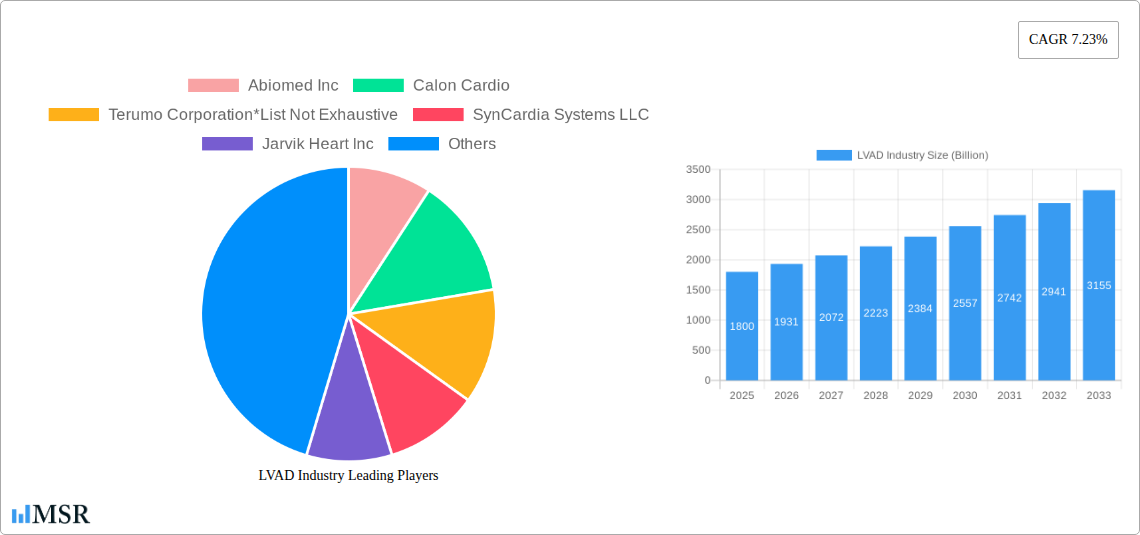
LVAD Industry Market Size (In Billion)

The VAD market is segmented into Left Ventricular Assist Devices (LVADs), Right Ventricular Assist Devices (RVADs), and Biventricular Assist Devices (BIVADs), with LVADs dominating the market due to the higher prevalence of left-sided heart failure. Applications are predominantly categorized into Bridge-to-Transplant (BTT) Therapy, Destination Therapy (DT), and Other Therapies. Geographically, North America currently leads the market, supported by a well-established healthcare infrastructure, high patient awareness, and strong reimbursement policies. Europe is the second-largest market, with Germany and the United Kingdom being key contributors. The Asia Pacific region is expected to witness the fastest growth due to an increasing patient pool, improving healthcare access, and rising disposable incomes. However, challenges such as the high cost of devices, the need for specialized surgical expertise, and potential device-related complications could temper growth. Key players like Abiomed Inc., Medtronic PLC, and Abbott Laboratories are continuously investing in research and development to introduce next-generation VADs and expand their global footprint.
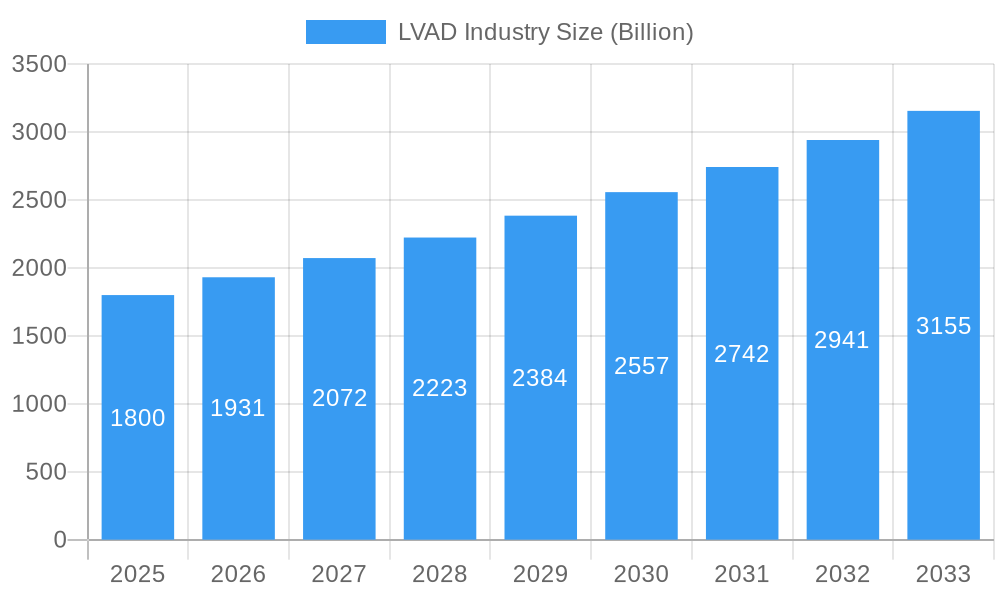
LVAD Industry Company Market Share
Comprehensive LVAD Industry Market Analysis 2024-2033: Unveiling Growth Drivers, Innovations, and Key Players in Mechanical Circulatory Support
This in-depth report provides an exhaustive analysis of the global Left Ventricular Assist Device (LVAD) industry, a critical segment within mechanical circulatory support (MCS) for advanced heart failure. Spanning from 2019 to 2033, with a focus on the 2025 base year and forecast period, this study delves into market dynamics, technological advancements, regulatory landscapes, and competitive strategies. Discover actionable insights for stakeholders including device manufacturers, healthcare providers, investors, and policymakers navigating the complex and rapidly evolving LVAD market. The report examines the burgeoning demand for LVAD, RVAD, and BIVAD devices across Bridge-to-Transplant (BTT) therapy, Destination Therapy, and other applications, projecting significant market growth driven by increasing heart failure prevalence and technological innovation.
LVAD Industry Market Concentration & Dynamics
The global LVAD industry exhibits a moderately concentrated market structure, characterized by a few dominant players alongside emerging innovators. Key companies like Abiomed Inc., Abbott Laboratories, and Medtronic PLC hold substantial market shares, fueled by extensive R&D investments and established distribution networks. Innovation ecosystems are thriving, evidenced by initiatives like IIT Kanpur's "Hridyantra" program, aimed at developing advanced artificial hearts. Regulatory frameworks, while stringent, are adapting to facilitate the approval of novel MCS technologies. Substitute products, such as improved pharmacological therapies and advanced heart transplantation techniques, present a dynamic competitive landscape. End-user trends increasingly favor minimally invasive devices and improved patient quality of life, pushing manufacturers towards next-generation LVAD solutions. Mergers and acquisitions (M&A) activity, though moderate, plays a crucial role in market consolidation and access to innovative technologies. For instance, the acquisition of HeartWare by Medtronic in 2016 significantly reshaped market dynamics. The market share of the top three players is estimated to be around 70% of the global LVAD market. M&A deal counts are projected to increase by 15% over the forecast period as companies seek to expand their portfolios and geographical reach.
LVAD Industry Industry Insights & Trends
The LVAD industry is poised for substantial expansion, driven by a confluence of escalating heart failure prevalence and continuous technological advancements in mechanical circulatory support. The global LVAD market size is projected to reach approximately $8 Billion by 2033, exhibiting a Compound Annual Growth Rate (CAGR) of roughly 12% during the forecast period (2025-2033). This robust growth is primarily propelled by an aging global population, a significant contributing factor to the rise in cardiovascular diseases and, consequently, end-stage heart failure. Furthermore, improvements in device design, including miniaturization, enhanced durability, and reduced adverse event rates, are making LVAD implantation a more attractive and viable treatment option for a wider patient demographic. The increasing adoption of destination therapy, offering long-term solutions for patients ineligible for transplantation, is a key market driver. Technological disruptions are manifesting in the development of wireless charging systems, improved anticoagulation management, and the exploration of advanced materials for biomocompatibility. Evolving consumer behaviors, influenced by patient advocacy groups and greater access to medical information, are emphasizing a higher quality of life and longer survival rates, aligning perfectly with the benefits offered by advanced LVAD technology. The impact of Medtronic's decision to cease the distribution of its HeartWare HVAD in June 2021, and Abbott's subsequent announcement of its capacity to meet the growing demand for MCS devices, has further underscored the dynamic nature of the market and the strategic importance of supply chain resilience.
Key Markets & Segments Leading LVAD Industry
The Left Ventricular Assist Device (LVAD) market's dominance is intricately linked to advancements in medical infrastructure, healthcare expenditure, and the prevalence of cardiovascular diseases across various regions. North America, particularly the United States, currently leads the global LVAD market.
Dominant Region: North America
- Drivers: High incidence of heart failure, advanced healthcare infrastructure, substantial R&D investments in cardiovascular devices, favorable reimbursement policies for MCS devices, and a high adoption rate of advanced medical technologies.
- Detailed Dominance Analysis: The United States represents a significant portion of the global LVAD market due to its well-established network of specialized cardiac centers, a large patient pool with end-stage heart failure, and a strong emphasis on clinical trials and innovation in the field of mechanical circulatory support. The presence of leading LVAD manufacturers and their robust sales and support infrastructure further solidifies North America's leading position.
Dominant Segment by Type of Ventricular Device: Left Ventricular Assist Device (LVAD)
- Drivers: LVADs are the most common type of ventricular assist device implanted for patients suffering from left-sided heart failure, which is more prevalent than right-sided heart failure.
- Detailed Dominance Analysis: The overwhelming majority of heart failure cases affecting the pumping function of the heart primarily involve the left ventricle. Consequently, LVADs, designed to assist the left ventricle, have the largest market share and are the most frequently implanted devices. Their efficacy in improving survival rates and quality of life for individuals with severe left ventricular dysfunction underpins their market leadership.
Dominant Segment by Application: Bridge-to-Transplant (BTT) Therapy
- Drivers: LVADs are crucial for stabilizing patients awaiting a suitable donor heart, significantly improving their survival rates during the waiting period.
- Detailed Dominance Analysis: Bridge-to-transplant therapy has historically been a primary application for LVADs. These devices provide essential circulatory support, allowing patients to remain stable and in better overall health while they await a life-saving heart transplant. The continued shortage of donor organs ensures the persistent demand for BTT therapy, making it a pivotal segment in the LVAD market. However, Destination Therapy is rapidly gaining traction as an alternative for patients not suitable for transplantation.
LVAD Industry Product Developments
Product development in the LVAD industry is characterized by a relentless pursuit of enhanced safety, efficacy, and patient quality of life. Innovations are focused on miniaturizing device components for less invasive implantation, improving pump durability to reduce the risk of device failure, and developing advanced anticoagulation strategies to mitigate thrombotic complications. The integration of wireless technology for energy transfer and remote patient monitoring is also a significant trend, offering greater patient mobility and improved clinician oversight. Companies are also investing in next-generation devices with longer projected lifespans and reduced power consumption, aiming to make these life-saving technologies more accessible and sustainable for a broader patient population. The introduction of smaller, more efficient pumps and improved driveline designs are key competitive differentiators.
Challenges in the LVAD Industry Market
The LVAD market faces several significant challenges that impede widespread adoption and accessibility. Stringent regulatory approval processes for novel devices and modifications can lead to lengthy development timelines and substantial financial investment. Supply chain vulnerabilities, highlighted by global events, can disrupt the availability of critical components and finished devices, impacting timely patient care. Furthermore, the high cost of LVAD implantation and ongoing management, coupled with variable reimbursement policies across different healthcare systems, can create financial barriers for both patients and healthcare providers. Competitive pressures from established players and emerging technologies also necessitate continuous innovation and cost-effectiveness. The prevalence of adverse events, though decreasing, remains a concern that requires ongoing monitoring and mitigation strategies.
Forces Driving LVAD Industry Growth
Several powerful forces are driving the growth of the LVAD industry. The escalating global burden of heart failure, driven by an aging population and increasing rates of lifestyle-related conditions like obesity and diabetes, creates a substantial and growing patient pool requiring advanced therapeutic interventions. Technological advancements in LVAD design, leading to smaller, more durable, and safer devices, are expanding the eligibility criteria and improving patient outcomes. Favorable regulatory pathways for innovative MCS devices, coupled with evolving reimbursement landscapes in key markets, are facilitating market access. Moreover, growing physician and patient awareness of the benefits of LVADs for both bridge-to-transplant and destination therapy is contributing to increased utilization.
Challenges in the LVAD Industry Market
Long-term growth catalysts in the LVAD industry are deeply rooted in sustained technological innovation, strategic partnerships, and market expansion. The continuous development of smaller, implantable devices with reduced complexity and improved biocompatibility will be crucial. Exploring novel power sources, such as fully implantable wireless energy transfer systems, will enhance patient freedom and reduce infection risks. Strategic collaborations between device manufacturers, academic research institutions, and leading cardiac centers will foster the development of next-generation therapies and clinical data. Expanding the application of LVADs to include earlier stages of heart failure or as an alternative to certain surgical procedures, where clinically appropriate, will unlock new market segments. Furthermore, global market expansion, particularly into emerging economies with growing healthcare infrastructure and increasing demand for advanced cardiovascular treatments, presents significant long-term growth opportunities.
Emerging Opportunities in LVAD Industry
Emerging opportunities in the LVAD industry are centered around technological breakthroughs, untapped geographical markets, and evolving patient needs. The development of fully bio-absorbable or wirelessly rechargeable devices represents a significant technological frontier. Expansion into emerging economies, where the prevalence of heart failure is rising and access to advanced cardiac care is growing, offers substantial untapped market potential. The increasing focus on personalized medicine and patient-centric care is driving demand for devices that offer improved patient mobility and reduced lifestyle impact. Furthermore, the potential application of LVAD technology in the treatment of other cardiac conditions, beyond end-stage heart failure, could open new avenues for growth. The integration of artificial intelligence for predictive analytics and remote patient monitoring will further enhance the value proposition of LVADs.
Leading Players in the LVAD Industry Sector
- Abiomed Inc.
- Calon Cardio
- Terumo Corporation
- SynCardia Systems LLC
- Jarvik Heart Inc.
- Medtronic PLC
- Abbott Laboratories
- BiVACOR Inc.
- Berlin Heart GmbH
Key Milestones in LVAD Industry Industry
- June 2021: Abbott announced its capacity and supply to effectively support the growing demand for mechanical circulatory support (MCS) devices for the effective treatment of advanced heart failure, following Medtronic's decision to stop the global distribution and sale of the Medtronic HeartWare ventricular assist device (HVAD).
- January 2022: The School of Medical Research and Technology (SMRT) of IIT Kanpur launched Hridyantra, a challenge-based program to develop an advanced artificial heart, also called a Left Ventricular Assist Device (LVAD), for patients with end-stage heart failure.
Strategic Outlook for LVAD Industry Market
The strategic outlook for the LVAD industry is overwhelmingly positive, driven by a robust demand for life-saving mechanical circulatory support solutions. Future growth will be accelerated by continued innovation in device miniaturization, improved biocompatibility, and enhanced power sources. Expanding the indication for LVADs to cover earlier stages of heart failure, where appropriate, will significantly increase the addressable market. Strategic partnerships between leading medical device manufacturers and research institutions will be pivotal in driving forward the development of next-generation LVADs. Furthermore, aggressive market penetration into emerging economies, coupled with supportive reimbursement policies, will be key to achieving long-term market expansion and ensuring broader patient access to these critical therapies. The industry is well-positioned to address the growing global epidemic of heart failure.
LVAD Industry Segmentation
-
1. Type of Ventricular Device
- 1.1. Left Ventricular Assist Device (LVAD)
- 1.2. Right Ventricular Assist Device (RVAD)
- 1.3. Biventricular Assist Device (BIVAD)
-
2. Application
- 2.1. Bridge-to-transplant (BTT) Therapy
- 2.2. Destination Therapy
- 2.3. Other Therapies
LVAD Industry Segmentation By Geography
-
1. North America
- 1.1. United States
- 1.2. Canada
- 1.3. Mexico
-
2. Europe
- 2.1. Germany
- 2.2. United Kingdom
- 2.3. France
- 2.4. Italy
- 2.5. Spain
- 2.6. Rest of Europe
-
3. Asia Pacific
- 3.1. China
- 3.2. Japan
- 3.3. India
- 3.4. Australia
- 3.5. South Korea
- 3.6. Rest of Asia Pacific
- 4. Middle East
-
5. GCC
- 5.1. South Africa
- 5.2. Rest of Middle East
-
6. South America
- 6.1. Brazil
- 6.2. Argentina
- 6.3. Rest of South America
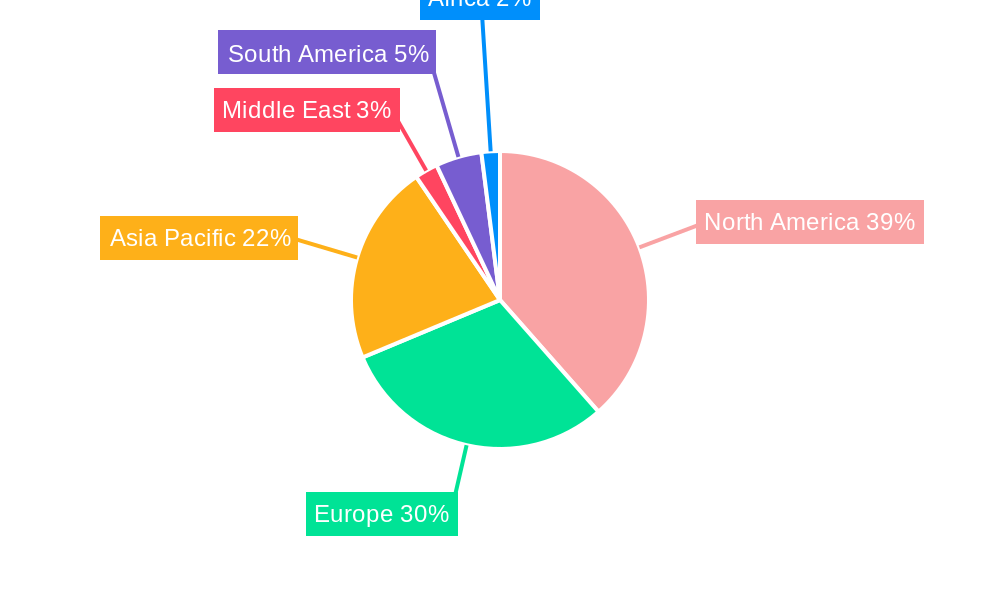
LVAD Industry Regional Market Share
Geographic Coverage of LVAD Industry
LVAD Industry REPORT HIGHLIGHTS
| Aspects | Details |
|---|---|
| Study Period | 2020-2034 |
| Base Year | 2025 |
| Estimated Year | 2026 |
| Forecast Period | 2026-2034 |
| Historical Period | 2020-2025 |
| Growth Rate | CAGR of 7.23% from 2020-2034 |
| Segmentation |
|
Table of Contents
- 1. Introduction
- 1.1. Research Scope
- 1.2. Market Segmentation
- 1.3. Research Methodology
- 1.4. Definitions and Assumptions
- 2. Executive Summary
- 2.1. Introduction
- 3. Market Dynamics
- 3.1. Introduction
- 3.2. Market Drivers
- 3.2.1. Growing Burden of Cardiac Diseases and Heart Failure; Technological Advancement of Devices for Cardiac Diseases Management; Growing Initiatives and Awareness Regarding Cardiovascular Diseases
- 3.3. Market Restrains
- 3.3.1. High Cost of Devices and Procedures; Several Risks Associated to VAD Implant
- 3.4. Market Trends
- 3.4.1. Left Ventricular Assist Device (LVAD) is Expected to Hold the Major Share in the Type of Ventricular Device Segment
- 4. Market Factor Analysis
- 4.1. Porters Five Forces
- 4.2. Supply/Value Chain
- 4.3. PESTEL analysis
- 4.4. Market Entropy
- 4.5. Patent/Trademark Analysis
- 5. Global LVAD Industry Analysis, Insights and Forecast, 2020-2032
- 5.1. Market Analysis, Insights and Forecast - by Type of Ventricular Device
- 5.1.1. Left Ventricular Assist Device (LVAD)
- 5.1.2. Right Ventricular Assist Device (RVAD)
- 5.1.3. Biventricular Assist Device (BIVAD)
- 5.2. Market Analysis, Insights and Forecast - by Application
- 5.2.1. Bridge-to-transplant (BTT) Therapy
- 5.2.2. Destination Therapy
- 5.2.3. Other Therapies
- 5.3. Market Analysis, Insights and Forecast - by Region
- 5.3.1. North America
- 5.3.2. Europe
- 5.3.3. Asia Pacific
- 5.3.4. Middle East
- 5.3.5. GCC
- 5.3.6. South America
- 5.1. Market Analysis, Insights and Forecast - by Type of Ventricular Device
- 6. North America LVAD Industry Analysis, Insights and Forecast, 2020-2032
- 6.1. Market Analysis, Insights and Forecast - by Type of Ventricular Device
- 6.1.1. Left Ventricular Assist Device (LVAD)
- 6.1.2. Right Ventricular Assist Device (RVAD)
- 6.1.3. Biventricular Assist Device (BIVAD)
- 6.2. Market Analysis, Insights and Forecast - by Application
- 6.2.1. Bridge-to-transplant (BTT) Therapy
- 6.2.2. Destination Therapy
- 6.2.3. Other Therapies
- 6.1. Market Analysis, Insights and Forecast - by Type of Ventricular Device
- 7. Europe LVAD Industry Analysis, Insights and Forecast, 2020-2032
- 7.1. Market Analysis, Insights and Forecast - by Type of Ventricular Device
- 7.1.1. Left Ventricular Assist Device (LVAD)
- 7.1.2. Right Ventricular Assist Device (RVAD)
- 7.1.3. Biventricular Assist Device (BIVAD)
- 7.2. Market Analysis, Insights and Forecast - by Application
- 7.2.1. Bridge-to-transplant (BTT) Therapy
- 7.2.2. Destination Therapy
- 7.2.3. Other Therapies
- 7.1. Market Analysis, Insights and Forecast - by Type of Ventricular Device
- 8. Asia Pacific LVAD Industry Analysis, Insights and Forecast, 2020-2032
- 8.1. Market Analysis, Insights and Forecast - by Type of Ventricular Device
- 8.1.1. Left Ventricular Assist Device (LVAD)
- 8.1.2. Right Ventricular Assist Device (RVAD)
- 8.1.3. Biventricular Assist Device (BIVAD)
- 8.2. Market Analysis, Insights and Forecast - by Application
- 8.2.1. Bridge-to-transplant (BTT) Therapy
- 8.2.2. Destination Therapy
- 8.2.3. Other Therapies
- 8.1. Market Analysis, Insights and Forecast - by Type of Ventricular Device
- 9. Middle East LVAD Industry Analysis, Insights and Forecast, 2020-2032
- 9.1. Market Analysis, Insights and Forecast - by Type of Ventricular Device
- 9.1.1. Left Ventricular Assist Device (LVAD)
- 9.1.2. Right Ventricular Assist Device (RVAD)
- 9.1.3. Biventricular Assist Device (BIVAD)
- 9.2. Market Analysis, Insights and Forecast - by Application
- 9.2.1. Bridge-to-transplant (BTT) Therapy
- 9.2.2. Destination Therapy
- 9.2.3. Other Therapies
- 9.1. Market Analysis, Insights and Forecast - by Type of Ventricular Device
- 10. GCC LVAD Industry Analysis, Insights and Forecast, 2020-2032
- 10.1. Market Analysis, Insights and Forecast - by Type of Ventricular Device
- 10.1.1. Left Ventricular Assist Device (LVAD)
- 10.1.2. Right Ventricular Assist Device (RVAD)
- 10.1.3. Biventricular Assist Device (BIVAD)
- 10.2. Market Analysis, Insights and Forecast - by Application
- 10.2.1. Bridge-to-transplant (BTT) Therapy
- 10.2.2. Destination Therapy
- 10.2.3. Other Therapies
- 10.1. Market Analysis, Insights and Forecast - by Type of Ventricular Device
- 11. South America LVAD Industry Analysis, Insights and Forecast, 2020-2032
- 11.1. Market Analysis, Insights and Forecast - by Type of Ventricular Device
- 11.1.1. Left Ventricular Assist Device (LVAD)
- 11.1.2. Right Ventricular Assist Device (RVAD)
- 11.1.3. Biventricular Assist Device (BIVAD)
- 11.2. Market Analysis, Insights and Forecast - by Application
- 11.2.1. Bridge-to-transplant (BTT) Therapy
- 11.2.2. Destination Therapy
- 11.2.3. Other Therapies
- 11.1. Market Analysis, Insights and Forecast - by Type of Ventricular Device
- 12. North America LVAD Industry Analysis, Insights and Forecast, 2020-2032
- 12.1. Market Analysis, Insights and Forecast - By Country/Sub-region
- 12.1.1 United States
- 12.1.2 Canada
- 12.1.3 Mexico
- 13. Europe LVAD Industry Analysis, Insights and Forecast, 2020-2032
- 13.1. Market Analysis, Insights and Forecast - By Country/Sub-region
- 13.1.1 Germany
- 13.1.2 United Kingdom
- 13.1.3 France
- 13.1.4 Italy
- 13.1.5 Spain
- 13.1.6 Rest of Europe
- 14. Asia Pacific LVAD Industry Analysis, Insights and Forecast, 2020-2032
- 14.1. Market Analysis, Insights and Forecast - By Country/Sub-region
- 14.1.1 China
- 14.1.2 Japan
- 14.1.3 India
- 14.1.4 Australia
- 14.1.5 South Korea
- 14.1.6 Rest of Asia Pacific
- 15. Middle East LVAD Industry Analysis, Insights and Forecast, 2020-2032
- 15.1. Market Analysis, Insights and Forecast - By Country/Sub-region
- 15.1.1.
- 16. GCC LVAD Industry Analysis, Insights and Forecast, 2020-2032
- 16.1. Market Analysis, Insights and Forecast - By Country/Sub-region
- 16.1.1 South Africa
- 16.1.2 Rest of Middle East
- 17. South America LVAD Industry Analysis, Insights and Forecast, 2020-2032
- 17.1. Market Analysis, Insights and Forecast - By Country/Sub-region
- 17.1.1 Brazil
- 17.1.2 Argentina
- 17.1.3 Rest of South America
- 18. Competitive Analysis
- 18.1. Global Market Share Analysis 2025
- 18.2. Company Profiles
- 18.2.1 Abiomed Inc
- 18.2.1.1. Overview
- 18.2.1.2. Products
- 18.2.1.3. SWOT Analysis
- 18.2.1.4. Recent Developments
- 18.2.1.5. Financials (Based on Availability)
- 18.2.2 Calon Cardio
- 18.2.2.1. Overview
- 18.2.2.2. Products
- 18.2.2.3. SWOT Analysis
- 18.2.2.4. Recent Developments
- 18.2.2.5. Financials (Based on Availability)
- 18.2.3 Terumo Corporation*List Not Exhaustive
- 18.2.3.1. Overview
- 18.2.3.2. Products
- 18.2.3.3. SWOT Analysis
- 18.2.3.4. Recent Developments
- 18.2.3.5. Financials (Based on Availability)
- 18.2.4 SynCardia Systems LLC
- 18.2.4.1. Overview
- 18.2.4.2. Products
- 18.2.4.3. SWOT Analysis
- 18.2.4.4. Recent Developments
- 18.2.4.5. Financials (Based on Availability)
- 18.2.5 Jarvik Heart Inc
- 18.2.5.1. Overview
- 18.2.5.2. Products
- 18.2.5.3. SWOT Analysis
- 18.2.5.4. Recent Developments
- 18.2.5.5. Financials (Based on Availability)
- 18.2.6 Medtronic PLC
- 18.2.6.1. Overview
- 18.2.6.2. Products
- 18.2.6.3. SWOT Analysis
- 18.2.6.4. Recent Developments
- 18.2.6.5. Financials (Based on Availability)
- 18.2.7 Abbott Laboratories (St Jude Medical Inc )
- 18.2.7.1. Overview
- 18.2.7.2. Products
- 18.2.7.3. SWOT Analysis
- 18.2.7.4. Recent Developments
- 18.2.7.5. Financials (Based on Availability)
- 18.2.8 BiVACOR Inc
- 18.2.8.1. Overview
- 18.2.8.2. Products
- 18.2.8.3. SWOT Analysis
- 18.2.8.4. Recent Developments
- 18.2.8.5. Financials (Based on Availability)
- 18.2.9 Berlin Heart GmbH
- 18.2.9.1. Overview
- 18.2.9.2. Products
- 18.2.9.3. SWOT Analysis
- 18.2.9.4. Recent Developments
- 18.2.9.5. Financials (Based on Availability)
- 18.2.1 Abiomed Inc
List of Figures
- Figure 1: Global LVAD Industry Revenue Breakdown (Billion, %) by Region 2025 & 2033
- Figure 2: Global LVAD Industry Volume Breakdown (Piece, %) by Region 2025 & 2033
- Figure 3: North America LVAD Industry Revenue (Billion), by Country 2025 & 2033
- Figure 4: North America LVAD Industry Volume (Piece), by Country 2025 & 2033
- Figure 5: North America LVAD Industry Revenue Share (%), by Country 2025 & 2033
- Figure 6: North America LVAD Industry Volume Share (%), by Country 2025 & 2033
- Figure 7: Europe LVAD Industry Revenue (Billion), by Country 2025 & 2033
- Figure 8: Europe LVAD Industry Volume (Piece), by Country 2025 & 2033
- Figure 9: Europe LVAD Industry Revenue Share (%), by Country 2025 & 2033
- Figure 10: Europe LVAD Industry Volume Share (%), by Country 2025 & 2033
- Figure 11: Asia Pacific LVAD Industry Revenue (Billion), by Country 2025 & 2033
- Figure 12: Asia Pacific LVAD Industry Volume (Piece), by Country 2025 & 2033
- Figure 13: Asia Pacific LVAD Industry Revenue Share (%), by Country 2025 & 2033
- Figure 14: Asia Pacific LVAD Industry Volume Share (%), by Country 2025 & 2033
- Figure 15: Middle East LVAD Industry Revenue (Billion), by Country 2025 & 2033
- Figure 16: Middle East LVAD Industry Volume (Piece), by Country 2025 & 2033
- Figure 17: Middle East LVAD Industry Revenue Share (%), by Country 2025 & 2033
- Figure 18: Middle East LVAD Industry Volume Share (%), by Country 2025 & 2033
- Figure 19: GCC LVAD Industry Revenue (Billion), by Country 2025 & 2033
- Figure 20: GCC LVAD Industry Volume (Piece), by Country 2025 & 2033
- Figure 21: GCC LVAD Industry Revenue Share (%), by Country 2025 & 2033
- Figure 22: GCC LVAD Industry Volume Share (%), by Country 2025 & 2033
- Figure 23: South America LVAD Industry Revenue (Billion), by Country 2025 & 2033
- Figure 24: South America LVAD Industry Volume (Piece), by Country 2025 & 2033
- Figure 25: South America LVAD Industry Revenue Share (%), by Country 2025 & 2033
- Figure 26: South America LVAD Industry Volume Share (%), by Country 2025 & 2033
- Figure 27: North America LVAD Industry Revenue (Billion), by Type of Ventricular Device 2025 & 2033
- Figure 28: North America LVAD Industry Volume (Piece), by Type of Ventricular Device 2025 & 2033
- Figure 29: North America LVAD Industry Revenue Share (%), by Type of Ventricular Device 2025 & 2033
- Figure 30: North America LVAD Industry Volume Share (%), by Type of Ventricular Device 2025 & 2033
- Figure 31: North America LVAD Industry Revenue (Billion), by Application 2025 & 2033
- Figure 32: North America LVAD Industry Volume (Piece), by Application 2025 & 2033
- Figure 33: North America LVAD Industry Revenue Share (%), by Application 2025 & 2033
- Figure 34: North America LVAD Industry Volume Share (%), by Application 2025 & 2033
- Figure 35: North America LVAD Industry Revenue (Billion), by Country 2025 & 2033
- Figure 36: North America LVAD Industry Volume (Piece), by Country 2025 & 2033
- Figure 37: North America LVAD Industry Revenue Share (%), by Country 2025 & 2033
- Figure 38: North America LVAD Industry Volume Share (%), by Country 2025 & 2033
- Figure 39: Europe LVAD Industry Revenue (Billion), by Type of Ventricular Device 2025 & 2033
- Figure 40: Europe LVAD Industry Volume (Piece), by Type of Ventricular Device 2025 & 2033
- Figure 41: Europe LVAD Industry Revenue Share (%), by Type of Ventricular Device 2025 & 2033
- Figure 42: Europe LVAD Industry Volume Share (%), by Type of Ventricular Device 2025 & 2033
- Figure 43: Europe LVAD Industry Revenue (Billion), by Application 2025 & 2033
- Figure 44: Europe LVAD Industry Volume (Piece), by Application 2025 & 2033
- Figure 45: Europe LVAD Industry Revenue Share (%), by Application 2025 & 2033
- Figure 46: Europe LVAD Industry Volume Share (%), by Application 2025 & 2033
- Figure 47: Europe LVAD Industry Revenue (Billion), by Country 2025 & 2033
- Figure 48: Europe LVAD Industry Volume (Piece), by Country 2025 & 2033
- Figure 49: Europe LVAD Industry Revenue Share (%), by Country 2025 & 2033
- Figure 50: Europe LVAD Industry Volume Share (%), by Country 2025 & 2033
- Figure 51: Asia Pacific LVAD Industry Revenue (Billion), by Type of Ventricular Device 2025 & 2033
- Figure 52: Asia Pacific LVAD Industry Volume (Piece), by Type of Ventricular Device 2025 & 2033
- Figure 53: Asia Pacific LVAD Industry Revenue Share (%), by Type of Ventricular Device 2025 & 2033
- Figure 54: Asia Pacific LVAD Industry Volume Share (%), by Type of Ventricular Device 2025 & 2033
- Figure 55: Asia Pacific LVAD Industry Revenue (Billion), by Application 2025 & 2033
- Figure 56: Asia Pacific LVAD Industry Volume (Piece), by Application 2025 & 2033
- Figure 57: Asia Pacific LVAD Industry Revenue Share (%), by Application 2025 & 2033
- Figure 58: Asia Pacific LVAD Industry Volume Share (%), by Application 2025 & 2033
- Figure 59: Asia Pacific LVAD Industry Revenue (Billion), by Country 2025 & 2033
- Figure 60: Asia Pacific LVAD Industry Volume (Piece), by Country 2025 & 2033
- Figure 61: Asia Pacific LVAD Industry Revenue Share (%), by Country 2025 & 2033
- Figure 62: Asia Pacific LVAD Industry Volume Share (%), by Country 2025 & 2033
- Figure 63: Middle East LVAD Industry Revenue (Billion), by Type of Ventricular Device 2025 & 2033
- Figure 64: Middle East LVAD Industry Volume (Piece), by Type of Ventricular Device 2025 & 2033
- Figure 65: Middle East LVAD Industry Revenue Share (%), by Type of Ventricular Device 2025 & 2033
- Figure 66: Middle East LVAD Industry Volume Share (%), by Type of Ventricular Device 2025 & 2033
- Figure 67: Middle East LVAD Industry Revenue (Billion), by Application 2025 & 2033
- Figure 68: Middle East LVAD Industry Volume (Piece), by Application 2025 & 2033
- Figure 69: Middle East LVAD Industry Revenue Share (%), by Application 2025 & 2033
- Figure 70: Middle East LVAD Industry Volume Share (%), by Application 2025 & 2033
- Figure 71: Middle East LVAD Industry Revenue (Billion), by Country 2025 & 2033
- Figure 72: Middle East LVAD Industry Volume (Piece), by Country 2025 & 2033
- Figure 73: Middle East LVAD Industry Revenue Share (%), by Country 2025 & 2033
- Figure 74: Middle East LVAD Industry Volume Share (%), by Country 2025 & 2033
- Figure 75: GCC LVAD Industry Revenue (Billion), by Type of Ventricular Device 2025 & 2033
- Figure 76: GCC LVAD Industry Volume (Piece), by Type of Ventricular Device 2025 & 2033
- Figure 77: GCC LVAD Industry Revenue Share (%), by Type of Ventricular Device 2025 & 2033
- Figure 78: GCC LVAD Industry Volume Share (%), by Type of Ventricular Device 2025 & 2033
- Figure 79: GCC LVAD Industry Revenue (Billion), by Application 2025 & 2033
- Figure 80: GCC LVAD Industry Volume (Piece), by Application 2025 & 2033
- Figure 81: GCC LVAD Industry Revenue Share (%), by Application 2025 & 2033
- Figure 82: GCC LVAD Industry Volume Share (%), by Application 2025 & 2033
- Figure 83: GCC LVAD Industry Revenue (Billion), by Country 2025 & 2033
- Figure 84: GCC LVAD Industry Volume (Piece), by Country 2025 & 2033
- Figure 85: GCC LVAD Industry Revenue Share (%), by Country 2025 & 2033
- Figure 86: GCC LVAD Industry Volume Share (%), by Country 2025 & 2033
- Figure 87: South America LVAD Industry Revenue (Billion), by Type of Ventricular Device 2025 & 2033
- Figure 88: South America LVAD Industry Volume (Piece), by Type of Ventricular Device 2025 & 2033
- Figure 89: South America LVAD Industry Revenue Share (%), by Type of Ventricular Device 2025 & 2033
- Figure 90: South America LVAD Industry Volume Share (%), by Type of Ventricular Device 2025 & 2033
- Figure 91: South America LVAD Industry Revenue (Billion), by Application 2025 & 2033
- Figure 92: South America LVAD Industry Volume (Piece), by Application 2025 & 2033
- Figure 93: South America LVAD Industry Revenue Share (%), by Application 2025 & 2033
- Figure 94: South America LVAD Industry Volume Share (%), by Application 2025 & 2033
- Figure 95: South America LVAD Industry Revenue (Billion), by Country 2025 & 2033
- Figure 96: South America LVAD Industry Volume (Piece), by Country 2025 & 2033
- Figure 97: South America LVAD Industry Revenue Share (%), by Country 2025 & 2033
- Figure 98: South America LVAD Industry Volume Share (%), by Country 2025 & 2033
List of Tables
- Table 1: Global LVAD Industry Revenue Billion Forecast, by Region 2020 & 2033
- Table 2: Global LVAD Industry Volume Piece Forecast, by Region 2020 & 2033
- Table 3: Global LVAD Industry Revenue Billion Forecast, by Type of Ventricular Device 2020 & 2033
- Table 4: Global LVAD Industry Volume Piece Forecast, by Type of Ventricular Device 2020 & 2033
- Table 5: Global LVAD Industry Revenue Billion Forecast, by Application 2020 & 2033
- Table 6: Global LVAD Industry Volume Piece Forecast, by Application 2020 & 2033
- Table 7: Global LVAD Industry Revenue Billion Forecast, by Region 2020 & 2033
- Table 8: Global LVAD Industry Volume Piece Forecast, by Region 2020 & 2033
- Table 9: Global LVAD Industry Revenue Billion Forecast, by Country 2020 & 2033
- Table 10: Global LVAD Industry Volume Piece Forecast, by Country 2020 & 2033
- Table 11: United States LVAD Industry Revenue (Billion) Forecast, by Application 2020 & 2033
- Table 12: United States LVAD Industry Volume (Piece) Forecast, by Application 2020 & 2033
- Table 13: Canada LVAD Industry Revenue (Billion) Forecast, by Application 2020 & 2033
- Table 14: Canada LVAD Industry Volume (Piece) Forecast, by Application 2020 & 2033
- Table 15: Mexico LVAD Industry Revenue (Billion) Forecast, by Application 2020 & 2033
- Table 16: Mexico LVAD Industry Volume (Piece) Forecast, by Application 2020 & 2033
- Table 17: Global LVAD Industry Revenue Billion Forecast, by Country 2020 & 2033
- Table 18: Global LVAD Industry Volume Piece Forecast, by Country 2020 & 2033
- Table 19: Germany LVAD Industry Revenue (Billion) Forecast, by Application 2020 & 2033
- Table 20: Germany LVAD Industry Volume (Piece) Forecast, by Application 2020 & 2033
- Table 21: United Kingdom LVAD Industry Revenue (Billion) Forecast, by Application 2020 & 2033
- Table 22: United Kingdom LVAD Industry Volume (Piece) Forecast, by Application 2020 & 2033
- Table 23: France LVAD Industry Revenue (Billion) Forecast, by Application 2020 & 2033
- Table 24: France LVAD Industry Volume (Piece) Forecast, by Application 2020 & 2033
- Table 25: Italy LVAD Industry Revenue (Billion) Forecast, by Application 2020 & 2033
- Table 26: Italy LVAD Industry Volume (Piece) Forecast, by Application 2020 & 2033
- Table 27: Spain LVAD Industry Revenue (Billion) Forecast, by Application 2020 & 2033
- Table 28: Spain LVAD Industry Volume (Piece) Forecast, by Application 2020 & 2033
- Table 29: Rest of Europe LVAD Industry Revenue (Billion) Forecast, by Application 2020 & 2033
- Table 30: Rest of Europe LVAD Industry Volume (Piece) Forecast, by Application 2020 & 2033
- Table 31: Global LVAD Industry Revenue Billion Forecast, by Country 2020 & 2033
- Table 32: Global LVAD Industry Volume Piece Forecast, by Country 2020 & 2033
- Table 33: China LVAD Industry Revenue (Billion) Forecast, by Application 2020 & 2033
- Table 34: China LVAD Industry Volume (Piece) Forecast, by Application 2020 & 2033
- Table 35: Japan LVAD Industry Revenue (Billion) Forecast, by Application 2020 & 2033
- Table 36: Japan LVAD Industry Volume (Piece) Forecast, by Application 2020 & 2033
- Table 37: India LVAD Industry Revenue (Billion) Forecast, by Application 2020 & 2033
- Table 38: India LVAD Industry Volume (Piece) Forecast, by Application 2020 & 2033
- Table 39: Australia LVAD Industry Revenue (Billion) Forecast, by Application 2020 & 2033
- Table 40: Australia LVAD Industry Volume (Piece) Forecast, by Application 2020 & 2033
- Table 41: South Korea LVAD Industry Revenue (Billion) Forecast, by Application 2020 & 2033
- Table 42: South Korea LVAD Industry Volume (Piece) Forecast, by Application 2020 & 2033
- Table 43: Rest of Asia Pacific LVAD Industry Revenue (Billion) Forecast, by Application 2020 & 2033
- Table 44: Rest of Asia Pacific LVAD Industry Volume (Piece) Forecast, by Application 2020 & 2033
- Table 45: Global LVAD Industry Revenue Billion Forecast, by Country 2020 & 2033
- Table 46: Global LVAD Industry Volume Piece Forecast, by Country 2020 & 2033
- Table 47: LVAD Industry Revenue (Billion) Forecast, by Application 2020 & 2033
- Table 48: LVAD Industry Volume (Piece) Forecast, by Application 2020 & 2033
- Table 49: Global LVAD Industry Revenue Billion Forecast, by Country 2020 & 2033
- Table 50: Global LVAD Industry Volume Piece Forecast, by Country 2020 & 2033
- Table 51: South Africa LVAD Industry Revenue (Billion) Forecast, by Application 2020 & 2033
- Table 52: South Africa LVAD Industry Volume (Piece) Forecast, by Application 2020 & 2033
- Table 53: Rest of Middle East LVAD Industry Revenue (Billion) Forecast, by Application 2020 & 2033
- Table 54: Rest of Middle East LVAD Industry Volume (Piece) Forecast, by Application 2020 & 2033
- Table 55: Global LVAD Industry Revenue Billion Forecast, by Country 2020 & 2033
- Table 56: Global LVAD Industry Volume Piece Forecast, by Country 2020 & 2033
- Table 57: Brazil LVAD Industry Revenue (Billion) Forecast, by Application 2020 & 2033
- Table 58: Brazil LVAD Industry Volume (Piece) Forecast, by Application 2020 & 2033
- Table 59: Argentina LVAD Industry Revenue (Billion) Forecast, by Application 2020 & 2033
- Table 60: Argentina LVAD Industry Volume (Piece) Forecast, by Application 2020 & 2033
- Table 61: Rest of South America LVAD Industry Revenue (Billion) Forecast, by Application 2020 & 2033
- Table 62: Rest of South America LVAD Industry Volume (Piece) Forecast, by Application 2020 & 2033
- Table 63: Global LVAD Industry Revenue Billion Forecast, by Type of Ventricular Device 2020 & 2033
- Table 64: Global LVAD Industry Volume Piece Forecast, by Type of Ventricular Device 2020 & 2033
- Table 65: Global LVAD Industry Revenue Billion Forecast, by Application 2020 & 2033
- Table 66: Global LVAD Industry Volume Piece Forecast, by Application 2020 & 2033
- Table 67: Global LVAD Industry Revenue Billion Forecast, by Country 2020 & 2033
- Table 68: Global LVAD Industry Volume Piece Forecast, by Country 2020 & 2033
- Table 69: United States LVAD Industry Revenue (Billion) Forecast, by Application 2020 & 2033
- Table 70: United States LVAD Industry Volume (Piece) Forecast, by Application 2020 & 2033
- Table 71: Canada LVAD Industry Revenue (Billion) Forecast, by Application 2020 & 2033
- Table 72: Canada LVAD Industry Volume (Piece) Forecast, by Application 2020 & 2033
- Table 73: Mexico LVAD Industry Revenue (Billion) Forecast, by Application 2020 & 2033
- Table 74: Mexico LVAD Industry Volume (Piece) Forecast, by Application 2020 & 2033
- Table 75: Global LVAD Industry Revenue Billion Forecast, by Type of Ventricular Device 2020 & 2033
- Table 76: Global LVAD Industry Volume Piece Forecast, by Type of Ventricular Device 2020 & 2033
- Table 77: Global LVAD Industry Revenue Billion Forecast, by Application 2020 & 2033
- Table 78: Global LVAD Industry Volume Piece Forecast, by Application 2020 & 2033
- Table 79: Global LVAD Industry Revenue Billion Forecast, by Country 2020 & 2033
- Table 80: Global LVAD Industry Volume Piece Forecast, by Country 2020 & 2033
- Table 81: Germany LVAD Industry Revenue (Billion) Forecast, by Application 2020 & 2033
- Table 82: Germany LVAD Industry Volume (Piece) Forecast, by Application 2020 & 2033
- Table 83: United Kingdom LVAD Industry Revenue (Billion) Forecast, by Application 2020 & 2033
- Table 84: United Kingdom LVAD Industry Volume (Piece) Forecast, by Application 2020 & 2033
- Table 85: France LVAD Industry Revenue (Billion) Forecast, by Application 2020 & 2033
- Table 86: France LVAD Industry Volume (Piece) Forecast, by Application 2020 & 2033
- Table 87: Italy LVAD Industry Revenue (Billion) Forecast, by Application 2020 & 2033
- Table 88: Italy LVAD Industry Volume (Piece) Forecast, by Application 2020 & 2033
- Table 89: Spain LVAD Industry Revenue (Billion) Forecast, by Application 2020 & 2033
- Table 90: Spain LVAD Industry Volume (Piece) Forecast, by Application 2020 & 2033
- Table 91: Rest of Europe LVAD Industry Revenue (Billion) Forecast, by Application 2020 & 2033
- Table 92: Rest of Europe LVAD Industry Volume (Piece) Forecast, by Application 2020 & 2033
- Table 93: Global LVAD Industry Revenue Billion Forecast, by Type of Ventricular Device 2020 & 2033
- Table 94: Global LVAD Industry Volume Piece Forecast, by Type of Ventricular Device 2020 & 2033
- Table 95: Global LVAD Industry Revenue Billion Forecast, by Application 2020 & 2033
- Table 96: Global LVAD Industry Volume Piece Forecast, by Application 2020 & 2033
- Table 97: Global LVAD Industry Revenue Billion Forecast, by Country 2020 & 2033
- Table 98: Global LVAD Industry Volume Piece Forecast, by Country 2020 & 2033
- Table 99: China LVAD Industry Revenue (Billion) Forecast, by Application 2020 & 2033
- Table 100: China LVAD Industry Volume (Piece) Forecast, by Application 2020 & 2033
- Table 101: Japan LVAD Industry Revenue (Billion) Forecast, by Application 2020 & 2033
- Table 102: Japan LVAD Industry Volume (Piece) Forecast, by Application 2020 & 2033
- Table 103: India LVAD Industry Revenue (Billion) Forecast, by Application 2020 & 2033
- Table 104: India LVAD Industry Volume (Piece) Forecast, by Application 2020 & 2033
- Table 105: Australia LVAD Industry Revenue (Billion) Forecast, by Application 2020 & 2033
- Table 106: Australia LVAD Industry Volume (Piece) Forecast, by Application 2020 & 2033
- Table 107: South Korea LVAD Industry Revenue (Billion) Forecast, by Application 2020 & 2033
- Table 108: South Korea LVAD Industry Volume (Piece) Forecast, by Application 2020 & 2033
- Table 109: Rest of Asia Pacific LVAD Industry Revenue (Billion) Forecast, by Application 2020 & 2033
- Table 110: Rest of Asia Pacific LVAD Industry Volume (Piece) Forecast, by Application 2020 & 2033
- Table 111: Global LVAD Industry Revenue Billion Forecast, by Type of Ventricular Device 2020 & 2033
- Table 112: Global LVAD Industry Volume Piece Forecast, by Type of Ventricular Device 2020 & 2033
- Table 113: Global LVAD Industry Revenue Billion Forecast, by Application 2020 & 2033
- Table 114: Global LVAD Industry Volume Piece Forecast, by Application 2020 & 2033
- Table 115: Global LVAD Industry Revenue Billion Forecast, by Country 2020 & 2033
- Table 116: Global LVAD Industry Volume Piece Forecast, by Country 2020 & 2033
- Table 117: Global LVAD Industry Revenue Billion Forecast, by Type of Ventricular Device 2020 & 2033
- Table 118: Global LVAD Industry Volume Piece Forecast, by Type of Ventricular Device 2020 & 2033
- Table 119: Global LVAD Industry Revenue Billion Forecast, by Application 2020 & 2033
- Table 120: Global LVAD Industry Volume Piece Forecast, by Application 2020 & 2033
- Table 121: Global LVAD Industry Revenue Billion Forecast, by Country 2020 & 2033
- Table 122: Global LVAD Industry Volume Piece Forecast, by Country 2020 & 2033
- Table 123: South Africa LVAD Industry Revenue (Billion) Forecast, by Application 2020 & 2033
- Table 124: South Africa LVAD Industry Volume (Piece) Forecast, by Application 2020 & 2033
- Table 125: Rest of Middle East LVAD Industry Revenue (Billion) Forecast, by Application 2020 & 2033
- Table 126: Rest of Middle East LVAD Industry Volume (Piece) Forecast, by Application 2020 & 2033
- Table 127: Global LVAD Industry Revenue Billion Forecast, by Type of Ventricular Device 2020 & 2033
- Table 128: Global LVAD Industry Volume Piece Forecast, by Type of Ventricular Device 2020 & 2033
- Table 129: Global LVAD Industry Revenue Billion Forecast, by Application 2020 & 2033
- Table 130: Global LVAD Industry Volume Piece Forecast, by Application 2020 & 2033
- Table 131: Global LVAD Industry Revenue Billion Forecast, by Country 2020 & 2033
- Table 132: Global LVAD Industry Volume Piece Forecast, by Country 2020 & 2033
- Table 133: Brazil LVAD Industry Revenue (Billion) Forecast, by Application 2020 & 2033
- Table 134: Brazil LVAD Industry Volume (Piece) Forecast, by Application 2020 & 2033
- Table 135: Argentina LVAD Industry Revenue (Billion) Forecast, by Application 2020 & 2033
- Table 136: Argentina LVAD Industry Volume (Piece) Forecast, by Application 2020 & 2033
- Table 137: Rest of South America LVAD Industry Revenue (Billion) Forecast, by Application 2020 & 2033
- Table 138: Rest of South America LVAD Industry Volume (Piece) Forecast, by Application 2020 & 2033
Frequently Asked Questions
1. What is the projected Compound Annual Growth Rate (CAGR) of the LVAD Industry?
The projected CAGR is approximately 7.23%.
2. Which companies are prominent players in the LVAD Industry?
Key companies in the market include Abiomed Inc, Calon Cardio, Terumo Corporation*List Not Exhaustive, SynCardia Systems LLC, Jarvik Heart Inc, Medtronic PLC, Abbott Laboratories (St Jude Medical Inc ), BiVACOR Inc, Berlin Heart GmbH.
3. What are the main segments of the LVAD Industry?
The market segments include Type of Ventricular Device, Application.
4. Can you provide details about the market size?
The market size is estimated to be USD 1.8 Billion as of 2022.
5. What are some drivers contributing to market growth?
Growing Burden of Cardiac Diseases and Heart Failure; Technological Advancement of Devices for Cardiac Diseases Management; Growing Initiatives and Awareness Regarding Cardiovascular Diseases.
6. What are the notable trends driving market growth?
Left Ventricular Assist Device (LVAD) is Expected to Hold the Major Share in the Type of Ventricular Device Segment.
7. Are there any restraints impacting market growth?
High Cost of Devices and Procedures; Several Risks Associated to VAD Implant.
8. Can you provide examples of recent developments in the market?
In January 2022, the School of Medical Research and Technology (SMRT) of IIT Kanpur has launched Hridyantra, a challenge-based program to develop an advanced artificial heart also called Left Ventricular Assist device (LVAD) for patients with end-stage heart failure.
9. What pricing options are available for accessing the report?
Pricing options include single-user, multi-user, and enterprise licenses priced at USD 4750, USD 5250, and USD 8750 respectively.
10. Is the market size provided in terms of value or volume?
The market size is provided in terms of value, measured in Billion and volume, measured in Piece.
11. Are there any specific market keywords associated with the report?
Yes, the market keyword associated with the report is "LVAD Industry," which aids in identifying and referencing the specific market segment covered.
12. How do I determine which pricing option suits my needs best?
The pricing options vary based on user requirements and access needs. Individual users may opt for single-user licenses, while businesses requiring broader access may choose multi-user or enterprise licenses for cost-effective access to the report.
13. Are there any additional resources or data provided in the LVAD Industry report?
While the report offers comprehensive insights, it's advisable to review the specific contents or supplementary materials provided to ascertain if additional resources or data are available.
14. How can I stay updated on further developments or reports in the LVAD Industry?
To stay informed about further developments, trends, and reports in the LVAD Industry, consider subscribing to industry newsletters, following relevant companies and organizations, or regularly checking reputable industry news sources and publications.
Methodology
Step 1 - Identification of Relevant Samples Size from Population Database



Step 2 - Approaches for Defining Global Market Size (Value, Volume* & Price*)

Note*: In applicable scenarios
Step 3 - Data Sources
Primary Research
- Web Analytics
- Survey Reports
- Research Institute
- Latest Research Reports
- Opinion Leaders
Secondary Research
- Annual Reports
- White Paper
- Latest Press Release
- Industry Association
- Paid Database
- Investor Presentations

Step 4 - Data Triangulation
Involves using different sources of information in order to increase the validity of a study
These sources are likely to be stakeholders in a program - participants, other researchers, program staff, other community members, and so on.
Then we put all data in single framework & apply various statistical tools to find out the dynamic on the market.
During the analysis stage, feedback from the stakeholder groups would be compared to determine areas of agreement as well as areas of divergence
