

Key Insights
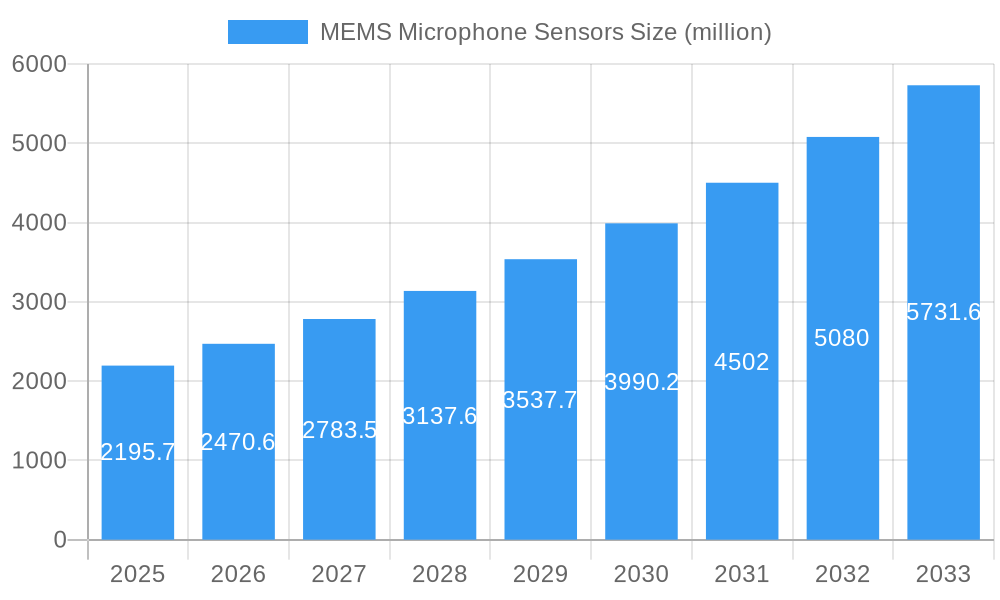
The global MEMS microphone sensor market is poised for substantial expansion, projected to reach USD 2195.7 million by 2025, demonstrating a robust Compound Annual Growth Rate (CAGR) of 11.3%. This impressive growth trajectory is primarily fueled by the escalating demand across diverse sectors, with Consumer Electronics and Automotive Electronics standing out as key drivers. The ubiquitous integration of MEMS microphones into smartphones, wearables, smart home devices, and advanced automotive infotainment systems underpins this surge. Furthermore, the increasing adoption of voice-activated technologies and the burgeoning IoT ecosystem are creating new avenues for market development. The market's resilience is also bolstered by advancements in sensor technology, leading to smaller, more sensitive, and power-efficient microphones that cater to evolving product designs and functionalities.
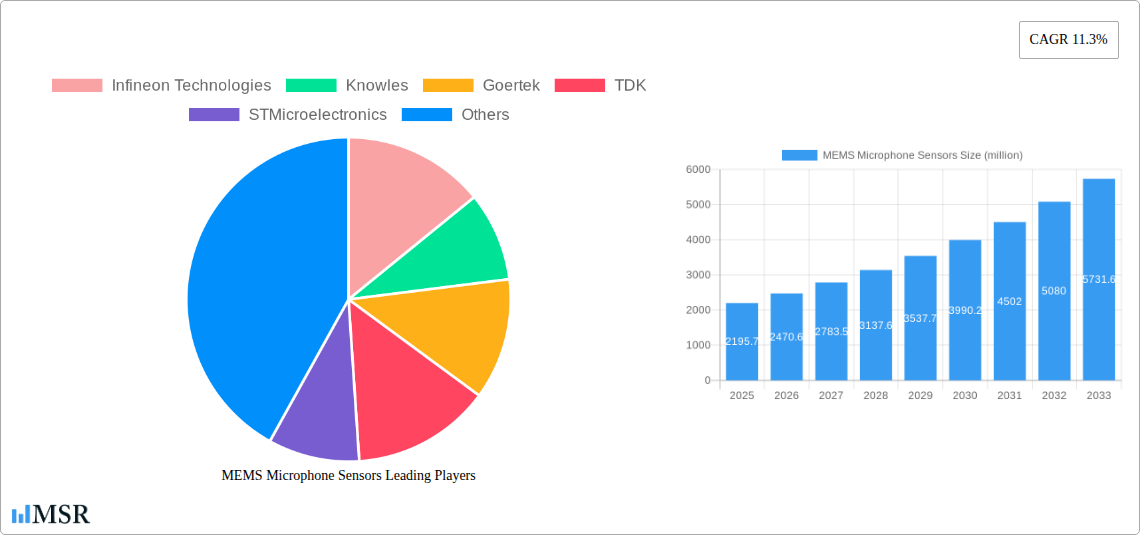
MEMS Microphone Sensors Market Size (In Billion)

The MEMS microphone sensor market is characterized by several influential trends and some restraining factors. Key trends include the miniaturization of devices, leading to a demand for increasingly compact sensor solutions, and the growing importance of analog-to-digital conversion directly within the microphone for improved signal processing and reduced noise. The automotive sector's focus on enhanced in-cabin acoustics for noise cancellation and voice command accuracy is a significant growth enabler. Conversely, challenges such as intense price competition among manufacturers and the need for substantial R&D investment to stay ahead of technological curves present potential restraints. However, the continuous innovation in sensor materials and manufacturing processes, coupled with expanding applications in emerging markets, are expected to overcome these hurdles, ensuring a dynamic and expanding global market.
MEMS Microphone Sensors Company Market Share
This comprehensive report provides an in-depth analysis of the global MEMS microphone sensors market, forecasting its trajectory from 2019 to 2033, with a base year of 2025. Discover critical market dynamics, emerging trends, key growth drivers, and the competitive landscape shaping this rapidly evolving sector.
MEMS Microphone Sensors Market Concentration & Dynamics
The global MEMS microphone sensors market is characterized by a moderately concentrated landscape, with a few dominant players holding significant market share, estimated at over 50% by value. However, a vibrant ecosystem of innovators and emerging companies is continuously pushing the boundaries of technology and application. Key industry developments revolve around miniaturization, enhanced sensitivity, improved signal-to-noise ratios, and power efficiency, driven by the insatiable demand for sophisticated audio capture across diverse end-user segments. Regulatory frameworks, particularly concerning environmental standards and product safety, are increasingly influencing manufacturing processes and material choices. The threat of substitute products, such as traditional piezoelectric microphones, remains minimal due to the superior performance and integration capabilities of MEMS technology. End-user trends are strongly influenced by the proliferation of smart devices, voice-activated interfaces, and the growing adoption of advanced audio features in automotive and medical applications. Mergers and acquisitions (M&A) activities are expected to continue, with approximately 5-10 significant M&A deals anticipated during the forecast period, as larger players seek to consolidate market share and acquire innovative technologies.
MEMS Microphone Sensors Industry Insights & Trends
The MEMS microphone sensors market is poised for robust growth, driven by the relentless expansion of consumer electronics, the burgeoning automotive sector, and the increasing integration of intelligent audio capabilities in medical and industrial applications. The market size is projected to reach an estimated $3.5 billion by 2033, exhibiting a compound annual growth rate (CAGR) of approximately 8.5% during the forecast period of 2025-2033. Technological disruptions are at the forefront of this expansion, with advancements in wafer-level packaging, digital interface integration, and sensor fusion technologies enabling smaller, more powerful, and more cost-effective MEMS microphones. Evolving consumer behaviors, such as the widespread adoption of voice assistants, wearables, and immersive audio experiences, are creating a persistent demand for high-performance and feature-rich MEMS microphone solutions. The historical period from 2019 to 2024 witnessed steady growth, fueled by the smartphone revolution and the initial foray of MEMS microphones into automotive and IoT devices. The base year of 2025 is expected to see a market value of approximately $2.2 billion, setting the stage for accelerated expansion. Innovations in acoustic signal processing, noise cancellation, and beamforming technologies are further enhancing the appeal and applicability of MEMS microphones.
Key Markets & Segments Leading MEMS Microphone Sensors
The Consumer Electronics segment unequivocally leads the MEMS microphone sensors market, driven by the ubiquitous presence of smartphones, laptops, tablets, smart home devices, and wearables. The sheer volume of these devices, coupled with the constant demand for improved audio quality and advanced features like voice control and active noise cancellation, makes this segment the primary growth engine.
- Drivers in Consumer Electronics:
- Rapid innovation cycles and frequent product refreshes.
- Increasing consumer demand for premium audio experiences.
- Proliferation of smart home ecosystems and voice assistants.
- Growth in portable audio devices and true wireless stereo (TWS) earbuds.
Within the Types categorization, Digital Type MEMS microphones are rapidly gaining dominance over their Analog counterparts. This shift is attributed to the inherent advantages of digital interfaces, including superior noise immunity, simpler integration with digital signal processors (DSPs), and the ability to support advanced functionalities like digital output and built-in signal processing. The market size for digital MEMS microphones is projected to surpass that of analog microphones by over 60% by 2033.
The Automotive Electronics segment is emerging as a significant growth driver, fueled by the increasing sophistication of in-car infotainment systems, advanced driver-assistance systems (ADAS), and the development of autonomous driving technologies. MEMS microphones are crucial for in-cabin voice commands, hands-free calling, and acoustic monitoring for safety and comfort.
- Drivers in Automotive Electronics:
- Increasing adoption of voice-activated infotainment systems.
- Development of advanced driver-assistance systems (ADAS) requiring acoustic sensing.
- Focus on cabin noise cancellation and personalized audio experiences.
- Stringent safety regulations mandating advanced communication features.
The Medical Electronics segment, while smaller in current volume, presents substantial long-term growth potential. MEMS microphones are finding applications in hearing aids, remote patient monitoring devices, digital stethoscopes, and implantable medical devices, where miniaturization and high performance are paramount.
- Drivers in Medical Electronics:
- Aging global population driving demand for hearing aids.
- Growth in telehealth and remote patient monitoring solutions.
- Advancements in miniaturized medical devices.
- Increasing focus on patient comfort and communication in healthcare settings.
The Industrial Electronics segment, encompassing applications in industrial automation, robotics, and predictive maintenance, is also experiencing steady growth. MEMS microphones are utilized for acoustic monitoring of machinery, vibration analysis, and worker safety communication.
- Drivers in Industrial Electronics:
- Increasing automation in manufacturing and industrial processes.
- Demand for predictive maintenance solutions based on acoustic analysis.
- Emphasis on workplace safety and communication.
MEMS Microphone Sensors Product Developments
Product developments in the MEMS microphone sensors market are intensely focused on enhancing performance metrics and expanding application scope. Innovations include ultra-low power consumption MEMS microphones for battery-powered devices, high signal-to-noise ratio (SNR) microphones for superior audio clarity in noisy environments, and multi-microphone arrays for advanced beamforming and noise cancellation. Companies are also developing MEMS microphones with integrated analog-to-digital converters (ADCs) for seamless digital output and improved signal integrity. These advancements are crucial for maintaining a competitive edge and catering to the evolving demands of consumer electronics, automotive, and medical sectors.
Challenges in the MEMS Microphone Sensors Market
The MEMS microphone sensors market faces several challenges that could impede its growth. Supply chain disruptions, particularly concerning raw materials and specialized fabrication processes, can lead to increased costs and production delays. Intense competition among a growing number of manufacturers puts pressure on profit margins, necessitating continuous innovation and cost optimization. Furthermore, stringent quality control and reliability standards, especially for automotive and medical applications, add to the complexity and cost of product development and manufacturing. Ensuring consistent performance across diverse environmental conditions remains a key challenge for widespread adoption in ruggedized industrial applications.
Forces Driving MEMS Microphone Sensors Growth
Several forces are propelling the growth of the MEMS microphone sensors market. The ubiquitous integration of voice-activated interfaces in consumer electronics, from smartphones to smart speakers and wearables, is a primary driver. The automotive industry's increasing adoption of advanced audio features for infotainment, driver assistance, and in-cabin communication is another significant catalyst. Technological advancements, including miniaturization, improved power efficiency, and enhanced signal processing capabilities, are enabling new applications and improving existing ones. The growing demand for high-fidelity audio in entertainment and communication further fuels market expansion.
Challenges in the MEMS Microphone Sensors Market
Long-term growth catalysts for the MEMS microphone sensors market are rooted in continuous technological innovation and strategic market expansion. The development of next-generation MEMS microphones with enhanced sensing capabilities, such as directional sensing and environmental sound analysis, will unlock new applications. Partnerships between MEMS sensor manufacturers and leading players in artificial intelligence (AI) and machine learning (ML) will drive the integration of sophisticated audio analytics. Expanding into emerging markets and niche applications like virtual and augmented reality (VR/AR) will also provide sustained growth opportunities.
Emerging Opportunities in MEMS Microphone Sensors
Emerging opportunities in the MEMS microphone sensors market lie in the burgeoning fields of artificial intelligence (AI) and the Internet of Things (IoT). The increasing demand for intelligent edge devices capable of sophisticated audio processing, such as voice recognition and acoustic event detection, presents a significant opportunity. The growth of virtual and augmented reality (VR/AR) applications, which rely heavily on immersive audio experiences, is another key area of expansion. Furthermore, the development of specialized MEMS microphones for challenging environments, including underwater acoustics and high-temperature industrial settings, offers untapped market potential.
Leading Players in the MEMS Microphone Sensors Sector
- Infineon Technologies
- Knowles
- Goertek
- TDK
- STMicroelectronics
- AAC Technologies
- Zilltek Technology
- MEMSensing
- Nisshinbo Micro Devices Inc. (NISD)
- Gettop
- NeoMEMS
- Hosiden
- Akustica (Bosch)
- MERRY
- BSE
- Sanico Electronics
- Sonion
- Vesper Technologies
- SinoVision SensTech
- 3S
- CUI Devices
- Aoi Electronics
Key Milestones in MEMS Microphone Sensors Industry
- 2019: Increased adoption of MEMS microphones in TWS earbuds, leading to a surge in demand.
- 2020: Development of ultra-low power MEMS microphones for battery-constrained IoT devices.
- 2021: Significant advancements in MEMS microphone array technology for enhanced noise cancellation.
- 2022: Growing integration of MEMS microphones in automotive ADAS for acoustic sensing.
- 2023: Introduction of MEMS microphones with higher SNR, improving audio fidelity in consumer electronics.
- 2024: Expansion of MEMS microphone applications in medical devices, including hearing aids and remote monitoring.
- 2025 (Estimated): Continued strong growth driven by smart home devices and advancements in digital MEMS microphones.
- 2026-2030 (Forecast): Expected proliferation of MEMS microphones in emerging applications like AR/VR and advanced robotics.
- 2031-2033 (Forecast): Maturation of digital MEMS technology and potential for new sensing modalities beyond acoustic capture.
Strategic Outlook for MEMS Microphone Sensors Market
The strategic outlook for the MEMS microphone sensors market is highly positive, driven by ongoing technological innovation and expanding application horizons. Key growth accelerators include the relentless demand for advanced audio features in consumer electronics and the increasing sophistication of in-car audio systems. Strategic partnerships with AI/ML developers will further unlock the potential of intelligent audio processing. Furthermore, the exploration of new market segments, such as immersive technologies and advanced industrial monitoring, will ensure sustained growth. Companies focusing on high-performance, low-power, and cost-effective MEMS microphone solutions are best positioned to capitalize on future market opportunities.
MEMS Microphone Sensors Segmentation
-
1. Application
- 1.1. Consumer Electronics
- 1.2. Automotive Electronics
- 1.3. Medical Electronics
- 1.4. Industrial Electronics
- 1.5. Others
-
2. Types
- 2.1. Analog Type
- 2.2. Digital Type
MEMS Microphone Sensors Segmentation By Geography
-
1. North America
- 1.1. United States
- 1.2. Canada
- 1.3. Mexico
-
2. South America
- 2.1. Brazil
- 2.2. Argentina
- 2.3. Rest of South America
-
3. Europe
- 3.1. United Kingdom
- 3.2. Germany
- 3.3. France
- 3.4. Italy
- 3.5. Spain
- 3.6. Russia
- 3.7. Benelux
- 3.8. Nordics
- 3.9. Rest of Europe
-
4. Middle East & Africa
- 4.1. Turkey
- 4.2. Israel
- 4.3. GCC
- 4.4. North Africa
- 4.5. South Africa
- 4.6. Rest of Middle East & Africa
-
5. Asia Pacific
- 5.1. China
- 5.2. India
- 5.3. Japan
- 5.4. South Korea
- 5.5. ASEAN
- 5.6. Oceania
- 5.7. Rest of Asia Pacific
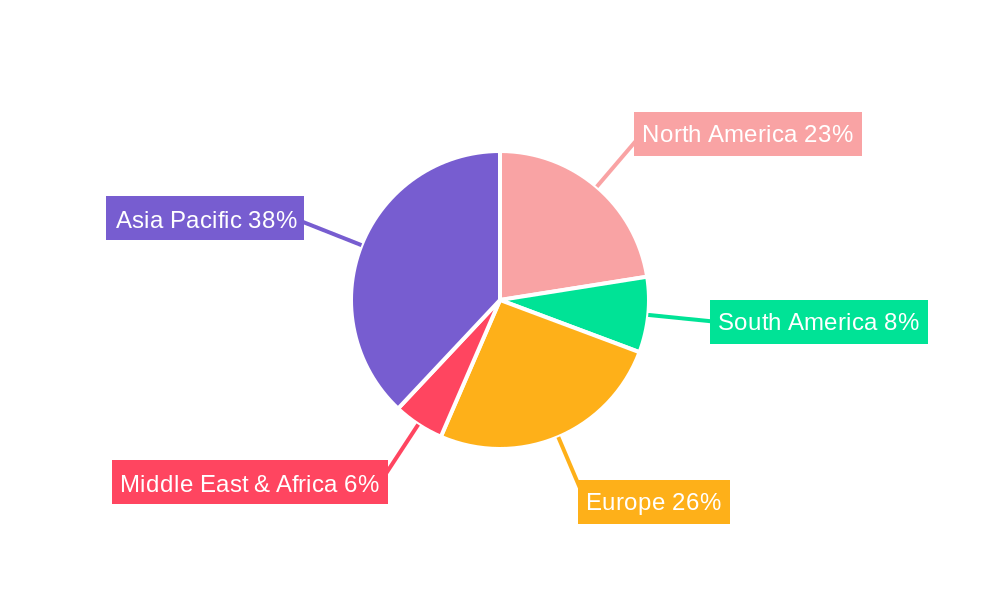
MEMS Microphone Sensors Regional Market Share
Geographic Coverage of MEMS Microphone Sensors
MEMS Microphone Sensors REPORT HIGHLIGHTS
| Aspects | Details |
|---|---|
| Study Period | 2020-2034 |
| Base Year | 2025 |
| Estimated Year | 2026 |
| Forecast Period | 2026-2034 |
| Historical Period | 2020-2025 |
| Growth Rate | CAGR of 11.3% from 2020-2034 |
| Segmentation |
|
Table of Contents
- 1. Introduction
- 1.1. Research Scope
- 1.2. Market Segmentation
- 1.3. Research Methodology
- 1.4. Definitions and Assumptions
- 2. Executive Summary
- 2.1. Introduction
- 3. Market Dynamics
- 3.1. Introduction
- 3.2. Market Drivers
- 3.3. Market Restrains
- 3.4. Market Trends
- 4. Market Factor Analysis
- 4.1. Porters Five Forces
- 4.2. Supply/Value Chain
- 4.3. PESTEL analysis
- 4.4. Market Entropy
- 4.5. Patent/Trademark Analysis
- 5. Global MEMS Microphone Sensors Analysis, Insights and Forecast, 2020-2032
- 5.1. Market Analysis, Insights and Forecast - by Application
- 5.1.1. Consumer Electronics
- 5.1.2. Automotive Electronics
- 5.1.3. Medical Electronics
- 5.1.4. Industrial Electronics
- 5.1.5. Others
- 5.2. Market Analysis, Insights and Forecast - by Types
- 5.2.1. Analog Type
- 5.2.2. Digital Type
- 5.3. Market Analysis, Insights and Forecast - by Region
- 5.3.1. North America
- 5.3.2. South America
- 5.3.3. Europe
- 5.3.4. Middle East & Africa
- 5.3.5. Asia Pacific
- 5.1. Market Analysis, Insights and Forecast - by Application
- 6. North America MEMS Microphone Sensors Analysis, Insights and Forecast, 2020-2032
- 6.1. Market Analysis, Insights and Forecast - by Application
- 6.1.1. Consumer Electronics
- 6.1.2. Automotive Electronics
- 6.1.3. Medical Electronics
- 6.1.4. Industrial Electronics
- 6.1.5. Others
- 6.2. Market Analysis, Insights and Forecast - by Types
- 6.2.1. Analog Type
- 6.2.2. Digital Type
- 6.1. Market Analysis, Insights and Forecast - by Application
- 7. South America MEMS Microphone Sensors Analysis, Insights and Forecast, 2020-2032
- 7.1. Market Analysis, Insights and Forecast - by Application
- 7.1.1. Consumer Electronics
- 7.1.2. Automotive Electronics
- 7.1.3. Medical Electronics
- 7.1.4. Industrial Electronics
- 7.1.5. Others
- 7.2. Market Analysis, Insights and Forecast - by Types
- 7.2.1. Analog Type
- 7.2.2. Digital Type
- 7.1. Market Analysis, Insights and Forecast - by Application
- 8. Europe MEMS Microphone Sensors Analysis, Insights and Forecast, 2020-2032
- 8.1. Market Analysis, Insights and Forecast - by Application
- 8.1.1. Consumer Electronics
- 8.1.2. Automotive Electronics
- 8.1.3. Medical Electronics
- 8.1.4. Industrial Electronics
- 8.1.5. Others
- 8.2. Market Analysis, Insights and Forecast - by Types
- 8.2.1. Analog Type
- 8.2.2. Digital Type
- 8.1. Market Analysis, Insights and Forecast - by Application
- 9. Middle East & Africa MEMS Microphone Sensors Analysis, Insights and Forecast, 2020-2032
- 9.1. Market Analysis, Insights and Forecast - by Application
- 9.1.1. Consumer Electronics
- 9.1.2. Automotive Electronics
- 9.1.3. Medical Electronics
- 9.1.4. Industrial Electronics
- 9.1.5. Others
- 9.2. Market Analysis, Insights and Forecast - by Types
- 9.2.1. Analog Type
- 9.2.2. Digital Type
- 9.1. Market Analysis, Insights and Forecast - by Application
- 10. Asia Pacific MEMS Microphone Sensors Analysis, Insights and Forecast, 2020-2032
- 10.1. Market Analysis, Insights and Forecast - by Application
- 10.1.1. Consumer Electronics
- 10.1.2. Automotive Electronics
- 10.1.3. Medical Electronics
- 10.1.4. Industrial Electronics
- 10.1.5. Others
- 10.2. Market Analysis, Insights and Forecast - by Types
- 10.2.1. Analog Type
- 10.2.2. Digital Type
- 10.1. Market Analysis, Insights and Forecast - by Application
- 11. Competitive Analysis
- 11.1. Global Market Share Analysis 2025
- 11.2. Company Profiles
- 11.2.1 Infineon Technologies
- 11.2.1.1. Overview
- 11.2.1.2. Products
- 11.2.1.3. SWOT Analysis
- 11.2.1.4. Recent Developments
- 11.2.1.5. Financials (Based on Availability)
- 11.2.2 Knowles
- 11.2.2.1. Overview
- 11.2.2.2. Products
- 11.2.2.3. SWOT Analysis
- 11.2.2.4. Recent Developments
- 11.2.2.5. Financials (Based on Availability)
- 11.2.3 Goertek
- 11.2.3.1. Overview
- 11.2.3.2. Products
- 11.2.3.3. SWOT Analysis
- 11.2.3.4. Recent Developments
- 11.2.3.5. Financials (Based on Availability)
- 11.2.4 TDK
- 11.2.4.1. Overview
- 11.2.4.2. Products
- 11.2.4.3. SWOT Analysis
- 11.2.4.4. Recent Developments
- 11.2.4.5. Financials (Based on Availability)
- 11.2.5 STMicroelectronics
- 11.2.5.1. Overview
- 11.2.5.2. Products
- 11.2.5.3. SWOT Analysis
- 11.2.5.4. Recent Developments
- 11.2.5.5. Financials (Based on Availability)
- 11.2.6 AAC Technologies
- 11.2.6.1. Overview
- 11.2.6.2. Products
- 11.2.6.3. SWOT Analysis
- 11.2.6.4. Recent Developments
- 11.2.6.5. Financials (Based on Availability)
- 11.2.7 Zilltek Technology
- 11.2.7.1. Overview
- 11.2.7.2. Products
- 11.2.7.3. SWOT Analysis
- 11.2.7.4. Recent Developments
- 11.2.7.5. Financials (Based on Availability)
- 11.2.8 MEMSensing
- 11.2.8.1. Overview
- 11.2.8.2. Products
- 11.2.8.3. SWOT Analysis
- 11.2.8.4. Recent Developments
- 11.2.8.5. Financials (Based on Availability)
- 11.2.9 Nisshinbo Micro Devices Inc. (NISD)
- 11.2.9.1. Overview
- 11.2.9.2. Products
- 11.2.9.3. SWOT Analysis
- 11.2.9.4. Recent Developments
- 11.2.9.5. Financials (Based on Availability)
- 11.2.10 Gettop
- 11.2.10.1. Overview
- 11.2.10.2. Products
- 11.2.10.3. SWOT Analysis
- 11.2.10.4. Recent Developments
- 11.2.10.5. Financials (Based on Availability)
- 11.2.11 NeoMEMS
- 11.2.11.1. Overview
- 11.2.11.2. Products
- 11.2.11.3. SWOT Analysis
- 11.2.11.4. Recent Developments
- 11.2.11.5. Financials (Based on Availability)
- 11.2.12 Hosiden
- 11.2.12.1. Overview
- 11.2.12.2. Products
- 11.2.12.3. SWOT Analysis
- 11.2.12.4. Recent Developments
- 11.2.12.5. Financials (Based on Availability)
- 11.2.13 Akustica (Bosch)
- 11.2.13.1. Overview
- 11.2.13.2. Products
- 11.2.13.3. SWOT Analysis
- 11.2.13.4. Recent Developments
- 11.2.13.5. Financials (Based on Availability)
- 11.2.14 MERRY
- 11.2.14.1. Overview
- 11.2.14.2. Products
- 11.2.14.3. SWOT Analysis
- 11.2.14.4. Recent Developments
- 11.2.14.5. Financials (Based on Availability)
- 11.2.15 BSE
- 11.2.15.1. Overview
- 11.2.15.2. Products
- 11.2.15.3. SWOT Analysis
- 11.2.15.4. Recent Developments
- 11.2.15.5. Financials (Based on Availability)
- 11.2.16 Sanico Electronics
- 11.2.16.1. Overview
- 11.2.16.2. Products
- 11.2.16.3. SWOT Analysis
- 11.2.16.4. Recent Developments
- 11.2.16.5. Financials (Based on Availability)
- 11.2.17 Sonion
- 11.2.17.1. Overview
- 11.2.17.2. Products
- 11.2.17.3. SWOT Analysis
- 11.2.17.4. Recent Developments
- 11.2.17.5. Financials (Based on Availability)
- 11.2.18 Vesper Technologies
- 11.2.18.1. Overview
- 11.2.18.2. Products
- 11.2.18.3. SWOT Analysis
- 11.2.18.4. Recent Developments
- 11.2.18.5. Financials (Based on Availability)
- 11.2.19 SinoVision SensTech
- 11.2.19.1. Overview
- 11.2.19.2. Products
- 11.2.19.3. SWOT Analysis
- 11.2.19.4. Recent Developments
- 11.2.19.5. Financials (Based on Availability)
- 11.2.20 3S
- 11.2.20.1. Overview
- 11.2.20.2. Products
- 11.2.20.3. SWOT Analysis
- 11.2.20.4. Recent Developments
- 11.2.20.5. Financials (Based on Availability)
- 11.2.21 CUI Devices
- 11.2.21.1. Overview
- 11.2.21.2. Products
- 11.2.21.3. SWOT Analysis
- 11.2.21.4. Recent Developments
- 11.2.21.5. Financials (Based on Availability)
- 11.2.22 Aoi Electronics
- 11.2.22.1. Overview
- 11.2.22.2. Products
- 11.2.22.3. SWOT Analysis
- 11.2.22.4. Recent Developments
- 11.2.22.5. Financials (Based on Availability)
- 11.2.1 Infineon Technologies
List of Figures
- Figure 1: Global MEMS Microphone Sensors Revenue Breakdown (million, %) by Region 2025 & 2033
- Figure 2: Global MEMS Microphone Sensors Volume Breakdown (K, %) by Region 2025 & 2033
- Figure 3: North America MEMS Microphone Sensors Revenue (million), by Application 2025 & 2033
- Figure 4: North America MEMS Microphone Sensors Volume (K), by Application 2025 & 2033
- Figure 5: North America MEMS Microphone Sensors Revenue Share (%), by Application 2025 & 2033
- Figure 6: North America MEMS Microphone Sensors Volume Share (%), by Application 2025 & 2033
- Figure 7: North America MEMS Microphone Sensors Revenue (million), by Types 2025 & 2033
- Figure 8: North America MEMS Microphone Sensors Volume (K), by Types 2025 & 2033
- Figure 9: North America MEMS Microphone Sensors Revenue Share (%), by Types 2025 & 2033
- Figure 10: North America MEMS Microphone Sensors Volume Share (%), by Types 2025 & 2033
- Figure 11: North America MEMS Microphone Sensors Revenue (million), by Country 2025 & 2033
- Figure 12: North America MEMS Microphone Sensors Volume (K), by Country 2025 & 2033
- Figure 13: North America MEMS Microphone Sensors Revenue Share (%), by Country 2025 & 2033
- Figure 14: North America MEMS Microphone Sensors Volume Share (%), by Country 2025 & 2033
- Figure 15: South America MEMS Microphone Sensors Revenue (million), by Application 2025 & 2033
- Figure 16: South America MEMS Microphone Sensors Volume (K), by Application 2025 & 2033
- Figure 17: South America MEMS Microphone Sensors Revenue Share (%), by Application 2025 & 2033
- Figure 18: South America MEMS Microphone Sensors Volume Share (%), by Application 2025 & 2033
- Figure 19: South America MEMS Microphone Sensors Revenue (million), by Types 2025 & 2033
- Figure 20: South America MEMS Microphone Sensors Volume (K), by Types 2025 & 2033
- Figure 21: South America MEMS Microphone Sensors Revenue Share (%), by Types 2025 & 2033
- Figure 22: South America MEMS Microphone Sensors Volume Share (%), by Types 2025 & 2033
- Figure 23: South America MEMS Microphone Sensors Revenue (million), by Country 2025 & 2033
- Figure 24: South America MEMS Microphone Sensors Volume (K), by Country 2025 & 2033
- Figure 25: South America MEMS Microphone Sensors Revenue Share (%), by Country 2025 & 2033
- Figure 26: South America MEMS Microphone Sensors Volume Share (%), by Country 2025 & 2033
- Figure 27: Europe MEMS Microphone Sensors Revenue (million), by Application 2025 & 2033
- Figure 28: Europe MEMS Microphone Sensors Volume (K), by Application 2025 & 2033
- Figure 29: Europe MEMS Microphone Sensors Revenue Share (%), by Application 2025 & 2033
- Figure 30: Europe MEMS Microphone Sensors Volume Share (%), by Application 2025 & 2033
- Figure 31: Europe MEMS Microphone Sensors Revenue (million), by Types 2025 & 2033
- Figure 32: Europe MEMS Microphone Sensors Volume (K), by Types 2025 & 2033
- Figure 33: Europe MEMS Microphone Sensors Revenue Share (%), by Types 2025 & 2033
- Figure 34: Europe MEMS Microphone Sensors Volume Share (%), by Types 2025 & 2033
- Figure 35: Europe MEMS Microphone Sensors Revenue (million), by Country 2025 & 2033
- Figure 36: Europe MEMS Microphone Sensors Volume (K), by Country 2025 & 2033
- Figure 37: Europe MEMS Microphone Sensors Revenue Share (%), by Country 2025 & 2033
- Figure 38: Europe MEMS Microphone Sensors Volume Share (%), by Country 2025 & 2033
- Figure 39: Middle East & Africa MEMS Microphone Sensors Revenue (million), by Application 2025 & 2033
- Figure 40: Middle East & Africa MEMS Microphone Sensors Volume (K), by Application 2025 & 2033
- Figure 41: Middle East & Africa MEMS Microphone Sensors Revenue Share (%), by Application 2025 & 2033
- Figure 42: Middle East & Africa MEMS Microphone Sensors Volume Share (%), by Application 2025 & 2033
- Figure 43: Middle East & Africa MEMS Microphone Sensors Revenue (million), by Types 2025 & 2033
- Figure 44: Middle East & Africa MEMS Microphone Sensors Volume (K), by Types 2025 & 2033
- Figure 45: Middle East & Africa MEMS Microphone Sensors Revenue Share (%), by Types 2025 & 2033
- Figure 46: Middle East & Africa MEMS Microphone Sensors Volume Share (%), by Types 2025 & 2033
- Figure 47: Middle East & Africa MEMS Microphone Sensors Revenue (million), by Country 2025 & 2033
- Figure 48: Middle East & Africa MEMS Microphone Sensors Volume (K), by Country 2025 & 2033
- Figure 49: Middle East & Africa MEMS Microphone Sensors Revenue Share (%), by Country 2025 & 2033
- Figure 50: Middle East & Africa MEMS Microphone Sensors Volume Share (%), by Country 2025 & 2033
- Figure 51: Asia Pacific MEMS Microphone Sensors Revenue (million), by Application 2025 & 2033
- Figure 52: Asia Pacific MEMS Microphone Sensors Volume (K), by Application 2025 & 2033
- Figure 53: Asia Pacific MEMS Microphone Sensors Revenue Share (%), by Application 2025 & 2033
- Figure 54: Asia Pacific MEMS Microphone Sensors Volume Share (%), by Application 2025 & 2033
- Figure 55: Asia Pacific MEMS Microphone Sensors Revenue (million), by Types 2025 & 2033
- Figure 56: Asia Pacific MEMS Microphone Sensors Volume (K), by Types 2025 & 2033
- Figure 57: Asia Pacific MEMS Microphone Sensors Revenue Share (%), by Types 2025 & 2033
- Figure 58: Asia Pacific MEMS Microphone Sensors Volume Share (%), by Types 2025 & 2033
- Figure 59: Asia Pacific MEMS Microphone Sensors Revenue (million), by Country 2025 & 2033
- Figure 60: Asia Pacific MEMS Microphone Sensors Volume (K), by Country 2025 & 2033
- Figure 61: Asia Pacific MEMS Microphone Sensors Revenue Share (%), by Country 2025 & 2033
- Figure 62: Asia Pacific MEMS Microphone Sensors Volume Share (%), by Country 2025 & 2033
List of Tables
- Table 1: Global MEMS Microphone Sensors Revenue million Forecast, by Region 2020 & 2033
- Table 2: Global MEMS Microphone Sensors Volume K Forecast, by Region 2020 & 2033
- Table 3: Global MEMS Microphone Sensors Revenue million Forecast, by Application 2020 & 2033
- Table 4: Global MEMS Microphone Sensors Volume K Forecast, by Application 2020 & 2033
- Table 5: Global MEMS Microphone Sensors Revenue million Forecast, by Types 2020 & 2033
- Table 6: Global MEMS Microphone Sensors Volume K Forecast, by Types 2020 & 2033
- Table 7: Global MEMS Microphone Sensors Revenue million Forecast, by Region 2020 & 2033
- Table 8: Global MEMS Microphone Sensors Volume K Forecast, by Region 2020 & 2033
- Table 9: Global MEMS Microphone Sensors Revenue million Forecast, by Application 2020 & 2033
- Table 10: Global MEMS Microphone Sensors Volume K Forecast, by Application 2020 & 2033
- Table 11: Global MEMS Microphone Sensors Revenue million Forecast, by Types 2020 & 2033
- Table 12: Global MEMS Microphone Sensors Volume K Forecast, by Types 2020 & 2033
- Table 13: Global MEMS Microphone Sensors Revenue million Forecast, by Country 2020 & 2033
- Table 14: Global MEMS Microphone Sensors Volume K Forecast, by Country 2020 & 2033
- Table 15: United States MEMS Microphone Sensors Revenue (million) Forecast, by Application 2020 & 2033
- Table 16: United States MEMS Microphone Sensors Volume (K) Forecast, by Application 2020 & 2033
- Table 17: Canada MEMS Microphone Sensors Revenue (million) Forecast, by Application 2020 & 2033
- Table 18: Canada MEMS Microphone Sensors Volume (K) Forecast, by Application 2020 & 2033
- Table 19: Mexico MEMS Microphone Sensors Revenue (million) Forecast, by Application 2020 & 2033
- Table 20: Mexico MEMS Microphone Sensors Volume (K) Forecast, by Application 2020 & 2033
- Table 21: Global MEMS Microphone Sensors Revenue million Forecast, by Application 2020 & 2033
- Table 22: Global MEMS Microphone Sensors Volume K Forecast, by Application 2020 & 2033
- Table 23: Global MEMS Microphone Sensors Revenue million Forecast, by Types 2020 & 2033
- Table 24: Global MEMS Microphone Sensors Volume K Forecast, by Types 2020 & 2033
- Table 25: Global MEMS Microphone Sensors Revenue million Forecast, by Country 2020 & 2033
- Table 26: Global MEMS Microphone Sensors Volume K Forecast, by Country 2020 & 2033
- Table 27: Brazil MEMS Microphone Sensors Revenue (million) Forecast, by Application 2020 & 2033
- Table 28: Brazil MEMS Microphone Sensors Volume (K) Forecast, by Application 2020 & 2033
- Table 29: Argentina MEMS Microphone Sensors Revenue (million) Forecast, by Application 2020 & 2033
- Table 30: Argentina MEMS Microphone Sensors Volume (K) Forecast, by Application 2020 & 2033
- Table 31: Rest of South America MEMS Microphone Sensors Revenue (million) Forecast, by Application 2020 & 2033
- Table 32: Rest of South America MEMS Microphone Sensors Volume (K) Forecast, by Application 2020 & 2033
- Table 33: Global MEMS Microphone Sensors Revenue million Forecast, by Application 2020 & 2033
- Table 34: Global MEMS Microphone Sensors Volume K Forecast, by Application 2020 & 2033
- Table 35: Global MEMS Microphone Sensors Revenue million Forecast, by Types 2020 & 2033
- Table 36: Global MEMS Microphone Sensors Volume K Forecast, by Types 2020 & 2033
- Table 37: Global MEMS Microphone Sensors Revenue million Forecast, by Country 2020 & 2033
- Table 38: Global MEMS Microphone Sensors Volume K Forecast, by Country 2020 & 2033
- Table 39: United Kingdom MEMS Microphone Sensors Revenue (million) Forecast, by Application 2020 & 2033
- Table 40: United Kingdom MEMS Microphone Sensors Volume (K) Forecast, by Application 2020 & 2033
- Table 41: Germany MEMS Microphone Sensors Revenue (million) Forecast, by Application 2020 & 2033
- Table 42: Germany MEMS Microphone Sensors Volume (K) Forecast, by Application 2020 & 2033
- Table 43: France MEMS Microphone Sensors Revenue (million) Forecast, by Application 2020 & 2033
- Table 44: France MEMS Microphone Sensors Volume (K) Forecast, by Application 2020 & 2033
- Table 45: Italy MEMS Microphone Sensors Revenue (million) Forecast, by Application 2020 & 2033
- Table 46: Italy MEMS Microphone Sensors Volume (K) Forecast, by Application 2020 & 2033
- Table 47: Spain MEMS Microphone Sensors Revenue (million) Forecast, by Application 2020 & 2033
- Table 48: Spain MEMS Microphone Sensors Volume (K) Forecast, by Application 2020 & 2033
- Table 49: Russia MEMS Microphone Sensors Revenue (million) Forecast, by Application 2020 & 2033
- Table 50: Russia MEMS Microphone Sensors Volume (K) Forecast, by Application 2020 & 2033
- Table 51: Benelux MEMS Microphone Sensors Revenue (million) Forecast, by Application 2020 & 2033
- Table 52: Benelux MEMS Microphone Sensors Volume (K) Forecast, by Application 2020 & 2033
- Table 53: Nordics MEMS Microphone Sensors Revenue (million) Forecast, by Application 2020 & 2033
- Table 54: Nordics MEMS Microphone Sensors Volume (K) Forecast, by Application 2020 & 2033
- Table 55: Rest of Europe MEMS Microphone Sensors Revenue (million) Forecast, by Application 2020 & 2033
- Table 56: Rest of Europe MEMS Microphone Sensors Volume (K) Forecast, by Application 2020 & 2033
- Table 57: Global MEMS Microphone Sensors Revenue million Forecast, by Application 2020 & 2033
- Table 58: Global MEMS Microphone Sensors Volume K Forecast, by Application 2020 & 2033
- Table 59: Global MEMS Microphone Sensors Revenue million Forecast, by Types 2020 & 2033
- Table 60: Global MEMS Microphone Sensors Volume K Forecast, by Types 2020 & 2033
- Table 61: Global MEMS Microphone Sensors Revenue million Forecast, by Country 2020 & 2033
- Table 62: Global MEMS Microphone Sensors Volume K Forecast, by Country 2020 & 2033
- Table 63: Turkey MEMS Microphone Sensors Revenue (million) Forecast, by Application 2020 & 2033
- Table 64: Turkey MEMS Microphone Sensors Volume (K) Forecast, by Application 2020 & 2033
- Table 65: Israel MEMS Microphone Sensors Revenue (million) Forecast, by Application 2020 & 2033
- Table 66: Israel MEMS Microphone Sensors Volume (K) Forecast, by Application 2020 & 2033
- Table 67: GCC MEMS Microphone Sensors Revenue (million) Forecast, by Application 2020 & 2033
- Table 68: GCC MEMS Microphone Sensors Volume (K) Forecast, by Application 2020 & 2033
- Table 69: North Africa MEMS Microphone Sensors Revenue (million) Forecast, by Application 2020 & 2033
- Table 70: North Africa MEMS Microphone Sensors Volume (K) Forecast, by Application 2020 & 2033
- Table 71: South Africa MEMS Microphone Sensors Revenue (million) Forecast, by Application 2020 & 2033
- Table 72: South Africa MEMS Microphone Sensors Volume (K) Forecast, by Application 2020 & 2033
- Table 73: Rest of Middle East & Africa MEMS Microphone Sensors Revenue (million) Forecast, by Application 2020 & 2033
- Table 74: Rest of Middle East & Africa MEMS Microphone Sensors Volume (K) Forecast, by Application 2020 & 2033
- Table 75: Global MEMS Microphone Sensors Revenue million Forecast, by Application 2020 & 2033
- Table 76: Global MEMS Microphone Sensors Volume K Forecast, by Application 2020 & 2033
- Table 77: Global MEMS Microphone Sensors Revenue million Forecast, by Types 2020 & 2033
- Table 78: Global MEMS Microphone Sensors Volume K Forecast, by Types 2020 & 2033
- Table 79: Global MEMS Microphone Sensors Revenue million Forecast, by Country 2020 & 2033
- Table 80: Global MEMS Microphone Sensors Volume K Forecast, by Country 2020 & 2033
- Table 81: China MEMS Microphone Sensors Revenue (million) Forecast, by Application 2020 & 2033
- Table 82: China MEMS Microphone Sensors Volume (K) Forecast, by Application 2020 & 2033
- Table 83: India MEMS Microphone Sensors Revenue (million) Forecast, by Application 2020 & 2033
- Table 84: India MEMS Microphone Sensors Volume (K) Forecast, by Application 2020 & 2033
- Table 85: Japan MEMS Microphone Sensors Revenue (million) Forecast, by Application 2020 & 2033
- Table 86: Japan MEMS Microphone Sensors Volume (K) Forecast, by Application 2020 & 2033
- Table 87: South Korea MEMS Microphone Sensors Revenue (million) Forecast, by Application 2020 & 2033
- Table 88: South Korea MEMS Microphone Sensors Volume (K) Forecast, by Application 2020 & 2033
- Table 89: ASEAN MEMS Microphone Sensors Revenue (million) Forecast, by Application 2020 & 2033
- Table 90: ASEAN MEMS Microphone Sensors Volume (K) Forecast, by Application 2020 & 2033
- Table 91: Oceania MEMS Microphone Sensors Revenue (million) Forecast, by Application 2020 & 2033
- Table 92: Oceania MEMS Microphone Sensors Volume (K) Forecast, by Application 2020 & 2033
- Table 93: Rest of Asia Pacific MEMS Microphone Sensors Revenue (million) Forecast, by Application 2020 & 2033
- Table 94: Rest of Asia Pacific MEMS Microphone Sensors Volume (K) Forecast, by Application 2020 & 2033
Frequently Asked Questions
1. What is the projected Compound Annual Growth Rate (CAGR) of the MEMS Microphone Sensors?
The projected CAGR is approximately 11.3%.
2. Which companies are prominent players in the MEMS Microphone Sensors?
Key companies in the market include Infineon Technologies, Knowles, Goertek, TDK, STMicroelectronics, AAC Technologies, Zilltek Technology, MEMSensing, Nisshinbo Micro Devices Inc. (NISD), Gettop, NeoMEMS, Hosiden, Akustica (Bosch), MERRY, BSE, Sanico Electronics, Sonion, Vesper Technologies, SinoVision SensTech, 3S, CUI Devices, Aoi Electronics.
3. What are the main segments of the MEMS Microphone Sensors?
The market segments include Application, Types.
4. Can you provide details about the market size?
The market size is estimated to be USD 2195.7 million as of 2022.
5. What are some drivers contributing to market growth?
N/A
6. What are the notable trends driving market growth?
N/A
7. Are there any restraints impacting market growth?
N/A
8. Can you provide examples of recent developments in the market?
N/A
9. What pricing options are available for accessing the report?
Pricing options include single-user, multi-user, and enterprise licenses priced at USD 3350.00, USD 5025.00, and USD 6700.00 respectively.
10. Is the market size provided in terms of value or volume?
The market size is provided in terms of value, measured in million and volume, measured in K.
11. Are there any specific market keywords associated with the report?
Yes, the market keyword associated with the report is "MEMS Microphone Sensors," which aids in identifying and referencing the specific market segment covered.
12. How do I determine which pricing option suits my needs best?
The pricing options vary based on user requirements and access needs. Individual users may opt for single-user licenses, while businesses requiring broader access may choose multi-user or enterprise licenses for cost-effective access to the report.
13. Are there any additional resources or data provided in the MEMS Microphone Sensors report?
While the report offers comprehensive insights, it's advisable to review the specific contents or supplementary materials provided to ascertain if additional resources or data are available.
14. How can I stay updated on further developments or reports in the MEMS Microphone Sensors?
To stay informed about further developments, trends, and reports in the MEMS Microphone Sensors, consider subscribing to industry newsletters, following relevant companies and organizations, or regularly checking reputable industry news sources and publications.
Methodology
Step 1 - Identification of Relevant Samples Size from Population Database



Step 2 - Approaches for Defining Global Market Size (Value, Volume* & Price*)

Note*: In applicable scenarios
Step 3 - Data Sources
Primary Research
- Web Analytics
- Survey Reports
- Research Institute
- Latest Research Reports
- Opinion Leaders
Secondary Research
- Annual Reports
- White Paper
- Latest Press Release
- Industry Association
- Paid Database
- Investor Presentations

Step 4 - Data Triangulation
Involves using different sources of information in order to increase the validity of a study
These sources are likely to be stakeholders in a program - participants, other researchers, program staff, other community members, and so on.
Then we put all data in single framework & apply various statistical tools to find out the dynamic on the market.
During the analysis stage, feedback from the stakeholder groups would be compared to determine areas of agreement as well as areas of divergence
