

Key Insights
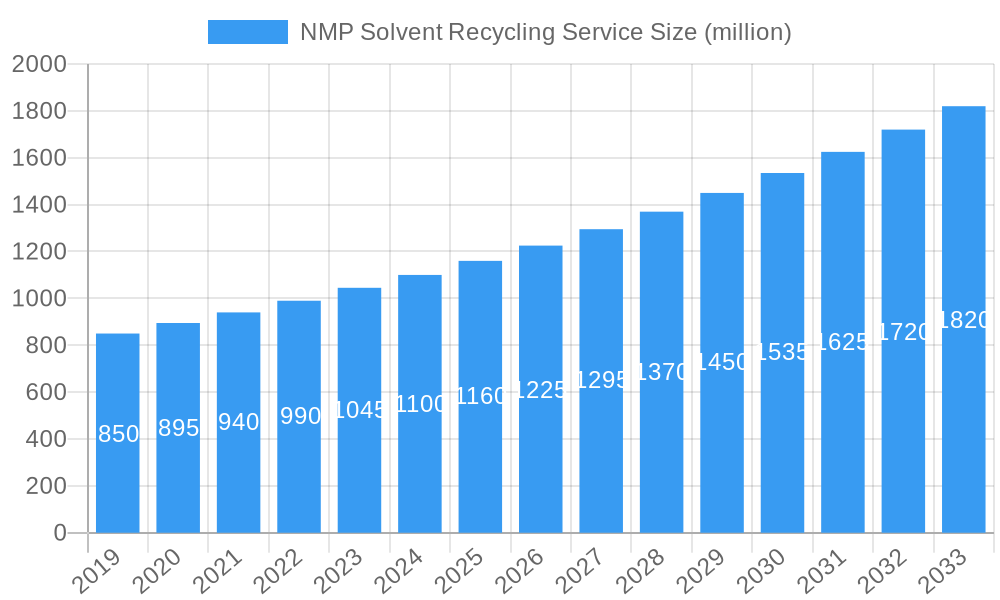
The global NMP Solvent Recycling Service market is poised for significant growth, projected to reach an estimated $1.24 billion in 2025. This expansion is driven by a robust Compound Annual Growth Rate (CAGR) of 6.3%, indicating a healthy and sustained upward trajectory throughout the forecast period of 2025-2033. Key to this growth are several critical drivers. The increasing environmental regulations worldwide are compelling industries to adopt sustainable practices, making NMP solvent recycling a crucial component of waste management and resource conservation. Furthermore, the rising cost of virgin NMP, coupled with a growing awareness of its hazardous nature and the economic benefits of recycling, fuels demand for these specialized services. The automotive sector, a major consumer of NMP in battery manufacturing and component cleaning, and the industrial sector, utilizing NMP in various chemical processes and coatings, represent the primary application segments.
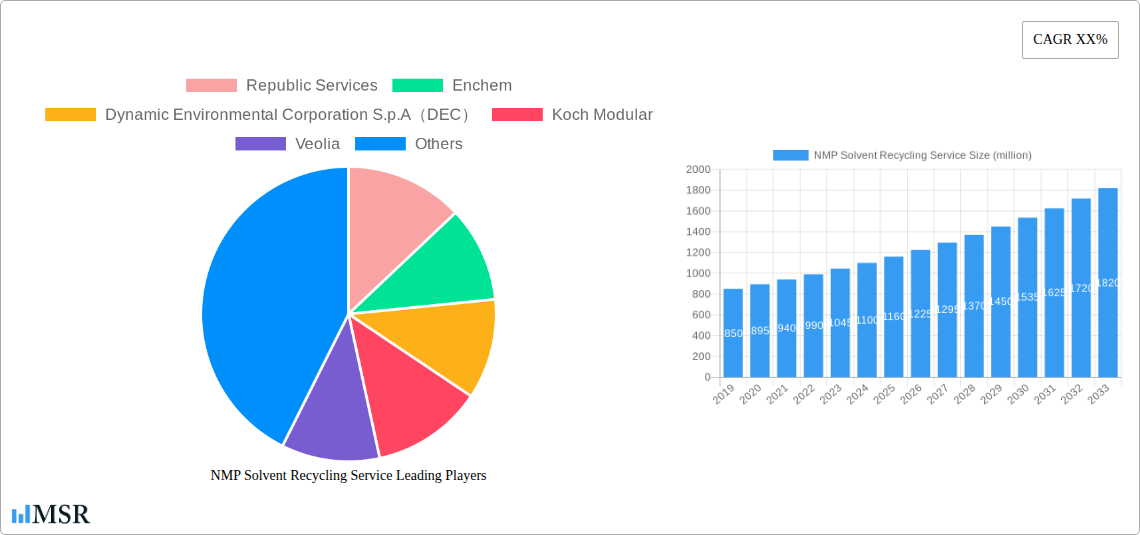
NMP Solvent Recycling Service Market Size (In Million)

The market is further segmented by the type of service offered, with both on-site and off-site recycling services catering to diverse industrial needs. On-site services offer convenience and immediate waste management solutions, while off-site services provide centralized, large-scale processing. Trends such as the development of advanced recycling technologies that enhance recovery rates and purity, alongside the expansion of service providers into new geographical regions, are shaping the market landscape. However, certain restraints, such as the initial capital investment required for recycling infrastructure and potential complexities in handling mixed solvent streams, could temper the pace of growth. Leading companies like Veolia, Clean Harbors, and Republic Services are actively investing in expanding their NMP recycling capabilities, underscoring the market's competitive yet promising nature. The demand for NMP solvent recycling is particularly strong in regions with significant industrial and automotive manufacturing hubs, indicating a concentrated but substantial market presence.
NMP Solvent Recycling Service Company Market Share
This comprehensive report, "NMP Solvent Recycling Service: Market Dynamics, Trends, and Future Outlook 2024-2033," provides an in-depth analysis of the global NMP solvent recycling market, a critical sector for sustainable industrial practices. This study is essential for industry stakeholders seeking to understand market concentration, identify growth drivers, and capitalize on emerging opportunities within the NMP recycling landscape.
NMP Solvent Recycling Service Market Concentration & Dynamics
The global NMP solvent recycling market exhibits a moderate to high concentration, with key players like Republic Services, Enchem, Dynamic Environmental Corporation S.p.A (DEC), Koch Modular, Veolia, Clean Harbors, and xx (estimated xx% market share) dominating significant portions of the market. The innovation ecosystem is driven by advancements in recycling technologies, aiming for higher recovery rates and purity levels of N-Methyl-2-pyrrolidone. Regulatory frameworks, particularly those emphasizing circular economy principles and hazardous waste reduction, are increasingly favoring solvent recycling services, stimulating market growth. Substitute products, while present, often fall short in terms of efficiency and environmental benefits compared to recycled NMP. End-user trends lean towards cost-effectiveness and environmental stewardship, pushing industries to adopt sustainable solvent management practices. Mergers and acquisitions (M&A) activities are anticipated to continue, with an estimated xx M&A deals projected during the forecast period, as larger players seek to expand their service portfolios and geographic reach. The market is characterized by a balance of established waste management giants and specialized recycling solution providers.
NMP Solvent Recycling Service Industry Insights & Trends
The NMP solvent recycling service market is poised for substantial growth, driven by increasing environmental regulations, the rising cost of virgin NMP, and a growing emphasis on sustainable manufacturing practices across various industries. The market size for NMP solvent recycling services was valued at approximately USD xxx billion in the historical year 2024 and is projected to reach an impressive USD xxx billion by 2033, expanding at a Compound Annual Growth Rate (CAGR) of xx% during the forecast period of 2025–2033. Key growth drivers include the escalating demand for NMP in battery manufacturing, pharmaceuticals, and electronics, coupled with the inherent challenges associated with virgin NMP production, such as high energy consumption and environmental impact. Technological disruptions, particularly in the development of more efficient and cost-effective distillation and purification techniques, are enhancing the appeal of recycled NMP. Evolving consumer behaviors, influenced by corporate social responsibility initiatives and consumer demand for eco-friendly products, are compelling manufacturers to adopt greener supply chain solutions, including solvent recycling. The circular economy model is gaining significant traction, encouraging businesses to invest in closed-loop systems for NMP management, thereby reducing waste generation and operational costs. Furthermore, government incentives and tax credits for adopting environmentally sound waste management practices are acting as significant catalysts for market expansion. The increasing awareness about the toxicity and environmental persistence of certain industrial chemicals further underscores the importance of robust NMP recycling infrastructure.
Key Markets & Segments Leading NMP Solvent Recycling Service
The Industrial segment, particularly within the Automotive and Electronics sub-sectors, is currently the dominant force in the NMP solvent recycling service market. This dominance is fueled by several critical drivers.
- Economic Growth: Robust economic expansion in key industrial regions translates to higher manufacturing output, consequently increasing the demand for NMP as a solvent in processes like battery electrode coating, paint stripping, and polymer manufacturing.
- Infrastructure Development: Investments in new manufacturing facilities and the expansion of existing ones, especially in regions with a strong automotive and electronics manufacturing base, directly correlate with a greater need for reliable NMP solvent recycling solutions.
- Technological Advancements in Manufacturing: The continuous innovation in battery technology, requiring high-purity NMP for electrode slurry preparation, is a significant contributor to the demand for recycled NMP. Similarly, the electronics industry's reliance on NMP for cleaning and stripping processes further bolsters this segment.
Geographically, Asia Pacific is emerging as the leading market for NMP solvent recycling services, driven by its status as a global manufacturing hub for electronics, automobiles, and other industrial goods. Countries like China, South Korea, and Japan are at the forefront of adopting advanced manufacturing techniques that heavily utilize NMP. The region's stringent environmental regulations, coupled with government initiatives promoting a circular economy, are further accelerating the adoption of NMP recycling services.
In terms of Types, both On-site Recycling Service and Off-site Recycling Service are witnessing significant adoption.
- On-site Recycling Service is gaining traction for large-scale industrial users who benefit from immediate solvent recovery, reduced transportation costs, and enhanced control over their NMP supply chain. This model is particularly attractive for companies with high NMP consumption volumes.
- Off-site Recycling Service remains crucial for small to medium-sized enterprises and for situations where on-site infrastructure is not feasible. It offers a convenient and often more cost-effective solution for managing NMP waste.
The Others application segment, encompassing pharmaceuticals and textiles, also presents substantial growth potential due to the increasing adoption of sustainable practices in these sectors.
NMP Solvent Recycling Service Product Developments
Recent product developments in the NMP solvent recycling service market focus on enhancing recovery efficiency and purity levels. Advancements in distillation technologies, membrane separation, and advanced purification techniques are enabling higher NMP recovery rates, often exceeding xx%. These innovations are crucial for meeting the stringent purity requirements of high-tech applications like battery manufacturing. Furthermore, the development of integrated on-site recycling units offers greater convenience and cost savings for end-users, minimizing logistics and waste disposal expenses. The market relevance of these developments is directly tied to their ability to provide cost-effective, environmentally compliant, and high-quality recycled NMP solutions, thereby strengthening the competitive edge of service providers.
Challenges in the NMP Solvent Recycling Service Market
The NMP solvent recycling service market faces several challenges that can impede growth. Regulatory hurdles, particularly varying international standards for hazardous waste management and recycled solvent quality, can create complexity for service providers operating globally. Supply chain issues, including the consistent availability of used NMP feedstock and fluctuations in transportation costs, pose another significant restraint. Competitive pressures from virgin NMP suppliers and alternative solvents, although decreasing, still exert influence. The capital-intensive nature of establishing advanced recycling facilities can also be a barrier to entry for smaller players, impacting market concentration.
Forces Driving NMP Solvent Recycling Service Growth
Several key forces are driving the growth of the NMP solvent recycling service market. Technological advancements in recycling processes, such as enhanced distillation and purification methods, are increasing the efficiency and quality of recycled NMP, making it more attractive to end-users. Economic factors, including the volatile pricing of virgin NMP and the overall cost-saving benefits of recycling, are compelling industries to adopt these services. Regulatory mandates and incentives promoting sustainability and circular economy principles are creating a favorable environment for NMP recycling. The growing environmental consciousness among consumers and businesses alike is further pushing demand for greener industrial practices.
Challenges in the NMP Solvent Recycling Service Market
Long-term growth catalysts for the NMP solvent recycling service market are rooted in continuous innovation and strategic market expansion. The development of novel recycling technologies that can handle more complex waste streams and achieve even higher purity levels will be pivotal. Partnerships and collaborations between recycling service providers and NMP-consuming industries can foster closed-loop systems and ensure a steady supply of feedstock. Market expansion into emerging economies with growing industrial sectors and increasing environmental awareness will unlock new revenue streams. Furthermore, the integration of digital technologies for process optimization and supply chain management will enhance operational efficiency and service delivery.
Emerging Opportunities in NMP Solvent Recycling Service
Emerging opportunities in the NMP solvent recycling service market are manifold. The burgeoning electric vehicle (EV) battery industry represents a significant growth area, with its substantial demand for NMP in electrode manufacturing, creating a massive need for high-quality recycled NMP. The increasing adoption of sustainable practices in the pharmaceutical and agrochemical sectors, which utilize NMP as a solvent, presents another promising avenue. Technological advancements in portable and modular recycling units could open up new service models for smaller enterprises. Furthermore, the growing consumer preference for products manufactured using eco-friendly processes is indirectly driving demand for recycled solvents across various industries.
Leading Players in the NMP Solvent Recycling Service Sector
- Republic Services
- Enchem
- Dynamic Environmental Corporation S.p.A (DEC)
- Koch Modular
- Veolia
- Clean Harbors
Key Milestones in NMP Solvent Recycling Service Industry
- 2019: Increased regulatory scrutiny on hazardous waste management globally, boosting interest in solvent recycling.
- 2020: Significant investments in R&D for advanced NMP purification technologies by leading chemical companies.
- 2021: Growing demand for NMP in the rapidly expanding EV battery sector, highlighting the need for sustainable NMP sourcing.
- 2022: Several key players announced strategic partnerships for on-site NMP recycling solutions.
- 2023: Launch of new, more energy-efficient NMP recycling processes with higher recovery rates.
- 2024: Introduction of pilot programs for closed-loop NMP recycling in the electronics manufacturing sector.
Strategic Outlook for NMP Solvent Recycling Service Market
The strategic outlook for the NMP solvent recycling service market is overwhelmingly positive. Growth will be propelled by the persistent drive for sustainability, stringent environmental regulations, and the economic imperative to reduce operational costs. Key growth accelerators include further technological innovation in recycling processes to achieve higher purity and lower costs, expansion into new application areas like advanced materials and bioplastics, and the development of more efficient logistical networks for feedstock collection and recycled product distribution. Strategic partnerships with major NMP consumers and investment in expanding service capabilities will be crucial for market leaders to capture a larger share of this growing market.
NMP Solvent Recycling Service Segmentation
-
1. Application
- 1.1. Automotive
- 1.2. Industrial
- 1.3. Others
-
2. Types
- 2.1. On-site Recycling Service
- 2.2. Off-site Recycling Service
NMP Solvent Recycling Service Segmentation By Geography
- 1. IN
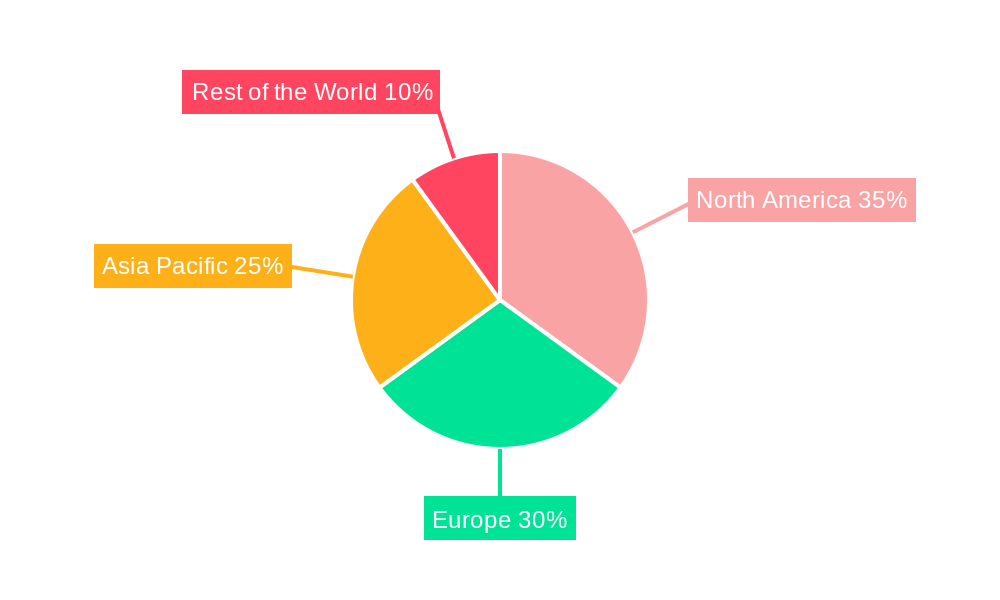
NMP Solvent Recycling Service Regional Market Share
Geographic Coverage of NMP Solvent Recycling Service
NMP Solvent Recycling Service REPORT HIGHLIGHTS
| Aspects | Details |
|---|---|
| Study Period | 2020-2034 |
| Base Year | 2025 |
| Estimated Year | 2026 |
| Forecast Period | 2026-2034 |
| Historical Period | 2020-2025 |
| Growth Rate | CAGR of 6.3% from 2020-2034 |
| Segmentation |
|
Table of Contents
- 1. Introduction
- 1.1. Research Scope
- 1.2. Market Segmentation
- 1.3. Research Methodology
- 1.4. Definitions and Assumptions
- 2. Executive Summary
- 2.1. Introduction
- 3. Market Dynamics
- 3.1. Introduction
- 3.2. Market Drivers
- 3.3. Market Restrains
- 3.4. Market Trends
- 4. Market Factor Analysis
- 4.1. Porters Five Forces
- 4.2. Supply/Value Chain
- 4.3. PESTEL analysis
- 4.4. Market Entropy
- 4.5. Patent/Trademark Analysis
- 5. NMP Solvent Recycling Service Analysis, Insights and Forecast, 2020-2032
- 5.1. Market Analysis, Insights and Forecast - by Application
- 5.1.1. Automotive
- 5.1.2. Industrial
- 5.1.3. Others
- 5.2. Market Analysis, Insights and Forecast - by Types
- 5.2.1. On-site Recycling Service
- 5.2.2. Off-site Recycling Service
- 5.3. Market Analysis, Insights and Forecast - by Region
- 5.3.1. IN
- 5.1. Market Analysis, Insights and Forecast - by Application
- 6. Competitive Analysis
- 6.1. Market Share Analysis 2025
- 6.2. Company Profiles
- 6.2.1 Republic Services
- 6.2.1.1. Overview
- 6.2.1.2. Products
- 6.2.1.3. SWOT Analysis
- 6.2.1.4. Recent Developments
- 6.2.1.5. Financials (Based on Availability)
- 6.2.2 Enchem
- 6.2.2.1. Overview
- 6.2.2.2. Products
- 6.2.2.3. SWOT Analysis
- 6.2.2.4. Recent Developments
- 6.2.2.5. Financials (Based on Availability)
- 6.2.3 Dynamic Environmental Corporation S.p.A(DEC)
- 6.2.3.1. Overview
- 6.2.3.2. Products
- 6.2.3.3. SWOT Analysis
- 6.2.3.4. Recent Developments
- 6.2.3.5. Financials (Based on Availability)
- 6.2.4 Koch Modular
- 6.2.4.1. Overview
- 6.2.4.2. Products
- 6.2.4.3. SWOT Analysis
- 6.2.4.4. Recent Developments
- 6.2.4.5. Financials (Based on Availability)
- 6.2.5 Veolia
- 6.2.5.1. Overview
- 6.2.5.2. Products
- 6.2.5.3. SWOT Analysis
- 6.2.5.4. Recent Developments
- 6.2.5.5. Financials (Based on Availability)
- 6.2.6 Clean Harbors
- 6.2.6.1. Overview
- 6.2.6.2. Products
- 6.2.6.3. SWOT Analysis
- 6.2.6.4. Recent Developments
- 6.2.6.5. Financials (Based on Availability)
- 6.2.1 Republic Services
List of Figures
- Figure 1: NMP Solvent Recycling Service Revenue Breakdown (undefined, %) by Product 2025 & 2033
- Figure 2: NMP Solvent Recycling Service Share (%) by Company 2025
List of Tables
- Table 1: NMP Solvent Recycling Service Revenue undefined Forecast, by Region 2020 & 2033
- Table 2: NMP Solvent Recycling Service Revenue undefined Forecast, by Application 2020 & 2033
- Table 3: NMP Solvent Recycling Service Revenue undefined Forecast, by Types 2020 & 2033
- Table 4: NMP Solvent Recycling Service Revenue undefined Forecast, by Region 2020 & 2033
- Table 5: NMP Solvent Recycling Service Revenue undefined Forecast, by Application 2020 & 2033
- Table 6: NMP Solvent Recycling Service Revenue undefined Forecast, by Types 2020 & 2033
- Table 7: NMP Solvent Recycling Service Revenue undefined Forecast, by Country 2020 & 2033
Frequently Asked Questions
1. What is the projected Compound Annual Growth Rate (CAGR) of the NMP Solvent Recycling Service?
The projected CAGR is approximately 6.3%.
2. Which companies are prominent players in the NMP Solvent Recycling Service?
Key companies in the market include Republic Services, Enchem, Dynamic Environmental Corporation S.p.A(DEC), Koch Modular, Veolia, Clean Harbors.
3. What are the main segments of the NMP Solvent Recycling Service?
The market segments include Application, Types.
4. Can you provide details about the market size?
The market size is estimated to be USD XXX N/A as of 2022.
5. What are some drivers contributing to market growth?
N/A
6. What are the notable trends driving market growth?
N/A
7. Are there any restraints impacting market growth?
N/A
8. Can you provide examples of recent developments in the market?
N/A
9. What pricing options are available for accessing the report?
Pricing options include single-user, multi-user, and enterprise licenses priced at USD 4500.00, USD 6750.00, and USD 9000.00 respectively.
10. Is the market size provided in terms of value or volume?
The market size is provided in terms of value, measured in N/A.
11. Are there any specific market keywords associated with the report?
Yes, the market keyword associated with the report is "NMP Solvent Recycling Service," which aids in identifying and referencing the specific market segment covered.
12. How do I determine which pricing option suits my needs best?
The pricing options vary based on user requirements and access needs. Individual users may opt for single-user licenses, while businesses requiring broader access may choose multi-user or enterprise licenses for cost-effective access to the report.
13. Are there any additional resources or data provided in the NMP Solvent Recycling Service report?
While the report offers comprehensive insights, it's advisable to review the specific contents or supplementary materials provided to ascertain if additional resources or data are available.
14. How can I stay updated on further developments or reports in the NMP Solvent Recycling Service?
To stay informed about further developments, trends, and reports in the NMP Solvent Recycling Service, consider subscribing to industry newsletters, following relevant companies and organizations, or regularly checking reputable industry news sources and publications.
Methodology
Step 1 - Identification of Relevant Samples Size from Population Database



Step 2 - Approaches for Defining Global Market Size (Value, Volume* & Price*)

Note*: In applicable scenarios
Step 3 - Data Sources
Primary Research
- Web Analytics
- Survey Reports
- Research Institute
- Latest Research Reports
- Opinion Leaders
Secondary Research
- Annual Reports
- White Paper
- Latest Press Release
- Industry Association
- Paid Database
- Investor Presentations

Step 4 - Data Triangulation
Involves using different sources of information in order to increase the validity of a study
These sources are likely to be stakeholders in a program - participants, other researchers, program staff, other community members, and so on.
Then we put all data in single framework & apply various statistical tools to find out the dynamic on the market.
During the analysis stage, feedback from the stakeholder groups would be compared to determine areas of agreement as well as areas of divergence
