

Key Insights
The global PCB Design and Circuit Simulator market is poised for substantial expansion, with an estimated market size of $4.08 billion in 2025. This robust growth is driven by an impressive Compound Annual Growth Rate (CAGR) of 14.9% anticipated over the forecast period. The proliferation of electronic devices across consumer, industrial, and automotive sectors, coupled with the increasing complexity of electronic designs, fuels the demand for sophisticated PCB design and circuit simulation tools. The burgeoning Internet of Things (IoT) ecosystem, the advancement of Artificial Intelligence (AI) and Machine Learning (ML) in electronics, and the growing need for rapid prototyping and validation are key factors propelling this market forward. Furthermore, the ongoing miniaturization of electronic components and the drive for enhanced performance and power efficiency in devices necessitate advanced simulation capabilities for accurate design and testing. Educational institutions are also increasingly adopting these tools to train future engineers, contributing to a broader user base.
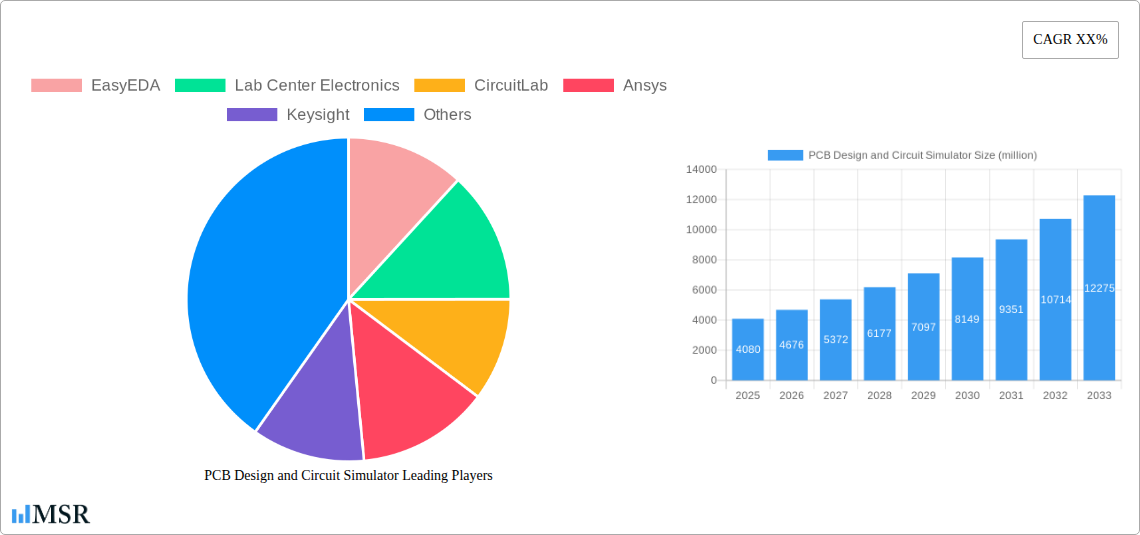
PCB Design and Circuit Simulator Market Size (In Billion)

The market's dynamism is further shaped by key trends such as the integration of AI and cloud-based solutions for enhanced design workflows and collaborative capabilities. The demand for specialized simulation software catering to niche applications, like high-frequency designs and power electronics, is also on the rise. While the market enjoys strong growth, potential restraints include the high cost of advanced software licenses and the need for specialized expertise to effectively utilize these complex tools. However, the availability of free and open-source alternatives is democratizing access and fostering innovation. Geographically, Asia Pacific, led by China and India, is expected to emerge as a significant growth engine due to its robust electronics manufacturing base and increasing R&D investments. North America and Europe remain mature markets with a strong demand for high-end solutions and continuous innovation. Key players are investing in R&D to offer integrated solutions that streamline the entire electronic design automation (EDA) process.
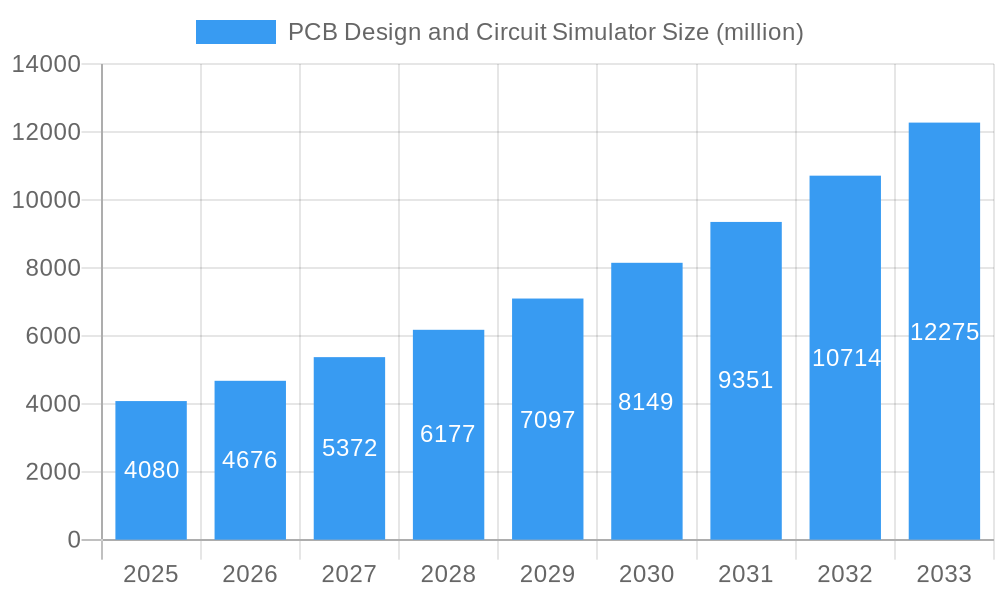
PCB Design and Circuit Simulator Company Market Share
Here is an SEO-optimized, engaging report description for the "PCB Design and Circuit Simulator Market" report, incorporating your specified requirements and keywords.
PCB Design and Circuit Simulator Market Concentration & Dynamics
The global PCB design and circuit simulator market, valued at an estimated xx billion in the base year of 2025, exhibits a moderately consolidated landscape. Key players like Ansys, Keysight, Cadence, and Autodesk command significant market share, driven by their comprehensive software suites and extensive R&D investments. Innovation ecosystems are vibrant, with companies such as EasyEDA, KiCad EDA, and Lab Center Electronics fostering open-source contributions and rapid development cycles, particularly for Free PCB design tools. Regulatory frameworks, while generally supportive of technological advancement, are increasingly focusing on cybersecurity and data integrity for complex designs, impacting development priorities. Substitute products, primarily manual design methods and less sophisticated simulation tools, are steadily losing ground to integrated, AI-powered solutions. End-user trends reveal a growing demand for cloud-based platforms, enabling collaborative design and remote access, particularly within the Education and Students segment and for Electronic Manufacturing applications. Mergers and acquisitions (M&A) activity, while not at an explosive pace, remains a strategic tool for market expansion and technology acquisition. For instance, a notable M&A deal count of xx was observed during the historical period, signaling a consolidation trend among mid-sized players seeking to bolster their offerings. The overarching dynamic is one of technological advancement and increasing integration, pushing the market towards more sophisticated and accessible solutions.
PCB Design and Circuit Simulator Industry Insights & Trends
The PCB design and circuit simulator market is poised for substantial growth, projected to reach an impressive xx billion by 2033, exhibiting a Compound Annual Growth Rate (CAGR) of approximately xx% during the forecast period of 2025–2033. This robust expansion is underpinned by a confluence of powerful market growth drivers. The relentless demand for miniaturization and increased functionality in electronic devices across consumer electronics, automotive, and telecommunications sectors necessitates sophisticated PCB design tools and accurate circuit simulation capabilities. Advancements in integrated circuit (IC) technology, including the rise of complex System-on-Chips (SoCs), directly fuel the need for advanced PCB layout and verification software. Furthermore, the burgeoning Internet of Things (IoT) ecosystem, with its vast array of interconnected devices, requires intricate PCB designs and reliable circuit simulations for optimal performance and power management.
Technological disruptions are a constant feature of this market. The integration of Artificial Intelligence (AI) and Machine Learning (ML) into PCB design workflows is revolutionizing the design process, enabling automated routing, design rule checking, and performance optimization. Cloud-based PCB design and simulation platforms are gaining traction, offering enhanced collaboration, scalability, and accessibility, particularly benefiting distributed teams and educational institutions. The emergence of Generative Design tools is also a significant trend, allowing for the exploration of novel and optimized design layouts based on specified constraints.
Evolving consumer behaviors are also playing a pivotal role. The increasing adoption of DIY electronics and maker culture, supported by accessible tools like Fritzing and EveryCircuit, is expanding the user base for simpler, often Free, PCB design software. Simultaneously, professional engineers and researchers in Electronic Manufacturing and advanced R&D environments are demanding more powerful, feature-rich Paid solutions from industry leaders like Ansys, Keysight, and Cadence for complex multi-layer board designs and high-frequency simulations. The growing emphasis on design for manufacturability (DFM) and design for testability (DFT) is driving the adoption of simulation tools that can predict potential production issues and optimize test procedures early in the design cycle, thus reducing development costs and time-to-market. The overall industry trend is characterized by increased sophistication, automation, and accessibility, catering to a diverse range of users from students to seasoned professionals.
Key Markets & Segments Leading PCB Design and Circuit Simulator
The PCB design and circuit simulator market is experiencing dynamic growth across various key markets and segments, with North America and Asia-Pacific leading the charge.
Dominant Regions and Countries
- North America: Driven by significant investment in R&D within the defense, aerospace, and advanced electronics sectors, coupled with a strong presence of leading software vendors like Ansys, Keysight, and Cadence, North America holds a substantial market share. The region benefits from a mature ecosystem of technology companies and a skilled workforce.
- Asia-Pacific: This region is emerging as a powerhouse due to the booming electronics manufacturing industry in countries like China, South Korea, and Taiwan. The exponential growth of the IoT, automotive electronics, and consumer electronics markets fuels a massive demand for PCB design and simulation tools. Government initiatives supporting technological innovation and a large pool of engineering talent further contribute to its dominance.
- Europe: A strong foundation in automotive, industrial automation, and telecommunications, combined with a focus on innovation and stringent quality standards, positions Europe as a key market. Companies like Altair and Sierra Circuits have a notable presence here, catering to specialized industrial needs.
Leading Applications
- Electronic Manufacturing: This segment is the largest and most critical driver of the PCB design and circuit simulator market. The continuous innovation in electronic devices, from smartphones and wearables to complex industrial machinery and automotive systems, necessitates advanced PCB design software for intricate layouts, signal integrity analysis, and power integrity simulations. The demand for faster design cycles and reduced time-to-market further amplifies the reliance on these tools.
- Drivers:
- Growth in IoT devices requiring complex PCB designs.
- Advancements in semiconductor technology demanding sophisticated layout capabilities.
- Increasing focus on miniaturization and higher component densities.
- Automotive industry's rapid adoption of electronic systems.
- Education and Students: This segment is experiencing significant growth, fueled by the increasing popularity of STEM education and hands-on learning. Accessible and often Free tools like EasyEDA, KiCad EDA, Fritzing, and EveryCircuit are instrumental in introducing students to the principles of electronic design and simulation. Universities and educational institutions are increasingly integrating these tools into their curricula to equip students with essential industry-relevant skills.
- Drivers:
- Growing emphasis on practical, project-based learning in engineering education.
- Increased availability of free and open-source PCB design software.
- Development of online learning platforms and resources.
- The maker movement fostering interest in electronics among younger demographics.
- Other: This broad category encompasses niche applications such as research and development in advanced fields, prototyping for startups, and specialized industrial applications not directly falling under mass electronic manufacturing. It includes areas like medical devices, aerospace, and defense, where highly specialized and precise PCB designs and simulations are paramount.
- Drivers:
- Growth in IoT devices requiring complex PCB designs.
- Advancements in semiconductor technology demanding sophisticated layout capabilities.
- Increasing focus on miniaturization and higher component densities.
- Automotive industry's rapid adoption of electronic systems.
- Drivers:
- Growing emphasis on practical, project-based learning in engineering education.
- Increased availability of free and open-source PCB design software.
- Development of online learning platforms and resources.
- The maker movement fostering interest in electronics among younger demographics.
Key Types Driving Adoption
- Paid: The Paid segment continues to dominate in terms of revenue due to the sophisticated features, advanced simulation capabilities, and dedicated technical support offered by premium software solutions from companies like Ansys, Keysight, Cadence, OrCAD, and Autodesk. These solutions are essential for professional engineers working on complex, high-stakes projects where accuracy and reliability are non-negotiable.
- Drivers:
- Demand for advanced simulation capabilities (e.g., EM analysis, thermal simulation).
- Need for comprehensive design rule checks and verification features.
- Requirement for integrated workflows and collaboration tools.
- Enterprise-level support and licensing models for large organizations.
- Free: The Free and open-source segment is crucial for market penetration, accessibility, and fostering a new generation of designers. Tools like EasyEDA, KiCad EDA, and Fritzing have democratized PCB design, making it accessible to hobbyists, students, and small businesses. These platforms often serve as gateways to more advanced Paid solutions as users' needs evolve.
- Drivers:
- Lowering the barrier to entry for aspiring designers and makers.
- Enabling rapid prototyping and experimentation for startups.
- Facilitating community-driven development and innovation.
- Providing educational resources and learning platforms.
- Drivers:
- Demand for advanced simulation capabilities (e.g., EM analysis, thermal simulation).
- Need for comprehensive design rule checks and verification features.
- Requirement for integrated workflows and collaboration tools.
- Enterprise-level support and licensing models for large organizations.
- Drivers:
- Lowering the barrier to entry for aspiring designers and makers.
- Enabling rapid prototyping and experimentation for startups.
- Facilitating community-driven development and innovation.
- Providing educational resources and learning platforms.
PCB Design and Circuit Simulator Product Developments
Product developments in the PCB design and circuit simulator market are characterized by rapid advancements in AI integration, cloud-based accessibility, and enhanced simulation accuracy. Companies are focusing on creating intelligent design tools that automate complex tasks like routing and layout optimization, significantly reducing design time and improving efficiency. Cloud platforms are emerging, offering collaborative design environments and on-demand access to powerful simulation engines, breaking down geographical barriers. Innovations in simulation technology are leading to more precise analysis of signal integrity, power integrity, and electromagnetic interference, crucial for high-speed and complex circuits. This leads to more robust and reliable electronic products, with a market relevance increasingly tied to speed, accuracy, and ease of use for a diverse user base, from educational institutions leveraging platforms like Multisim and TINA Design Suite to professional manufacturers using sophisticated tools from OrCAD and Autodesk.
Challenges in the PCB Design and Circuit Simulator Market
The PCB design and circuit simulator market faces several significant challenges that can impact growth and adoption. One primary challenge is the steep learning curve associated with advanced software, which can deter new users and necessitate extensive training. The high cost of premium software solutions can be a barrier for smaller businesses, startups, and individual makers, limiting their access to cutting-edge technology. Integration complexities with existing engineering workflows and other software tools can also pose hurdles. Furthermore, cybersecurity concerns related to cloud-based platforms and the protection of proprietary design data are becoming increasingly important. Finally, the ever-evolving nature of electronic technologies requires continuous updates and adaptation of software, demanding significant R&D investment from vendors and potentially leading to compatibility issues for users.
Forces Driving PCB Design and Circuit Simulator Growth
The PCB design and circuit simulator market is propelled by several key growth forces. The relentless demand for miniaturization and increased functionality in electronic devices across industries like consumer electronics, automotive, and telecommunications is a primary driver. The rapid expansion of the Internet of Things (IoT) ecosystem necessitates sophisticated PCB designs for a vast array of interconnected devices. Furthermore, advancements in semiconductor technology, including the development of more complex integrated circuits, directly increase the need for advanced design and simulation tools. The growing emphasis on research and development (R&D) in emerging technologies such as 5G, artificial intelligence, and autonomous systems also fuels demand. Finally, the increasing adoption of electronics in developing economies and the burgeoning maker movement are expanding the user base and driving innovation in accessible design solutions.
Challenges in the PCB Design and Circuit Simulator Market
Long-term growth catalysts for the PCB design and circuit simulator market are deeply rooted in technological innovation and market expansion. The increasing integration of Artificial Intelligence (AI) and Machine Learning (ML) into design workflows offers significant potential for automating complex tasks, optimizing designs, and predicting potential issues proactively, leading to faster development cycles and improved product reliability. The continued development and adoption of cloud-based platforms will further enhance collaboration, accessibility, and scalability, democratizing access to powerful design tools globally. Strategic partnerships between software vendors and hardware manufacturers will foster seamless integration and co-optimization, leading to more robust and efficient design ecosystems. Moreover, the growing demand for specialized PCB designs in sectors like advanced healthcare, aerospace, and renewable energy presents substantial opportunities for niche solutions and advanced simulation capabilities, ensuring sustained market expansion.
Emerging Opportunities in PCB Design and Circuit Simulator
Emerging opportunities in the PCB design and circuit simulator market are ripe for exploration. The significant growth of the 5G infrastructure and deployment demands highly complex and precise PCB designs for antennas, base stations, and user equipment, creating a substantial market for advanced simulation tools. The booming automotive sector, with its rapid electrification and adoption of autonomous driving technologies, requires sophisticated designs for power electronics, sensor integration, and control systems. The expanding wearable technology market and the increasing adoption of smart home devices present opportunities for accessible and cost-effective design solutions. Furthermore, the growing interest in sustainable electronics is driving demand for tools that can optimize power consumption and facilitate eco-friendly material choices. The development of more intuitive and user-friendly interfaces for both Free and Paid software will unlock new markets and foster wider adoption among a broader range of users.
Leading Players in the PCB Design and Circuit Simulator Sector
- EasyEDA
- Lab Center Electronics
- CircuitLab
- Ansys
- Keysight
- Autodesk
- KiCad EDA
- Cadence
- Altair
- Sierra Circuits
- OrCAD
- Hillman Curtis
- EasyEda
- Multisim
- EveryCircuit
- TINA Design Suite
- Fritzing
- Eremex
Key Milestones in PCB Design and Circuit Simulator Industry
- 2019: Widespread adoption of cloud-based PCB design platforms gains momentum, enabling remote collaboration.
- 2020: Significant advancements in AI/ML integration for automated PCB layout and routing become more prominent.
- 2021: Increased focus on simulation for signal integrity and power integrity in high-speed digital designs.
- 2022: Growth in the adoption of free and open-source EDA tools like KiCad EDA for educational and startup purposes.
- 2023: Emergence of generative design capabilities within PCB design software, exploring novel layouts.
- 2024: Enhanced integration of simulation into the entire product development lifecycle, from concept to manufacturing.
Strategic Outlook for PCB Design and Circuit Simulator Market
The strategic outlook for the PCB design and circuit simulator market is overwhelmingly positive, driven by continuous innovation and expanding market penetration. Key growth accelerators include the deep integration of AI and ML, which will further automate complex design tasks and enhance design optimization. The ongoing shift towards cloud-native platforms will foster greater collaboration, accessibility, and scalability, catering to a global user base. Furthermore, the increasing demand for specialized simulation capabilities in burgeoning sectors like autonomous vehicles, advanced medical devices, and high-frequency communication will create significant opportunities for vendors offering tailored solutions. Strategic partnerships and ecosystem development will play a crucial role in providing seamless workflows and comprehensive design environments, ensuring sustained market growth and technological advancement in the coming years.
PCB Design and Circuit Simulator Segmentation
-
1. Application
- 1.1. Electronic Manufacturing
- 1.2. Education and Students
- 1.3. Other
-
2. Types
- 2.1. Free
- 2.2. Paid
PCB Design and Circuit Simulator Segmentation By Geography
-
1. North America
- 1.1. United States
- 1.2. Canada
- 1.3. Mexico
-
2. South America
- 2.1. Brazil
- 2.2. Argentina
- 2.3. Rest of South America
-
3. Europe
- 3.1. United Kingdom
- 3.2. Germany
- 3.3. France
- 3.4. Italy
- 3.5. Spain
- 3.6. Russia
- 3.7. Benelux
- 3.8. Nordics
- 3.9. Rest of Europe
-
4. Middle East & Africa
- 4.1. Turkey
- 4.2. Israel
- 4.3. GCC
- 4.4. North Africa
- 4.5. South Africa
- 4.6. Rest of Middle East & Africa
-
5. Asia Pacific
- 5.1. China
- 5.2. India
- 5.3. Japan
- 5.4. South Korea
- 5.5. ASEAN
- 5.6. Oceania
- 5.7. Rest of Asia Pacific
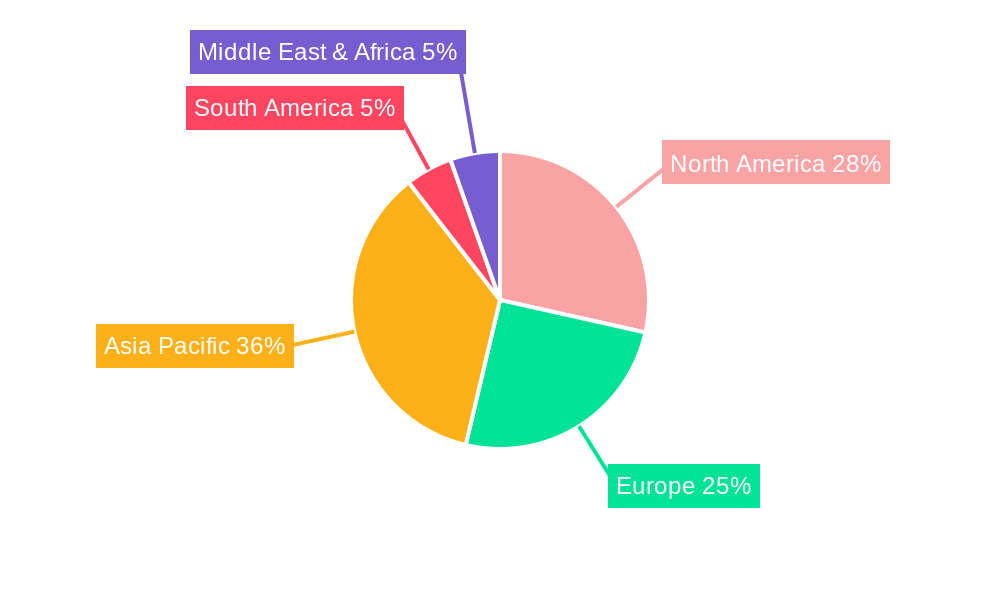
PCB Design and Circuit Simulator Regional Market Share
Geographic Coverage of PCB Design and Circuit Simulator
PCB Design and Circuit Simulator REPORT HIGHLIGHTS
| Aspects | Details |
|---|---|
| Study Period | 2020-2034 |
| Base Year | 2025 |
| Estimated Year | 2026 |
| Forecast Period | 2026-2034 |
| Historical Period | 2020-2025 |
| Growth Rate | CAGR of 14.9% from 2020-2034 |
| Segmentation |
|
Table of Contents
- 1. Introduction
- 1.1. Research Scope
- 1.2. Market Segmentation
- 1.3. Research Methodology
- 1.4. Definitions and Assumptions
- 2. Executive Summary
- 2.1. Introduction
- 3. Market Dynamics
- 3.1. Introduction
- 3.2. Market Drivers
- 3.3. Market Restrains
- 3.4. Market Trends
- 4. Market Factor Analysis
- 4.1. Porters Five Forces
- 4.2. Supply/Value Chain
- 4.3. PESTEL analysis
- 4.4. Market Entropy
- 4.5. Patent/Trademark Analysis
- 5. Global PCB Design and Circuit Simulator Analysis, Insights and Forecast, 2020-2032
- 5.1. Market Analysis, Insights and Forecast - by Application
- 5.1.1. Electronic Manufacturing
- 5.1.2. Education and Students
- 5.1.3. Other
- 5.2. Market Analysis, Insights and Forecast - by Types
- 5.2.1. Free
- 5.2.2. Paid
- 5.3. Market Analysis, Insights and Forecast - by Region
- 5.3.1. North America
- 5.3.2. South America
- 5.3.3. Europe
- 5.3.4. Middle East & Africa
- 5.3.5. Asia Pacific
- 5.1. Market Analysis, Insights and Forecast - by Application
- 6. North America PCB Design and Circuit Simulator Analysis, Insights and Forecast, 2020-2032
- 6.1. Market Analysis, Insights and Forecast - by Application
- 6.1.1. Electronic Manufacturing
- 6.1.2. Education and Students
- 6.1.3. Other
- 6.2. Market Analysis, Insights and Forecast - by Types
- 6.2.1. Free
- 6.2.2. Paid
- 6.1. Market Analysis, Insights and Forecast - by Application
- 7. South America PCB Design and Circuit Simulator Analysis, Insights and Forecast, 2020-2032
- 7.1. Market Analysis, Insights and Forecast - by Application
- 7.1.1. Electronic Manufacturing
- 7.1.2. Education and Students
- 7.1.3. Other
- 7.2. Market Analysis, Insights and Forecast - by Types
- 7.2.1. Free
- 7.2.2. Paid
- 7.1. Market Analysis, Insights and Forecast - by Application
- 8. Europe PCB Design and Circuit Simulator Analysis, Insights and Forecast, 2020-2032
- 8.1. Market Analysis, Insights and Forecast - by Application
- 8.1.1. Electronic Manufacturing
- 8.1.2. Education and Students
- 8.1.3. Other
- 8.2. Market Analysis, Insights and Forecast - by Types
- 8.2.1. Free
- 8.2.2. Paid
- 8.1. Market Analysis, Insights and Forecast - by Application
- 9. Middle East & Africa PCB Design and Circuit Simulator Analysis, Insights and Forecast, 2020-2032
- 9.1. Market Analysis, Insights and Forecast - by Application
- 9.1.1. Electronic Manufacturing
- 9.1.2. Education and Students
- 9.1.3. Other
- 9.2. Market Analysis, Insights and Forecast - by Types
- 9.2.1. Free
- 9.2.2. Paid
- 9.1. Market Analysis, Insights and Forecast - by Application
- 10. Asia Pacific PCB Design and Circuit Simulator Analysis, Insights and Forecast, 2020-2032
- 10.1. Market Analysis, Insights and Forecast - by Application
- 10.1.1. Electronic Manufacturing
- 10.1.2. Education and Students
- 10.1.3. Other
- 10.2. Market Analysis, Insights and Forecast - by Types
- 10.2.1. Free
- 10.2.2. Paid
- 10.1. Market Analysis, Insights and Forecast - by Application
- 11. Competitive Analysis
- 11.1. Global Market Share Analysis 2025
- 11.2. Company Profiles
- 11.2.1 EasyEDA
- 11.2.1.1. Overview
- 11.2.1.2. Products
- 11.2.1.3. SWOT Analysis
- 11.2.1.4. Recent Developments
- 11.2.1.5. Financials (Based on Availability)
- 11.2.2 Lab Center Electronics
- 11.2.2.1. Overview
- 11.2.2.2. Products
- 11.2.2.3. SWOT Analysis
- 11.2.2.4. Recent Developments
- 11.2.2.5. Financials (Based on Availability)
- 11.2.3 CircuitLab
- 11.2.3.1. Overview
- 11.2.3.2. Products
- 11.2.3.3. SWOT Analysis
- 11.2.3.4. Recent Developments
- 11.2.3.5. Financials (Based on Availability)
- 11.2.4 Ansys
- 11.2.4.1. Overview
- 11.2.4.2. Products
- 11.2.4.3. SWOT Analysis
- 11.2.4.4. Recent Developments
- 11.2.4.5. Financials (Based on Availability)
- 11.2.5 Keysight
- 11.2.5.1. Overview
- 11.2.5.2. Products
- 11.2.5.3. SWOT Analysis
- 11.2.5.4. Recent Developments
- 11.2.5.5. Financials (Based on Availability)
- 11.2.6 Autodesk
- 11.2.6.1. Overview
- 11.2.6.2. Products
- 11.2.6.3. SWOT Analysis
- 11.2.6.4. Recent Developments
- 11.2.6.5. Financials (Based on Availability)
- 11.2.7 KiCad EDA
- 11.2.7.1. Overview
- 11.2.7.2. Products
- 11.2.7.3. SWOT Analysis
- 11.2.7.4. Recent Developments
- 11.2.7.5. Financials (Based on Availability)
- 11.2.8 Cadence
- 11.2.8.1. Overview
- 11.2.8.2. Products
- 11.2.8.3. SWOT Analysis
- 11.2.8.4. Recent Developments
- 11.2.8.5. Financials (Based on Availability)
- 11.2.9 Altair
- 11.2.9.1. Overview
- 11.2.9.2. Products
- 11.2.9.3. SWOT Analysis
- 11.2.9.4. Recent Developments
- 11.2.9.5. Financials (Based on Availability)
- 11.2.10 Sierra Circuits
- 11.2.10.1. Overview
- 11.2.10.2. Products
- 11.2.10.3. SWOT Analysis
- 11.2.10.4. Recent Developments
- 11.2.10.5. Financials (Based on Availability)
- 11.2.11 OrCAD
- 11.2.11.1. Overview
- 11.2.11.2. Products
- 11.2.11.3. SWOT Analysis
- 11.2.11.4. Recent Developments
- 11.2.11.5. Financials (Based on Availability)
- 11.2.12 Hillman Curtis
- 11.2.12.1. Overview
- 11.2.12.2. Products
- 11.2.12.3. SWOT Analysis
- 11.2.12.4. Recent Developments
- 11.2.12.5. Financials (Based on Availability)
- 11.2.13 EasyEda
- 11.2.13.1. Overview
- 11.2.13.2. Products
- 11.2.13.3. SWOT Analysis
- 11.2.13.4. Recent Developments
- 11.2.13.5. Financials (Based on Availability)
- 11.2.14 Multisim
- 11.2.14.1. Overview
- 11.2.14.2. Products
- 11.2.14.3. SWOT Analysis
- 11.2.14.4. Recent Developments
- 11.2.14.5. Financials (Based on Availability)
- 11.2.15 EveryCircuit
- 11.2.15.1. Overview
- 11.2.15.2. Products
- 11.2.15.3. SWOT Analysis
- 11.2.15.4. Recent Developments
- 11.2.15.5. Financials (Based on Availability)
- 11.2.16 TINA Design Suite
- 11.2.16.1. Overview
- 11.2.16.2. Products
- 11.2.16.3. SWOT Analysis
- 11.2.16.4. Recent Developments
- 11.2.16.5. Financials (Based on Availability)
- 11.2.17 Fritzing
- 11.2.17.1. Overview
- 11.2.17.2. Products
- 11.2.17.3. SWOT Analysis
- 11.2.17.4. Recent Developments
- 11.2.17.5. Financials (Based on Availability)
- 11.2.18 Eremex
- 11.2.18.1. Overview
- 11.2.18.2. Products
- 11.2.18.3. SWOT Analysis
- 11.2.18.4. Recent Developments
- 11.2.18.5. Financials (Based on Availability)
- 11.2.1 EasyEDA
List of Figures
- Figure 1: Global PCB Design and Circuit Simulator Revenue Breakdown (undefined, %) by Region 2025 & 2033
- Figure 2: North America PCB Design and Circuit Simulator Revenue (undefined), by Application 2025 & 2033
- Figure 3: North America PCB Design and Circuit Simulator Revenue Share (%), by Application 2025 & 2033
- Figure 4: North America PCB Design and Circuit Simulator Revenue (undefined), by Types 2025 & 2033
- Figure 5: North America PCB Design and Circuit Simulator Revenue Share (%), by Types 2025 & 2033
- Figure 6: North America PCB Design and Circuit Simulator Revenue (undefined), by Country 2025 & 2033
- Figure 7: North America PCB Design and Circuit Simulator Revenue Share (%), by Country 2025 & 2033
- Figure 8: South America PCB Design and Circuit Simulator Revenue (undefined), by Application 2025 & 2033
- Figure 9: South America PCB Design and Circuit Simulator Revenue Share (%), by Application 2025 & 2033
- Figure 10: South America PCB Design and Circuit Simulator Revenue (undefined), by Types 2025 & 2033
- Figure 11: South America PCB Design and Circuit Simulator Revenue Share (%), by Types 2025 & 2033
- Figure 12: South America PCB Design and Circuit Simulator Revenue (undefined), by Country 2025 & 2033
- Figure 13: South America PCB Design and Circuit Simulator Revenue Share (%), by Country 2025 & 2033
- Figure 14: Europe PCB Design and Circuit Simulator Revenue (undefined), by Application 2025 & 2033
- Figure 15: Europe PCB Design and Circuit Simulator Revenue Share (%), by Application 2025 & 2033
- Figure 16: Europe PCB Design and Circuit Simulator Revenue (undefined), by Types 2025 & 2033
- Figure 17: Europe PCB Design and Circuit Simulator Revenue Share (%), by Types 2025 & 2033
- Figure 18: Europe PCB Design and Circuit Simulator Revenue (undefined), by Country 2025 & 2033
- Figure 19: Europe PCB Design and Circuit Simulator Revenue Share (%), by Country 2025 & 2033
- Figure 20: Middle East & Africa PCB Design and Circuit Simulator Revenue (undefined), by Application 2025 & 2033
- Figure 21: Middle East & Africa PCB Design and Circuit Simulator Revenue Share (%), by Application 2025 & 2033
- Figure 22: Middle East & Africa PCB Design and Circuit Simulator Revenue (undefined), by Types 2025 & 2033
- Figure 23: Middle East & Africa PCB Design and Circuit Simulator Revenue Share (%), by Types 2025 & 2033
- Figure 24: Middle East & Africa PCB Design and Circuit Simulator Revenue (undefined), by Country 2025 & 2033
- Figure 25: Middle East & Africa PCB Design and Circuit Simulator Revenue Share (%), by Country 2025 & 2033
- Figure 26: Asia Pacific PCB Design and Circuit Simulator Revenue (undefined), by Application 2025 & 2033
- Figure 27: Asia Pacific PCB Design and Circuit Simulator Revenue Share (%), by Application 2025 & 2033
- Figure 28: Asia Pacific PCB Design and Circuit Simulator Revenue (undefined), by Types 2025 & 2033
- Figure 29: Asia Pacific PCB Design and Circuit Simulator Revenue Share (%), by Types 2025 & 2033
- Figure 30: Asia Pacific PCB Design and Circuit Simulator Revenue (undefined), by Country 2025 & 2033
- Figure 31: Asia Pacific PCB Design and Circuit Simulator Revenue Share (%), by Country 2025 & 2033
List of Tables
- Table 1: Global PCB Design and Circuit Simulator Revenue undefined Forecast, by Region 2020 & 2033
- Table 2: Global PCB Design and Circuit Simulator Revenue undefined Forecast, by Application 2020 & 2033
- Table 3: Global PCB Design and Circuit Simulator Revenue undefined Forecast, by Types 2020 & 2033
- Table 4: Global PCB Design and Circuit Simulator Revenue undefined Forecast, by Region 2020 & 2033
- Table 5: Global PCB Design and Circuit Simulator Revenue undefined Forecast, by Application 2020 & 2033
- Table 6: Global PCB Design and Circuit Simulator Revenue undefined Forecast, by Types 2020 & 2033
- Table 7: Global PCB Design and Circuit Simulator Revenue undefined Forecast, by Country 2020 & 2033
- Table 8: United States PCB Design and Circuit Simulator Revenue (undefined) Forecast, by Application 2020 & 2033
- Table 9: Canada PCB Design and Circuit Simulator Revenue (undefined) Forecast, by Application 2020 & 2033
- Table 10: Mexico PCB Design and Circuit Simulator Revenue (undefined) Forecast, by Application 2020 & 2033
- Table 11: Global PCB Design and Circuit Simulator Revenue undefined Forecast, by Application 2020 & 2033
- Table 12: Global PCB Design and Circuit Simulator Revenue undefined Forecast, by Types 2020 & 2033
- Table 13: Global PCB Design and Circuit Simulator Revenue undefined Forecast, by Country 2020 & 2033
- Table 14: Brazil PCB Design and Circuit Simulator Revenue (undefined) Forecast, by Application 2020 & 2033
- Table 15: Argentina PCB Design and Circuit Simulator Revenue (undefined) Forecast, by Application 2020 & 2033
- Table 16: Rest of South America PCB Design and Circuit Simulator Revenue (undefined) Forecast, by Application 2020 & 2033
- Table 17: Global PCB Design and Circuit Simulator Revenue undefined Forecast, by Application 2020 & 2033
- Table 18: Global PCB Design and Circuit Simulator Revenue undefined Forecast, by Types 2020 & 2033
- Table 19: Global PCB Design and Circuit Simulator Revenue undefined Forecast, by Country 2020 & 2033
- Table 20: United Kingdom PCB Design and Circuit Simulator Revenue (undefined) Forecast, by Application 2020 & 2033
- Table 21: Germany PCB Design and Circuit Simulator Revenue (undefined) Forecast, by Application 2020 & 2033
- Table 22: France PCB Design and Circuit Simulator Revenue (undefined) Forecast, by Application 2020 & 2033
- Table 23: Italy PCB Design and Circuit Simulator Revenue (undefined) Forecast, by Application 2020 & 2033
- Table 24: Spain PCB Design and Circuit Simulator Revenue (undefined) Forecast, by Application 2020 & 2033
- Table 25: Russia PCB Design and Circuit Simulator Revenue (undefined) Forecast, by Application 2020 & 2033
- Table 26: Benelux PCB Design and Circuit Simulator Revenue (undefined) Forecast, by Application 2020 & 2033
- Table 27: Nordics PCB Design and Circuit Simulator Revenue (undefined) Forecast, by Application 2020 & 2033
- Table 28: Rest of Europe PCB Design and Circuit Simulator Revenue (undefined) Forecast, by Application 2020 & 2033
- Table 29: Global PCB Design and Circuit Simulator Revenue undefined Forecast, by Application 2020 & 2033
- Table 30: Global PCB Design and Circuit Simulator Revenue undefined Forecast, by Types 2020 & 2033
- Table 31: Global PCB Design and Circuit Simulator Revenue undefined Forecast, by Country 2020 & 2033
- Table 32: Turkey PCB Design and Circuit Simulator Revenue (undefined) Forecast, by Application 2020 & 2033
- Table 33: Israel PCB Design and Circuit Simulator Revenue (undefined) Forecast, by Application 2020 & 2033
- Table 34: GCC PCB Design and Circuit Simulator Revenue (undefined) Forecast, by Application 2020 & 2033
- Table 35: North Africa PCB Design and Circuit Simulator Revenue (undefined) Forecast, by Application 2020 & 2033
- Table 36: South Africa PCB Design and Circuit Simulator Revenue (undefined) Forecast, by Application 2020 & 2033
- Table 37: Rest of Middle East & Africa PCB Design and Circuit Simulator Revenue (undefined) Forecast, by Application 2020 & 2033
- Table 38: Global PCB Design and Circuit Simulator Revenue undefined Forecast, by Application 2020 & 2033
- Table 39: Global PCB Design and Circuit Simulator Revenue undefined Forecast, by Types 2020 & 2033
- Table 40: Global PCB Design and Circuit Simulator Revenue undefined Forecast, by Country 2020 & 2033
- Table 41: China PCB Design and Circuit Simulator Revenue (undefined) Forecast, by Application 2020 & 2033
- Table 42: India PCB Design and Circuit Simulator Revenue (undefined) Forecast, by Application 2020 & 2033
- Table 43: Japan PCB Design and Circuit Simulator Revenue (undefined) Forecast, by Application 2020 & 2033
- Table 44: South Korea PCB Design and Circuit Simulator Revenue (undefined) Forecast, by Application 2020 & 2033
- Table 45: ASEAN PCB Design and Circuit Simulator Revenue (undefined) Forecast, by Application 2020 & 2033
- Table 46: Oceania PCB Design and Circuit Simulator Revenue (undefined) Forecast, by Application 2020 & 2033
- Table 47: Rest of Asia Pacific PCB Design and Circuit Simulator Revenue (undefined) Forecast, by Application 2020 & 2033
Frequently Asked Questions
1. What is the projected Compound Annual Growth Rate (CAGR) of the PCB Design and Circuit Simulator?
The projected CAGR is approximately 14.9%.
2. Which companies are prominent players in the PCB Design and Circuit Simulator?
Key companies in the market include EasyEDA, Lab Center Electronics, CircuitLab, Ansys, Keysight, Autodesk, KiCad EDA, Cadence, Altair, Sierra Circuits, OrCAD, Hillman Curtis, EasyEda, Multisim, EveryCircuit, TINA Design Suite, Fritzing, Eremex.
3. What are the main segments of the PCB Design and Circuit Simulator?
The market segments include Application, Types.
4. Can you provide details about the market size?
The market size is estimated to be USD XXX N/A as of 2022.
5. What are some drivers contributing to market growth?
N/A
6. What are the notable trends driving market growth?
N/A
7. Are there any restraints impacting market growth?
N/A
8. Can you provide examples of recent developments in the market?
N/A
9. What pricing options are available for accessing the report?
Pricing options include single-user, multi-user, and enterprise licenses priced at USD 4350.00, USD 6525.00, and USD 8700.00 respectively.
10. Is the market size provided in terms of value or volume?
The market size is provided in terms of value, measured in N/A.
11. Are there any specific market keywords associated with the report?
Yes, the market keyword associated with the report is "PCB Design and Circuit Simulator," which aids in identifying and referencing the specific market segment covered.
12. How do I determine which pricing option suits my needs best?
The pricing options vary based on user requirements and access needs. Individual users may opt for single-user licenses, while businesses requiring broader access may choose multi-user or enterprise licenses for cost-effective access to the report.
13. Are there any additional resources or data provided in the PCB Design and Circuit Simulator report?
While the report offers comprehensive insights, it's advisable to review the specific contents or supplementary materials provided to ascertain if additional resources or data are available.
14. How can I stay updated on further developments or reports in the PCB Design and Circuit Simulator?
To stay informed about further developments, trends, and reports in the PCB Design and Circuit Simulator, consider subscribing to industry newsletters, following relevant companies and organizations, or regularly checking reputable industry news sources and publications.
Methodology
Step 1 - Identification of Relevant Samples Size from Population Database



Step 2 - Approaches for Defining Global Market Size (Value, Volume* & Price*)

Note*: In applicable scenarios
Step 3 - Data Sources
Primary Research
- Web Analytics
- Survey Reports
- Research Institute
- Latest Research Reports
- Opinion Leaders
Secondary Research
- Annual Reports
- White Paper
- Latest Press Release
- Industry Association
- Paid Database
- Investor Presentations

Step 4 - Data Triangulation
Involves using different sources of information in order to increase the validity of a study
These sources are likely to be stakeholders in a program - participants, other researchers, program staff, other community members, and so on.
Then we put all data in single framework & apply various statistical tools to find out the dynamic on the market.
During the analysis stage, feedback from the stakeholder groups would be compared to determine areas of agreement as well as areas of divergence
